White House Revokes Press Credentials for CNN, Politico, and MS NOW Journalists

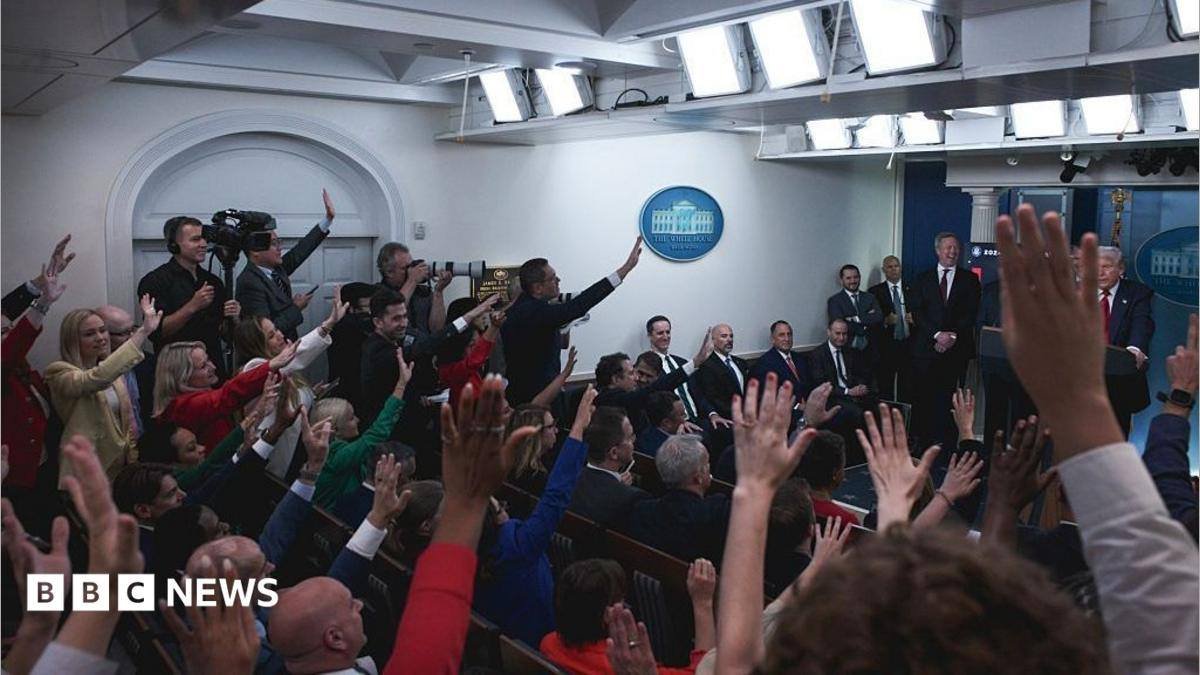
Journalists from CNN, Politico, and MS NOW have been denied entry to the White House after US President Donald Trump announced a ban on the three major media organizations. On Saturday morning, reporters from the affected outlets had their press badges confiscated and deactivated by security personnel at the White House gates.
The move follows an announcement by President Trump on Friday, in which he declared he was barring the three news organizations from the White House. Trump accused the outlets of publishing "fiction or lies" regarding his administration.
Reporters Denied Entry at White House Gates
On Saturday morning, MS NOW reporter Akayla Gardner and a photographer attempted to enter the White House grounds, but their press passes failed to scan. "The officer asked me to hand over my badge. He said that it was disabled," Gardner said. "I asked why I was not able to get inside. He said it was above him."
While Gardner and her colleague were turned away, an MS NOW producer was able to scan her badge and gain entry. No explanation was provided as to why the producer's pass remained active while the others were deactivated.
Similar incidents occurred with reporters from other banned outlets. CNN reporter Betsy Klein stated that a Secret Service agent informed her that her badge had been deactivated. Politico also confirmed that its reporter, Cheyenne Haslett, was denied entry on Saturday morning after the Secret Service revoked her pass.
Media Outlets Pledge Legal and Constitutional Defense
All three news organizations have strongly condemned the administration's actions, characterizing the ban as a violation of their constitutional rights to free speech and freedom of the press.
A spokesperson for MS NOW stated that the White House "belongs to the American people and the decisions made inside are funded by our tax dollars." The outlet added that it "intends to take any and all steps necessary to defend our First Amendment rights and the essential role of independent journalism in our democracy."
Politico Editor-in-Chief Jonathan Greenberger expressed support for the outlet's journalists in an internal email shared in the company's Playbook newsletter, writing that the organization stands by its reporters and will "vigorously defend" their First Amendment rights.
CNN also released a statement defending its constitutional protections. "We have a right under the US Constitution to do our reporting without hindrance or interference from the government and this ban is an illegal assault on this fundamental right," the network said.
Trump Cites Cumulative Coverage as Reason for Ban
President Trump did not point to specific articles or broadcasts to justify the ban when making the announcement. However, he later stated that the decision was prompted by "cumulative stories over the last few years."
Trump also suggested that additional news organizations could face similar restrictions in the future, stating there "may be others to join them," though he has not issued directives to ban other outlets. When asked to clarify his comments, Trump remarked, "Others to come in terms of fake news? Well, you know, the New York Times is fake news, the Washington Post is fake news."
Press Freedom Groups and WHCA Condemn the Decision
The White House Correspondents Association (WHCA), an independent, non-profit group representing journalists covering the presidency, has called on the Trump administration to immediately restore access for the affected reporters. The association accused the administration of violating the First Amendment.
WHCA President Jacqui Heinrich, a journalist for Fox News, warned of the broader implications of the ban. "The implications extend beyond these organizations: a standard used to exclude one news outlet because of its coverage could be applied to any outlet in the future," Heinrich said. She emphasized that the American public must be able to scrutinize elected officials through an independent press, "regardless of whether government officials view it favorably."
Heinrich added that courts have consistently ruled that once the White House grants access to journalists, it cannot arbitrarily revoke that access based on the content of their reporting.
The Reporters Committee for Freedom of the Press, an organization providing legal services to the media, also condemned the ban as unconstitutional and predicted a swift legal reversal. Bruce Brown, the president of the committee, stated, "The First Amendment is clear that once the White House invites in some journalists, it can't ban others because it doesn't like their reporting."
This confrontation is the latest in a series of actions by the Trump administration targeting media organizations it deems critical. The administration has previously initiated legal action against several domestic and international outlets, including The New York Times, The Wall Street Journal, and the BBC. While some of these lawsuits have ended in multimillion-dollar settlements paid by media organizations, Trump's lawsuit against the BBC remains ongoing.