
Bengaluru Startup Alteon Secures $2.5 Million to Develop Wind-Powered Autonomous Aircraft

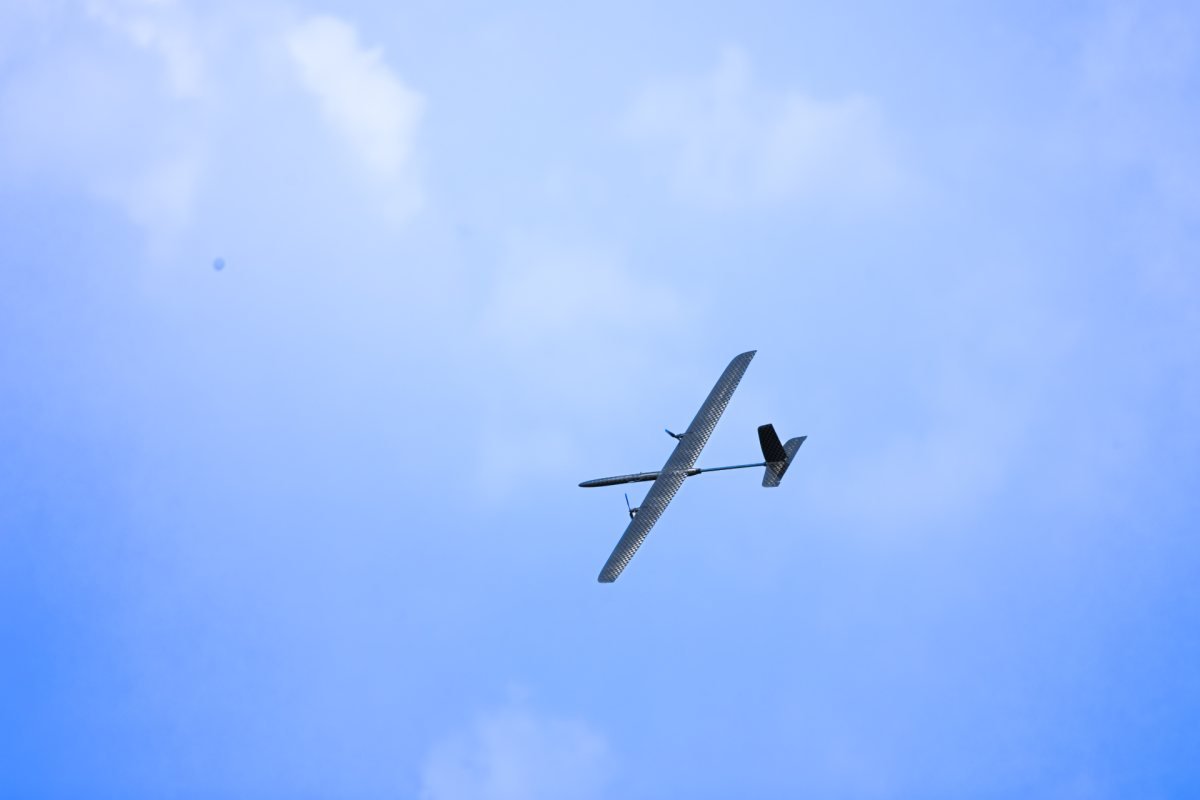
Alteon, a Bengaluru-based aerospace startup, has raised $2.5 million in a pre-seed funding round to develop autonomous aircraft designed to remain airborne for more than a year. The funding round was led by prominent solo investor Lachy Groom, with participation from Together Fund.
Founded by 20-year-old Samay Sanghvi, the startup aims to break the limitations of conventional aircraft, which are restricted by the fuel or battery power they can carry. Alteon plans to achieve perpetual flight by harvesting energy from ocean winds through a flight technique known as dynamic soaring.
The Mechanics of Dynamic Soaring
Dynamic soaring is a flight maneuver inspired by the albatross, a seabird that extracts energy from wind shear above the ocean. The technique involves an aircraft repeatedly moving between layers of air traveling at different speeds to gain momentum and energy.
Alteon is designing a small, fixed-wing autonomous aircraft with a wingspan of approximately three meters. The aircraft is engineered to fly close to the ocean’s surface, climb and turn through faster-moving air, and repeat the cycle to continuously harvest energy from the wind. Eventually, the startup plans to use the aircraft’s propellers as turbines to convert harvested wind energy into electricity, allowing it to recharge its onboard batteries.
“Once you build airplanes that can stay in the air for more than a year, there are millions of things you can do with them,” Sanghvi told TechCrunch. Alteon intends to initially deploy these aircraft for maritime surveillance, offering governments real-time visibility over activities in their territorial waters.
Testing Milestones and Future Goals
While Alteon has not yet demonstrated that its aircraft can sustain long-term flight solely through dynamic soaring, the company has achieved early testing milestones. The startup recently completed a test of its autonomous flight system over the Bay of Bengal. During the test, the aircraft autonomously executed seven O-shaped cycles at speeds exceeding 62 miles per hour while flying within one meter of the water’s surface.
The company’s next major technical milestone is what Sanghvi terms “energy-neutral dynamic soaring.” Achieving this milestone would allow the aircraft to fly continuously with its propulsion system switched off, relying entirely on wind energy to remain aloft.
Currently, Alteon operates from a 10,000-square-foot facility in Bengaluru with a team of 20 people. The startup is manufacturing four to five aircraft per week for testing purposes and has conducted more than 200 test flights within the last 30 days.
Technical Challenges and Expert Perspectives
Aerospace experts acknowledge the potential of the technology but highlight the significant engineering hurdles ahead. Dr. Gabriel Bousquet, a Silicon Valley-based aerospace and robotics engineer who researched dynamic soaring during his doctoral studies at MIT, described Alteon’s low-altitude flight over the Bay of Bengal as a “promising first result.”
However, Bousquet noted that the primary challenge lies in proving the aircraft can reliably extract sufficient energy from real-world winds over extended periods. Flying at very low altitudes presents severe operational difficulties, as the aircraft must continuously sense and react to a moving ocean surface while contending with turbulence, waves, water spray, rain, and changing light conditions.
Dr. Bharath Swaminathan, who earned his PhD from IIT Madras studying the stability of dynamic soaring, agreed that the underlying physics of the maneuver is well established. He noted that keeping an aircraft airborne for even several days using dynamic soaring would represent “a very big step, and a big achievement.”
Swaminathan cautioned that while large-scale wind patterns are predictable, localized wind shear and turbulence can vary substantially. These localized variations complicate an aircraft’s ability to extract energy consistently, and some of these challenges may only become apparent during real-world flight testing.
Origins and Investor Confidence
Sanghvi began developing the concepts behind Alteon in 2023 immediately after graduating from high school. He initially learned to build aircraft by constructing and crashing radio-controlled models before progressing to early prototypes. He formally established Alteon in 2025, receiving early financial backing from Emergent Ventures and 1517.
Lead investor Lachy Groom decided to back the startup within the first 30 minutes of his initial meeting with Sanghvi. Groom acknowledged the high level of technical risk associated with the project but expressed confidence in the team.
“Ambitious problems are always going to come with risks,” Groom told TechCrunch. “For me, it came down to believing Samay and the Alteon team are the ones to figure them out.”