
Syama Sastri's Iconic Swarajatis: An Intimate Dialogue with the Goddess

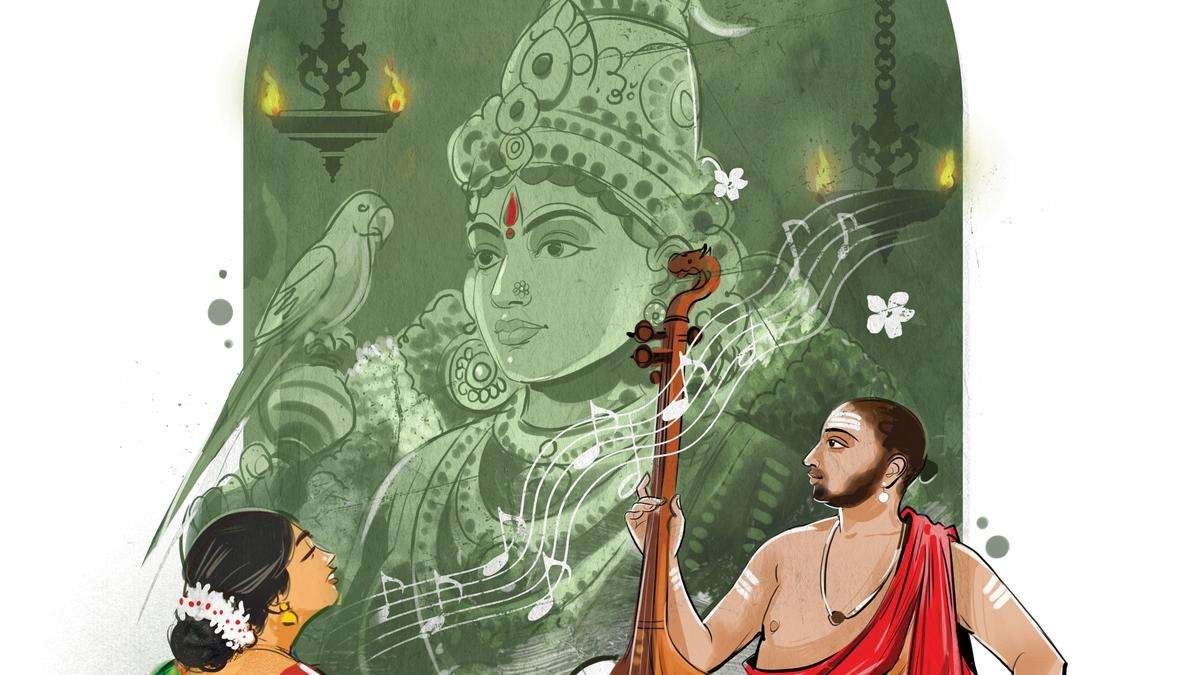
Ahead of the nine-day celebration of the goddess, Syama Sastri's compositions, particularly his swarajatis, are a testament to his musical brilliance and devotion to the goddess Kamakshi. Born in a family of hereditary archakas at the Kamakshi Temple in Kanchipuram, Syama Sastri's life was deeply connected to the goddess.
His ancestors left Kanchipuram during a period of political turmoil, carrying with them the golden vigraha of Kamakshi. They travelled through several places before finally settling in Thanjavur, where Syama Sastri was born in Tiruvarur. He later made Thanjavur his home, living beside the Kamakshi temple and regularly performing puja to the goddess.
Compositions Dedicated to Kamakshi
With the exception of a few kritis, all of Syama Sastri's compositions are dedicated to Kamakshi. While each is a precious gem, the three swarajatis — 'Kamakshi Anudinamu' (Bhairavi), 'Rave Himagiri Kumari' (Thodi), and 'Kamakshi Ni Pada' (Yadukula Kamboji) — occupy a special place in his oeuvre.
These works are marked by his musical genius and intense devotion to the deity. In the swarajatis, Syama Sastri describes Kamakshi's beauty, majesty, and glory, while addressing her as a child would address his mother. This mother–child sentiment is reflected in the simple, direct, and deeply personal Telugu sahitya.
Unique Structure and Musical Brilliance
Each of the three swarajatis has a unique structure, with the Bhairavi and Yadukula Kamboji swarajatis following arohana krama, with eight and eleven swara-sahitya passages respectively. The Thodi swarajati, with six passages, does not follow this pattern and is set to Adi tala.
These compositions showcase Syama Sastri's musical genius, with characteristic phrases, oscillations, swara movements, and charming rhythmic patterns. The rhythmic introduction of the setting in the pallavi of both the Bhairavi and Yadukula Kamboji are similar.
Emotional Depth and Lyrical Lucidity
The confluence of sahitya and sangita in these swarajatis is a marvel. The emotional depth, lyrical lucidity, and musical brilliance of these masterpieces remain unparalleled to this day. To Syama Sastri, we owe abundant gratitude for gifting us these extraordinary treasures.
The legendary musician Semmangudi Srinivasa Iyer, whose renditions of these swarajatis remain evergreen, was once asked why he chose to sing niraval at this line when the composition seemed complete. He replied that the format offered musicians immense inspiration.
These swarajatis are a testament to Syama Sastri's musical genius and devotion to the goddess Kamakshi. They continue to inspire and delight music lovers to this day.