
Microsoft Unveils Maia 300 AI Chip to Reduce Reliance on Nvidia and AMD

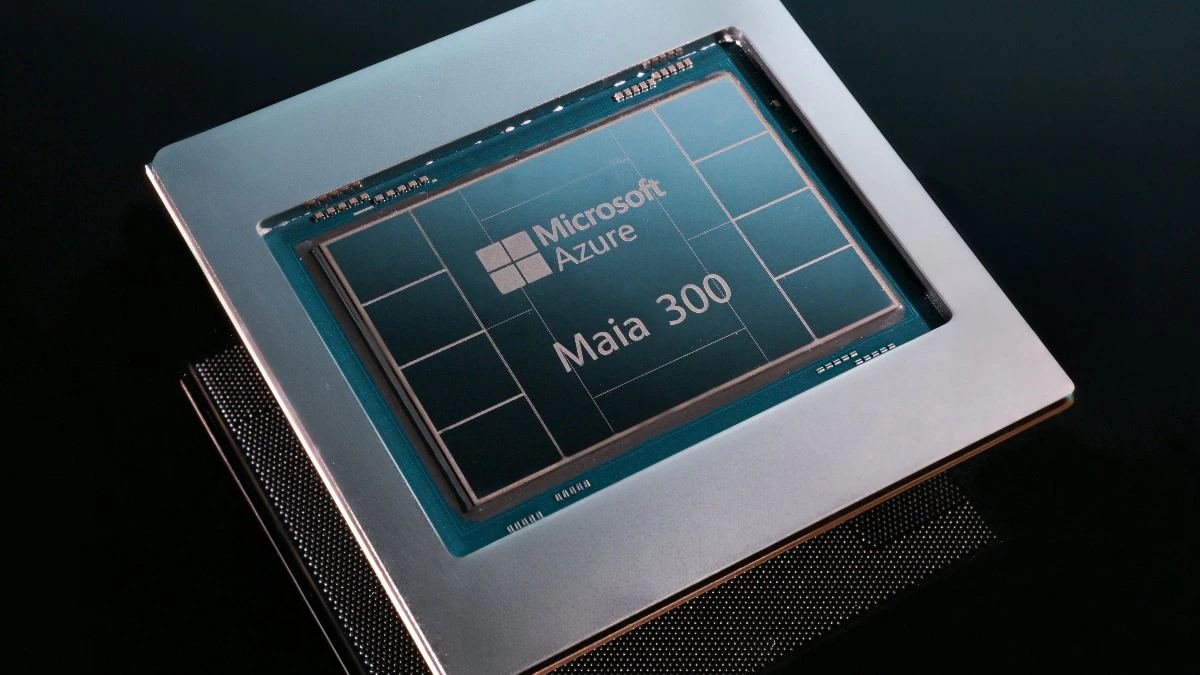
Microsoft has unveiled Maia 300, its third-generation custom artificial intelligence processor, as part of an effort to shift more of its AI infrastructure onto proprietary silicon. The move is intended to scale inference workloads across the company's services, improve operational efficiency, and decrease its dependence on external chipmakers such as Nvidia and AMD.
The company plans to begin deploying Maia 300 in production environments in 2027. Microsoft aims to establish the Maia hardware family as the primary processing system for handling AI user requests across its product ecosystem.
Scaling In-House Silicon Deployment
Announcing the launch on X, Microsoft Chief Executive Officer Satya Nadella described the development as the company's "biggest bet yet on our own silicon." Nadella confirmed that Microsoft will expand its Maia deployments to multi-gigawatt capacity beginning next calendar year.
"Today we are announcing our biggest bet yet on our own silicon. Starting next calendar year, we will scale our Maia family to multi-gigawatt deployments, making it the primary inference system for our own product and services," Nadella stated in his post.
The announcement comes amid expanding demand for AI compute capacity, which has prompted cloud service providers to design custom processors to better control operating costs and manage electricity consumption across large-scale data centres.
Architecture and Performance Metrics
According to Microsoft, Maia 300 features a chiplet-based architecture that separates compute, memory control, and input-output functions. This modular design allows different sections of the component to utilise manufacturing technologies tailored to specific operational requirements.
In terms of efficiency, Microsoft reported that Maia 300 yields 40 per cent more AI tokens per watt compared to leading GPU-based systems. AI tokens represent the fundamental units of text or data processed by artificial intelligence models; increasing token output per unit of electricity enables greater operational throughput without proportional power increases.
Microsoft added that a data centre rack configured with 96 Maia 300 accelerators can deliver up to seven times the token throughput of an equivalent Maia 200 configuration. The new silicon is designed to support demanding workloads, including complex multi-step AI agent workflows, detailed reasoning, and extended conversational interactions.
Role of External Hardware and Product Integration
While Microsoft is expanding its proprietary chip footprint, the company indicated it will not eliminate the use of processors from Nvidia and AMD. Third-party graphics processing units will remain part of Microsoft's infrastructure fleet, particularly for AI model training workloads.
Microsoft introduced its initial Maia processor in 2023, followed by the Maia 200 in January 2026. According to the company, Maia 200 is currently deployed across data centres in the United States, Europe, and Australia, delivering up to 1.7 times more tokens per watt for features in Microsoft Teams and Copilot. The chip is also actively handling production tasks for GitHub Copilot and Microsoft Foundry.
Regarding consumer impact, Microsoft has not announced direct price reductions for its subscription services. However, the company noted that enhanced power efficiency could lower execution costs, and indicated that elements of Microsoft 365 Copilot may experience performance speed improvements depending on service optimisation and deployment scale.