Hyderabad Police Question Independent Journalist and Infant Over Social Media Post

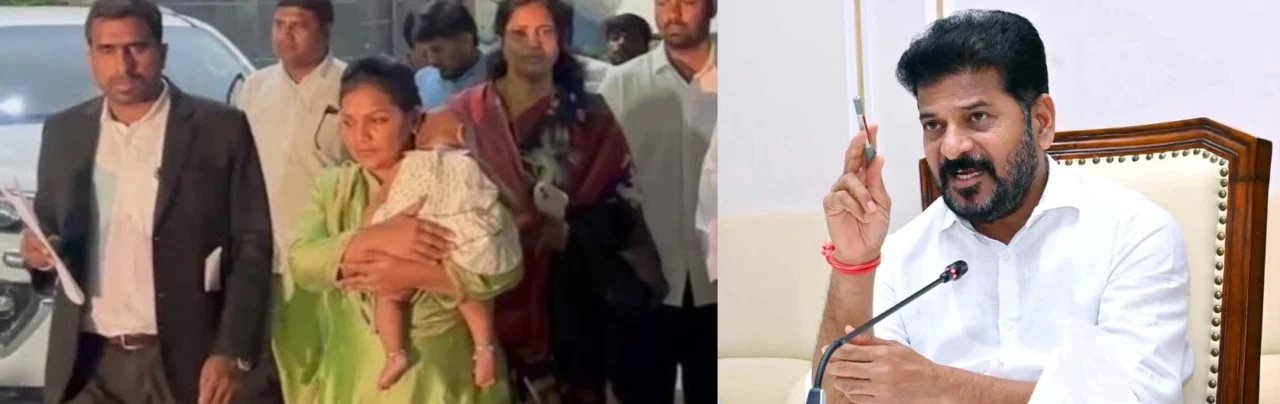
An independent journalist and her six-month-old infant were kept at the Central Crimes Station (CCS) in Basheerbagh, Hyderabad, for nearly six hours on October 7. The journalist, Jalli Rekha, who runs the YouTube channel MR Media Telangana, was questioned over an Instagram reel that raised questions regarding the business investments and property holdings of Naimisha Reddy, the daughter of Telangana Chief Minister A Revanth Reddy.
Late-Night Notice and FIR Details
The police action began late on the night of October 6. At approximately 11:30 PM, four male police officers arrived at Rekha’s residence without any accompanying female personnel. After knocking on her door for 15 minutes, the officers served a notice requiring her to appear for questioning at 11:30 AM the following morning. Rekha requested additional time, explaining that her six-month-old daughter was suffering from a post-vaccination fever, but police insisted her appearance was mandatory.
The questioning followed a First Information Report (FIR) registered on October 5 under Sections 353(2) and 352 of the Bharatiya Nyaya Sanhita (BNS). The complaint was filed by Mettu Sai Kumar, chairman of the TPCC Fisherman Congress Committee. The complaint targeted Rekha’s YouTube channel, Bharat Rashtra Samithi (BRS) leader Manne Krishank, and others, seeking legal action against those circulating content about Naimisha Reddy’s financial activities.
While Krishank was arrested on October 6, he was granted immediate bail by a Secunderabad magistrate. The Telangana High Court also directed the police to refrain from taking coercive steps and to adhere to Supreme Court guidelines. However, the police proceeded with their inquiry involving Rekha.
Conditions During Interrogation
Rekha arrived at the CCS station with her unwell infant at around 3:30 PM on October 7. She remained at the facility for nearly six hours under difficult conditions. The station lacked private facilities for nursing. Rekha was initially directed to feed her baby inside an active interrogation room, then in a busy common hall, and eventually in a corner of the facility under the instruction of a female constable. She was also escorted by a constable during trips to the washroom.
During the session, officers pressured Rekha to hand over her phone, email address, and account credentials. Police officials acknowledged that they sought to locate and delete videos related to the Chief Minister’s family. Officers also criticized Rekha’s social media activity, accusing her of operating with political backing. When Rekha raised concerns about keeping her feverish baby at the station, a senior official reportedly told her to consider the impact of the allegations on the Chief Minister’s family.
Rekha and her child were permitted to leave the station at approximately 9:00 PM, following the intervention of her legal counsel, Laxman, who challenged the police demands for her electronic devices without prior notice.
Political Reactions and Press Freedom Concerns
The incident has sparked significant political backlash and criticism on social media. Opposition leaders strongly condemned the police actions. The Bharatiya Janata Party (BJP) issued a statement criticizing the Congress-led state government, pointing out the contrast between political slogans and the treatment of a nursing mother at a police station.
BRS Working President K T Rama Rao and BRSLP Deputy Floor Leader T Harish Rao also condemned the interrogation. Harish Rao described the action as an attack on press freedom and women’s rights, demanding an immediate response from the Telangana Director General of Police (DGP) and the withdrawal of the case against Rekha.
Reflecting on the ordeal, Rekha defended her reporting, stating that she was performing her duties as a journalist by asking questions of public figures. She described the treatment as an attempt to silence reporters who raise critical questions.