Crowds Swell at Jantar Mantar Ahead of CJP Parliament March

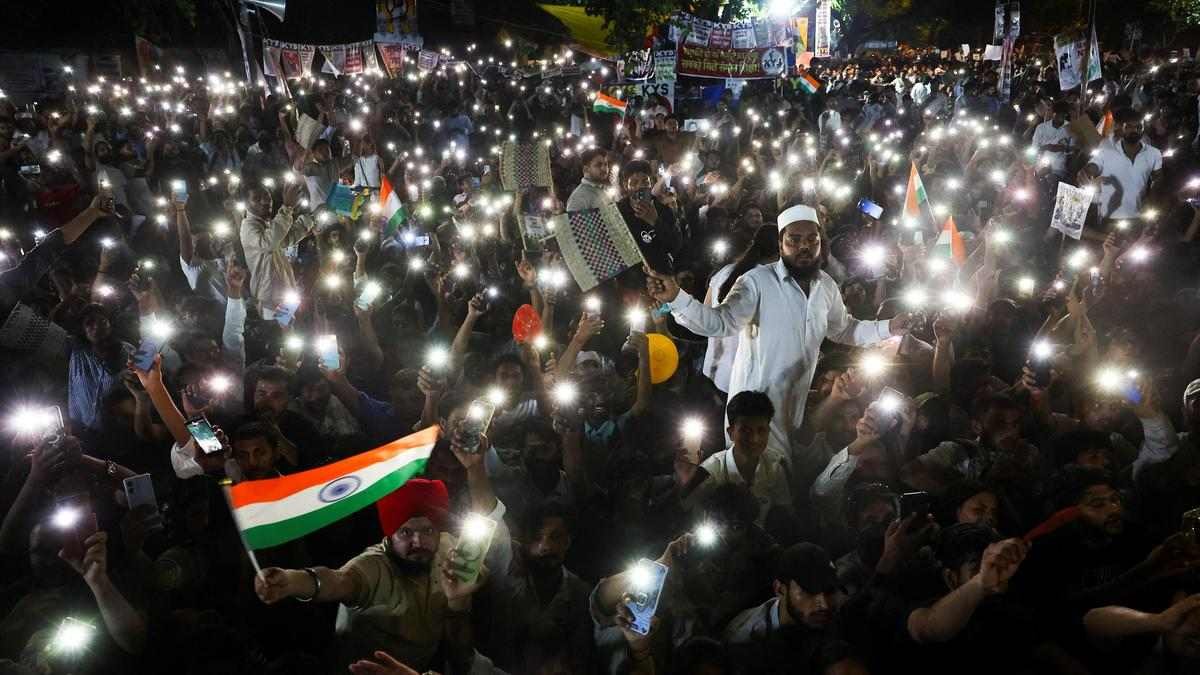
Crowds continued to pour into the Cockroach Janta Party (CJP) protest site at Jantar Mantar in central Delhi on Sunday, July 19, 2026. The surge in attendees comes as preparations gather pace for a planned march to Parliament on Monday.
By Sunday afternoon, thousands of people were streaming through both entry points of the protest area. The high density of people made movement within the site difficult, marking a dramatic increase in crowd size compared to the initial days of the protest, which began on June 20.
Surge in Crowd Following Activist's Removal
According to attendees who have been at Jantar Mantar for several days, the number of protesters rose significantly after police forcefully removed activist and Indian education reformer Sonam Wangchuk from the site on Saturday morning, July 18, 2026. Wangchuk, who had been on a hunger strike, was taken to a hospital by authorities.
Following his removal, supporters gathered to chant slogans and wave mobile phones with flashlights on. The ongoing sit-in protest specifically demands the resignation of Indian Education Minister Dharmendra Pradhan.
To manage the influx, queues were formed at both entry points. Inside the venue, protesters took on roles as crowd managers. Volunteers fanned attendees and sprayed water from handheld sprays to help people cope with the heat and humidity.
Volunteer Support and Medical Aid at the Site
A makeshift clinic has been established at the site to assist protesters, some of whom have been living at Jantar Mantar for days. Abhishek Saha, an Ayurvedic doctor from Rohini in north Delhi, managed a table stocked with donated medicines, masks, ORS packets, tablets, and band-aids.
Saha explained that the medical table was initiated by another doctor from Maharashtra, and he has since taken over its management. He stated that he was participating to express his solidarity for a better education system.
Security Deployment and Student Participation
Security at the protest site has been heavily reinforced. Personnel from the Rapido Action Force, the Nagaland Armed Force, and the Delhi Police have been deployed, with at least 10 to 11 buses positioned near the entry points.
Protesters had to cross multiple layers of barricades to enter the main area. Inside, camps set up by student organisations, including the All India Students' Association (AISA) and the Students' Federation of India (SFI), housed students participating in hunger strikes. Volunteers from the Krantikari Yuva Sangathan (KYS) fanned seated protesters as they listened to leaders speaking from the dais, while other groups sang songs and held placards demanding the Education Minister's resignation.
Voices of Protest and Diverse Grievances
Among those fasting were Pawan Kumar, 28, from Uttar Pradesh, and Shambu Dayal Meena, 31, a tribal from Rajasthan, both of whom had been fasting for six days. Meena expressed anger toward the government, stating they do not respect the Constitution, and noted that remarks by the Chief Justice of India regarding "cockroaches" felt personal due to his past unemployment.
Janeshwar, 32, who was sitting with them, highlighted the unity among Dalit, tribal, and OBC protesters, attributing their anger to the government closing down thousands of schools, which he said directly impacts their children.
Other protesters raised concerns regarding national examinations and broader civic issues. Ravi, a student from Rai Bareilly, Uttar Pradesh, shared that his brother took the NEET exam this year, pointing to the distress caused by paper leaks and exam scams. Vinod Kumar Mehra, a 60-year-old social worker from Gurgaon, supported the youth, stating that a hunger strike was their option to express rage.
Additionally, some attendees used the gathering to voice wider discontent. Priya (name changed), an IT professional from Gurgaon, cited issues ranging from monsoon waterlogging to alleged embezzlement of donations at the Ram Temple in Ayodhya as reasons for her participation.