CJP Under Scanner Over Alleged Mobilisation of Minors for October 2 Protest

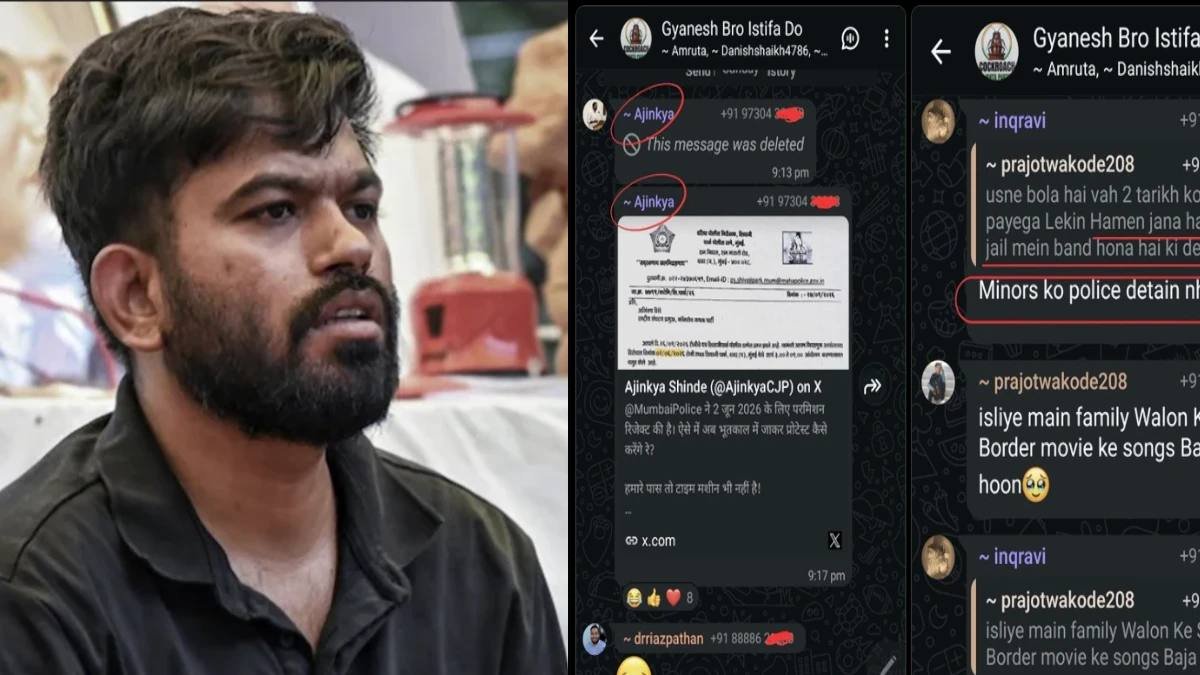
A set of circulating WhatsApp chats linked to the Cockroach Janta Party’s (CJP) proposed October 2 agitation has raised questions over whether school-age children and madrasa students are being encouraged to participate in the mobilisation. The development comes ahead of the party's planned demonstration in Mumbai demanding the resignation of Chief Election Commissioner Gyanesh Kumar.
In the circulating messages, one participant appears to suggest that minors may avoid detention by the police. Another participant wrote, "Me toh bach jaunga minor hu" (I will escape, I am a minor), directly raising questions about whether age is being discussed as a shield against police action. Other messages in the group chat discuss going to jail, as well as mundane issues such as food and prayer facilities during detention.
Legal Implications of Mobilising Minors
The discussion of involving children in the protest has drawn attention to potential legal consequences. Under Section 83(2) of the Juvenile Justice (Care and Protection of Children) Act, 2015, adults or adult groups can face punishment if they are found to have used children for illegal activities.
This is not the first time the CJP has faced scrutiny regarding minors. Previously, former National Commission for Protection of Child Rights (NCPCR) chairperson Priyank Kanoongo raised the possibility of legal action against CJP leaders under the Juvenile Justice Act. This followed the alleged involvement of a 14-year-old girl in an illegal protest. Kanoongo argued that CJP leaders could face legal liability, though this was an interpretation of the law rather than a judicial finding of guilt.
The earlier episode also raised concerns regarding the minor's privacy. Child-protection authorities and rights officials have cautioned against publishing the identity, photographs, or other identifying details of minors involved in legal or protest-related controversies. Additionally, an FIR was previously filed involving the minor and her father over social media posts alleged to have insulted Hindu deities and hurt religious sentiments, allegations that remain subject to due legal process.
The October 2 Protest and Police Permission
The CJP’s October 2 mobilisation is directed at the Election Commission, with CJP founder Abhijeet Dipke demanding the resignation of Chief Election Commissioner Gyanesh Kumar. The campaign intensified after reports emerged that Election Commissioners Sukhbir Singh Sandhu and Vivek Joshi formally objected 14 times over 10 months to decisions they said were taken without their knowledge. The Election Commission has rejected suggestions of an institutional breakdown, stating that differing views are part of normal deliberations and that its decisions complied with the law.
The proposed Mumbai demonstration has faced administrative hurdles. Mumbai Police denied permission for the CJP to gather at Shivaji Park, citing High Court directions, government guidelines, a lack of civic clearance, and concerns over traffic and noise. Police noted that Shivaji Park is a designated silence zone and advised organisers to seek an alternative venue.
Following the denial of permission, Dipke announced a "Jail Bharo Andolan" for October 2. However, as of September 29, reports indicated that the proposed protest still lacked permission from the Brihanmumbai Municipal Corporation (BMC) to use Shivaji Park. Tensions have already risen at the venue, where a group confronted CJP members on September 29 and asked them to leave the area.
Role of Ajinkya Shinde and Calls for Investigation
Ajinkya Shinde, the National Organisation In-Charge of the CJP, has also come under scrutiny. Shinde, who is part of the CJP's 12-member national leadership, reportedly submitted the September 26 application seeking permission for the October 2 protest. Reports have also highlighted his previous association with the Aam Aadmi Party (AAP), and he is reportedly active in the WhatsApp group where the chats originated.
While Shinde's political background and current role are public record, his presence in the WhatsApp group does not by itself prove that he authorised or organised the alleged mobilisation of minors. Shinde and other CJP functionaries were also named in an August FIR in Maharashtra over allegations of entering a government school and disrupting official work, which remain subject to legal proceedings.
The leaked screenshots have triggered calls on social media for Mumbai Police to interrogate group administrators and investigate the organisers. Some online posts have demanded that CJP leaders face stringent provisions, including the National Security Act (NSA) and the Unlawful Activities (Prevention) Act (UAPA), alleging that minors are being used as "human shields."