Centre Tells Supreme Court It Will Not Reopen Katchatheevu Island Issue With Sri Lanka

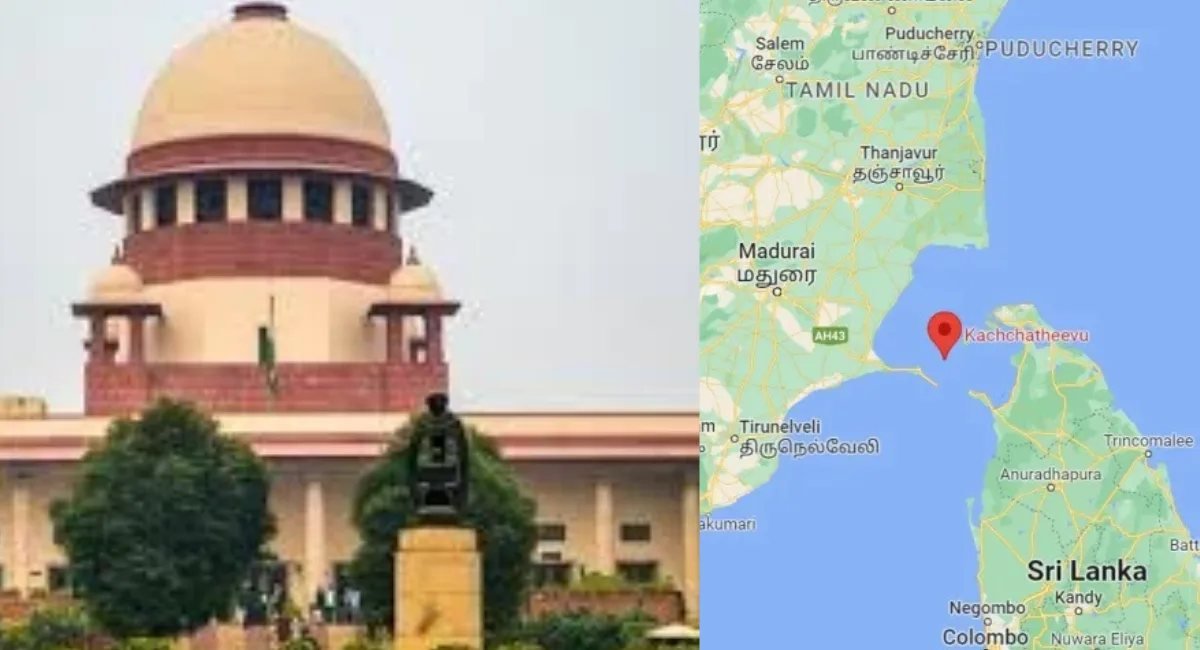
The Central government has informed the Supreme Court of India that it does not wish to reopen the Katchatheevu island issue with Sri Lanka. The government stated that it wants to preserve its excellent bilateral relationship with the neighbouring island nation.
During a hearing on October 6, 2026, Attorney General for India R Venkataramani told a bench comprising Justice Sanjay Kumar and Justice Sanjeev Sachedeva that the government does not want to get into the matter. He noted that while the government initially entered into the issue, it dropped it at some point to avoid spoiling ties with Sri Lanka.
The Supreme Court bench was hearing a writ petition challenging the ceding of Katchatheevu island to Sri Lanka under the 1974 and 1976 Indo-Sri Lankan maritime agreements. The petition argues that these agreements unconstitutionally restricted the rights of Tamil Nadu fishermen.
Supreme Court Questions Treaty Interpretation
During the proceedings, Justice Sanjay Kumar asked the Attorney General how long the matter could be kept pending. He inquired if there had been any developments regarding the interpretation of the international treaty and whether the government was in talks with Sri Lanka about it.
The Attorney General reiterated that the Union government does not want to reopen the issue. The bench also observed that Indian fishermen from Tamil Nadu need to be sensitised against entering Sri Lankan territorial waters around Katchatheevu island for fishing.
Addressing the reasons behind the border crossings, the Attorney General stated that Tamil Nadu fishermen cross the maritime boundary because fish stocks have depleted on Indian shores due to apparent pollution. He warned that fishermen will face arrest if they continue to venture into Sri Lankan waters.
Diplomatic Measures and Fishermen Safety
The Central government stated that although fishermen are repeatedly advised not to enter Sri Lankan territorial waters, they continue to venture there. The Centre maintained that it is alive to the situation and is actively taking diplomatic measures to address the issue.
Tamil Nadu Additional Advocate General Prashanto Chandra Sen defended the fishermen, stating that they do not pollute the rivers. Meanwhile, reports indicate that Tamil Nadu fishermen regularly face arrests, attacks, injuries, and confiscation of their boats and catches by Sri Lankan authorities.
The court heard that some fishermen reportedly cross the maritime border not only for fishing but also to transport smuggled items, such as drugs, petrol, and essential provisions, which carry high prices in Sri Lanka. To avoid detection, some fishermen reportedly deactivate or avoid fitting GPS tracking devices, which are otherwise used for emergency rescues.
Arguments on Constitutional Validity
Senior Advocate and Rajya Sabha DMK MP P Wilson, representing the fishermen, argued that the maritime agreements require a constitutional amendment to be ratified, which has not occurred. He expressed serious concern over the repeated arrests and attacks on Indian fishermen.
Additional Advocate General for Tamil Nadu Haripriya argued that the Union government must resolve the issue directly with Sri Lanka. Both state counsels cited a recent letter from the Chief Minister of Tamil Nadu requesting central intervention following the arrest of 20 fishermen by the Sri Lankan Navy.
Responding to the state's arguments, the Attorney General asserted that because the fishermen belong to Tamil Nadu, it is the state government's responsibility to sensitise them against crossing the boundary. He also objected to the court issuing specific directives on protecting the fishermen, warning that such statements could impact India's diplomatic relations.
Historical Context of the Dispute
The Katchatheevu issue remains a subject of political controversy. Claims persist that the island was ceded by then Prime Minister Indira Gandhi's government with the cooperation of the then Tamil Nadu Chief Minister M Karunanidhi.
In August 2008, former Tamil Nadu Chief Minister J. Jayalalithaa approached the Supreme Court seeking to declare the 1974 and 1976 agreements null and void. Her petition argued that the territory was handed over through an executive act without parliamentary ratification.
The petition cited the 1960 Berubari Union case, in which the Supreme Court ruled that Indian territory cannot be ceded to another country without a constitutional amendment passed under Article 368. The Supreme Court has posted the matter for further hearing in February 2027.