Centenary of Raaj Kumar: Remembering the Legacy of a Singular Hindi Film Legend
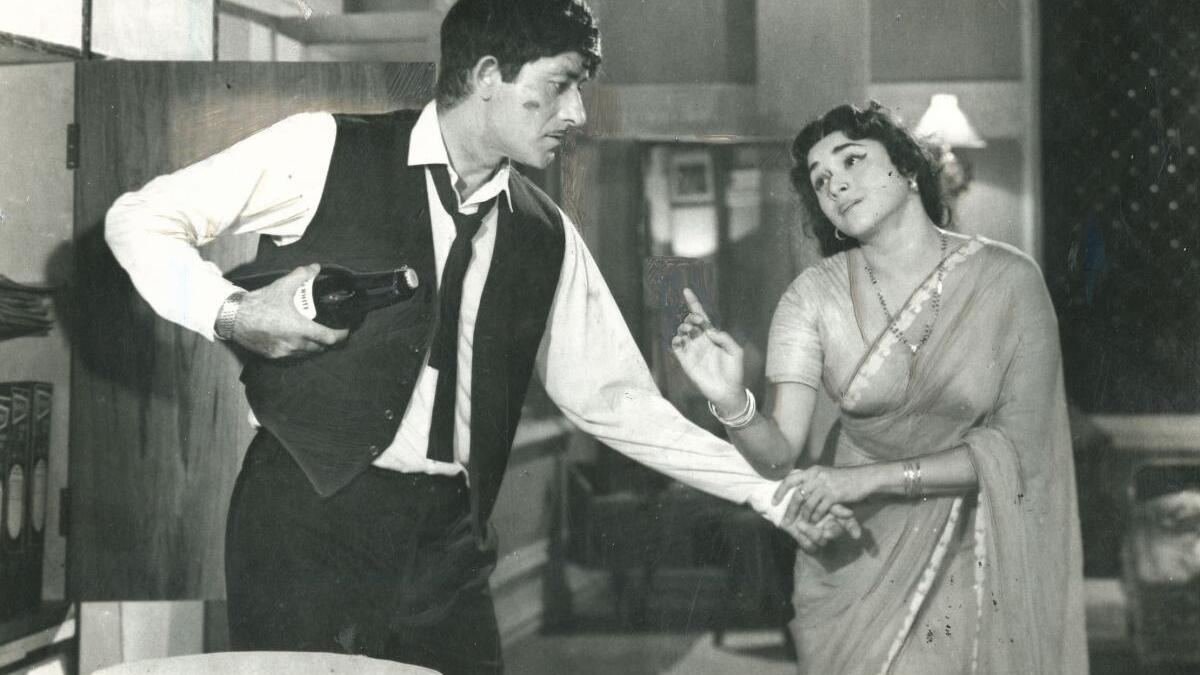
The centenary of Raaj Kumar offers an occasion to reflect on the career, distinct style, and personal life of one of Hindi cinema's most singular stars. Known for his commanding screen presence, unique dialogue delivery, and emotional intensity, Raaj Kumar carved out a distinct niche in the film industry, leaving behind a legacy defined by both his professional brilliance and his personal idiosyncrasies.
Early Life and the Bond with Chetan Anand
Before embarking on his acting career, Raaj Kumar served as a police inspector. During this period, he was convicted of murder. Film director Chetan Anand stepped in to assist him by appointing a lawyer to defend him. Raaj Kumar remained deeply grateful for this assistance throughout his life, maintaining a cordial relationship with Anand long before achieving stardom.
This loyalty was evident decades later. In May 1994, at a villa in Andheri West, Mumbai, Anand was directing the muhurat shot for a film starring Mithun Chakraborty and Neena Gupta. The event was attended by prominent figures, including poet Kaifi Azmi. Raaj Kumar made a grand entry and respectfully greeted Azmi. Freelance photographer Pradip Bandekar noted that Chakraborty did not show the same courtesy to the poet.
Displeased with the film's story and cast, Raaj Kumar personally advised Anand after the shoot not to proceed with the project. Due to subsequent differences with the producer, Anand ultimately abandoned the film.
A Unique Screen Presence and Acting Style
Assessments of Raaj Kumar's acting abilities show he was distinct from his contemporaries. He did not possess the classical style of Ashok Kumar or Balraj Sahni, the versatility of Dilip Kumar, or the poetic nuance of actor-director Guru Dutt. His early attempts as a conventional romantic hero, such as in the 1958 film Panchayat, were unsuccessful.
However, when guided by sensitive directors and provided with strong dialogue, Raaj Kumar excelled. His performances in films like Mother India (1957), Ujala (1959), Dil Ek Mandir (1963), Kaajal (1965), and Pakeezah (1972) showcased his ability to overshadow co-stars through his majestic personality and rhetoric-oriented delivery.
Following an impressive cameo alongside Nargis in Mother India, Raaj Kumar established strong on-screen chemistry with leading actors of the era, including Meena Kumari, Mala Sinha, Nutan, and Sadhana. Mala Sinha later recalled their work together in films like Phool Bane Angare and Mere Huzoor, describing his performances as highly original and noting his ability to emote naturally without the use of glycerin.
Versatility and Professional Relationships
Raaj Kumar's artistic range extended beyond dramatic roles. Actor and Lok Sabha Member Hema Malini recalled that he was strongly opposed to larger-than-life characters and felt many films lacked logical consistency. However, during the filming of Sharara, he learned to waltz, performing alongside her for the song "Shabnam, Sharara."
He also performed a western dance number with Helen for the song "Chodo Dil Ka Lena Dena" in the 1971 film Maryada. The "Ah Ha Ha" portion of the song, sung by Mohammed Rafi, was included at Raaj Kumar's personal request. His standing in the industry was such that Rajesh Khanna, then a major superstar, agreed to play the second lead in Maryada out of respect for him.
Among his most notable performances was in the 1963 film Godaan, where he delivered a highly regarded death scene in a single take. Conversely, the actor remained modest about some of his work, admitting that co-star Priya Rajvansh outperformed him in the 1970 film Heer Ranjha.
Later Career and Personal Life
Beyond acting, Raaj Kumar was an avid reader who frequently recited the works of Rabindranath Tagore, Omar Khayyam, and Percy Bysshe Shelley. He held unconventional views on Hindi cinema, often stating that Indian comedies were essentially tragedies, with the rare exceptions of Professor (1962) and Padosan (1981).
While he showed flashes of his trademark brilliance in later films like Bulundi (1981), Police Public (1990), and Saudagar (1991), much of his work in the 1980s and 1990s became formulaic. Directors increasingly focused on his established style, forcing him to play to the gallery. The sharpness seen in classics like Waqt (1965), Hamraaz (1967), and Pakeezah was largely absent. Although Raaj Kumar recognized this decline, he found himself unable to alter the industry's direction.
Director and producer B.R. Chopra once remarked that Raaj Kumar's talents were ideally suited for European and Hollywood cinema. In his personal life, his late wife Gayatri, who was Jewish, described him as a complex individual who nevertheless cared deeply and uninhibitedly for his family. He maintained close friendships with industry peers Rajendra Kumar, Shammi Kapoor, and Sunil Dutt, securing his place as one of the most memorable figures in Indian cinema.