
Australia Faces Environmental and Community Concerns Amid AI Data Centre Boom

Australia has rapidly emerged as a key global destination for data centres, driven by an influx of investment and the global expansion of artificial intelligence (AI). The country currently hosts 162 data centres, with plans for an additional 90 facilities and more than A$155 billion (£80 billion) in projected investment. Earlier this year, OpenAI Chief Executive Officer Sam Altman suggested that Australia possesses the potential to become a global capital for data centres.
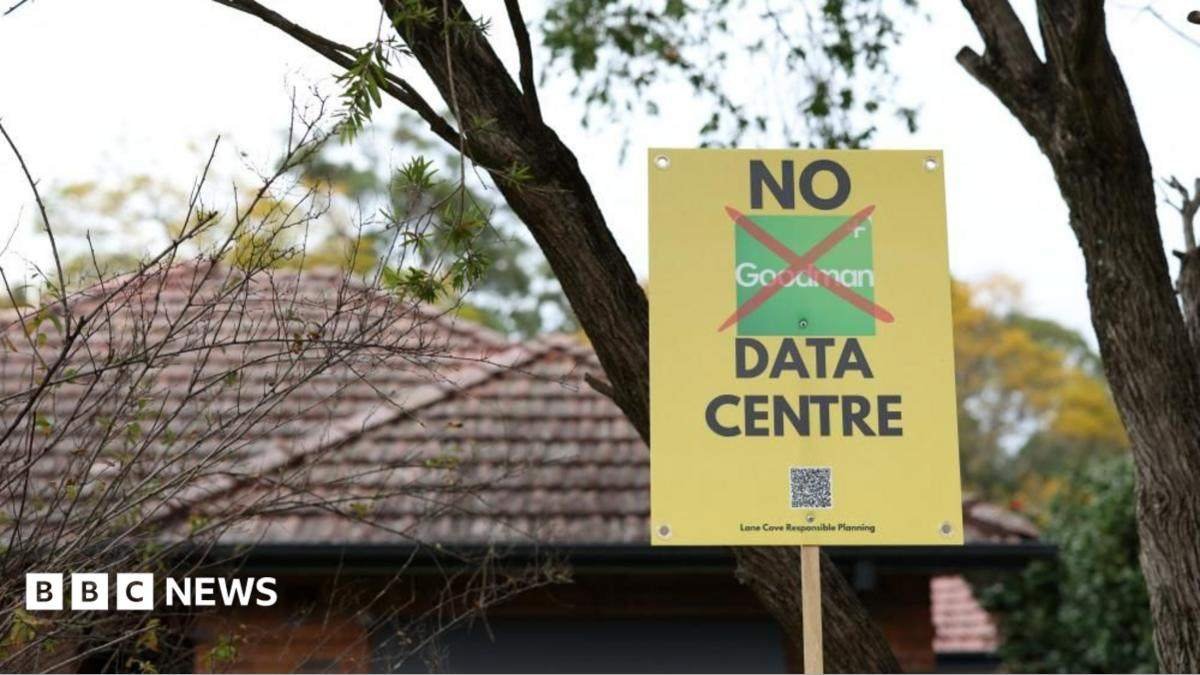
However, the rapid expansion has triggered significant concerns among local residents, environmental experts, and community leaders. In residential areas, the physical presence and operational noise of these facilities have become immediate issues. In Lane Cove, a suburb on Sydney’s lower north-shore, residents live just 350 metres from an active data centre, with four more planned for a local industrial park. Residents report hearing a constant humming noise, which some compare to a high-pitched whine or a jet plane preparing for takeoff.
The Push for Digital Infrastructure
Data centres have long been a cornerstone of the digital economy, handling data storage and processing for emails, online banking, and cloud services. The launch of ChatGPT in 2022 and the subsequent surge in generative AI have accelerated the demand for high-capacity facilities. Proponents of the expansion argue that local infrastructure is essential to minimize latency—the time required for data to travel—which is critical for services such as air traffic control, robotic surgery, and streaming platforms.
According to Belinda Dennett, CEO of Data Centres Australia, the country has approximately 13.6 million monthly AI users, ranking sixth globally in active usage. Dennett argues that establishing local data centres lowers the barrier for domestic AI development. She notes that Australia offers land availability, political stability, membership in the Five Eyes security alliance, a skilled workforce, and significant renewable energy potential. Economists and business experts have also noted that the recent investment boom helped Australia avoid an economic recession over the past two years.
Jon Whittle, a leading voice in AI and former director of the digital research centre at the Commonwealth Scientific and Industrial Research Organisation (CSIRO), stated that the government must engage with the sector. While acknowledging serious considerations, Whittle argued that Australia needs to lean into the investment path to avoid simply importing foreign digital tools.
Strains on Energy and Water Resources
Despite the economic arguments, energy and environmental experts warn that Australia's utility grids may struggle to support the high resource demands of these facilities. The Australian Energy Market Operator projects that data centre energy demands nationwide could triple by 2030. The Climate Council, an independent non-profit advisory group, estimates that without substantial new renewable generation and storage, this demand could increase electricity prices in New South Wales (NSW) by 26% by 2035.
Because data centres require continuous, uninterrupted power, critics fear the boom could lead to prolonged reliance on fossil fuels. A recent report by Greenpeace Australia Pacific found that no analysed data centre operator had adequately demonstrated that their operations were driving renewable energy growth. Some operators are turning to fossil fuels directly; Cloud Carrier, an Australian-owned data group, plans to construct three gas-fired power stations to power its facilities 90 minutes outside Sydney. Additionally, facilities like the one in Lane Cove rely on backup diesel generators during grid outages.
Water consumption is another critical concern. Data centres can use up to 40 million litres of water daily to cool their servers, an amount equivalent to the usage of 80,000 households. Sydney Water, the state's largest water utility, warned that data centres could consume up to 25% of Sydney's drinking water by 2035. This comes at a time when the Water Services Association of Australia (WSAA) indicates Sydney must expand its drinking water supply over the next decade to accommodate population growth, potentially forcing households to bear the higher costs of desalinated water.
Government Policy and Local Disruptions
In response to growing pressure, Prime Minister Anthony Albanese announced in July a new legal framework that will require large-scale data centres to underwrite their power supplies, limit water consumption, and fund necessary water infrastructure. However, this legislation, scheduled for introduction in 2027, will only apply to new proposals, exempting existing facilities and those currently under construction.
This exemption has led environmental and community groups to call for a complete pause on data centre developments. In Lane Cove, Deputy Mayor Rochelle Flood questioned whether the rapid rollout aligns with the country's net-zero and water storage targets. Local residents at a recent town hall organized by Greenpeace expressed frustration over a lack of community consultation, noting that one proposed facility is located 16 metres from a home and 160 metres from a primary school.
The transition is also impacting local employment. In Lane Cove, Flood estimated that if the four proposed data centres are approved, half of the existing businesses in the local industrial park will be forced to relocate. Felipe Tanaka, a local business manager, stated that thousands of jobs could be displaced. While a data centre can employ over 1,000 workers during its construction phase, that number typically falls to around 100 once the facility becomes operational.
NSW Treasurer Daniel Mookhey defended the developments, arguing that private investment in data centres helps fund the transition from coal-fired power to renewable energy, reducing the financial burden on households. Mookhey added that the primary employment benefits of data centres come from the skilled operations of major tech tenants, such as Microsoft and Amazon, rather than direct facility management. However, critics like Flood remain skeptical, questioning the societal value of dedicating critical resources to power generative AI applications.