Youth Protests Led by CJP Highlight Shift Toward Independent Digital Journalism in India

Recent youth-led protests at Jantar Mantar, organized under the banner of the Cockroach Janata Party (CJP), have highlighted a significant shift in the landscape of Indian journalism. The demonstrations have exposed a credibility crisis within mainstream television news while accelerating the rise of independent, digital-first reporting as a primary source of public information and democratic accountability.
During the protests, young reporters working independently or in small teams across various digital platforms took the lead in covering the events on the ground. Armed with basic recording equipment, these digital-first journalists actively questioned authorities and law enforcement, stepping into a reporting space that observers note has been increasingly vacated by legacy media outlets.
Protests and Mobilization at Jantar Mantar
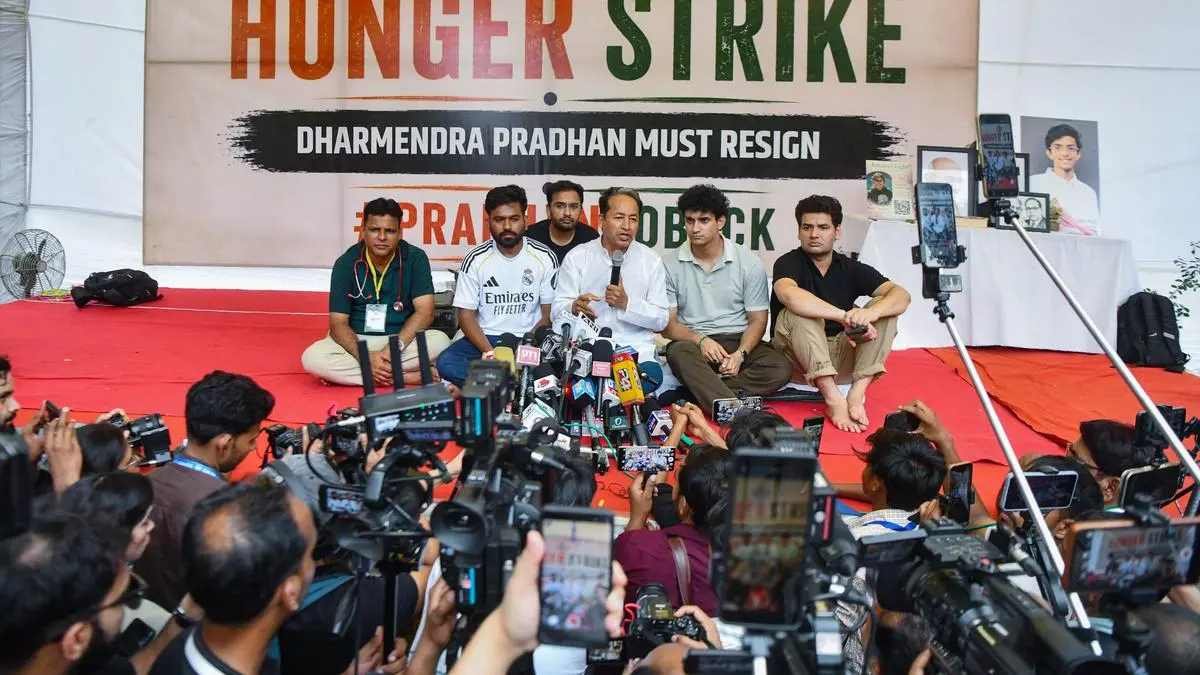
The demonstrations featured prominent figures, including environmentalist Sonam Wangchuk, who addressed the media on the second day of his hunger strike during a CJP protest. CJP founder Abhijeet Dipke and other organizers were also present at Jantar Mantar during the demonstrations. In another instance, independent content creator Samdish Bhatia conducted an on-the-ground interview with Dipke at the protest site.
The gathering demonstrated a high level of organization among the participating youth. Protesters marched in an orderly manner, fanned one another to cope with the heat, and students actively cleaned the protest site by picking up litter. Despite the scale of the organic turnout, mainstream television coverage remained highly limited.
Only three senior television journalists were observed reporting directly from Jantar Mantar, while the majority of prime-time anchors stayed away from the ground. Observers noted that traditional media houses initially blanked out the movement, a strategy that ultimately failed to prevent information from spreading through alternative digital channels.
The Boycott of Mainstream Channels and Rise of Digital Media
In response to years of perceived bias, selective reporting, and the amplification of unverified information by major networks, the protesters initiated a boycott of most mainstream news channels. Posters displayed at Jantar Mantar reflected deep public anger, with some labeling prominent television journalists as highly damaging to the country's democratic fabric.
While physical heckling has been widely opposed, media analysts suggest the public anger directed at these channels stems from a long-standing dissatisfaction with editors who have ignored critical governance issues and failed to support targeted colleagues within their own industry.
Instead of relying on traditional broadcasts, students and young demonstrators flooded social media platforms with speeches by CJP leaders, footage of Sonam Wangchuk’s fast, videos of police lathi charges, and images of defiance from across the country, such as a young woman standing in front of a police bus in Mumbai. This decentralized flow of information effectively bypassed traditional gatekeepers.
Digital Reach and Cross-Border Engagement
The digital reach of the protests quickly expanded beyond domestic borders. Reels, videos, and interviews captured audiences in neighboring Pakistan, leading to an exchange of letters between young people on both sides of the border, reminiscent of historical peace initiatives but updated for the digital age.
The rapid spread of online content also prompted a response from the highest levels of government. Prime Minister Narendra Modi posted two Instagram reels on consecutive nights. However, the digital-native audience remained largely unimpressed, responding with technical critiques of the video framing and counteracting political messaging with satirical memes.
This demographic, characterized by its digital literacy and indifference to traditional power structures, has used humor and satire as tools for democratic criticism, rendering conventional television monologues increasingly ineffective among younger citizens.
Demographic Shifts and Demands for Reform
The protests addressed several critical national issues, including the tragic suicides of 21 students following the NEET exam paper leak, which subsequently led to the resignation of Union Education Minister Dharmendra Pradhan. The demonstrators also raised their voices against the marginalization of minority communities and called for systemic reforms in education and employment.
The active participation of youth in these protests underscores a significant demographic reality in India, where approximately 40 percent of the population is under the age of 25. Many of the young participants attended the protests without the knowledge of their older family members, highlighting a generational divide in media consumption and political priorities.
While older generations continue to form the core audience for evening television news, the younger demographic is increasingly turning to independent digital platforms for representation and reporting, signaling a permanent shift in how news is consumed and produced in the country.