Benchmark Partners Outline Investment Strategy, Fund Growth, and AI Market Dynamics
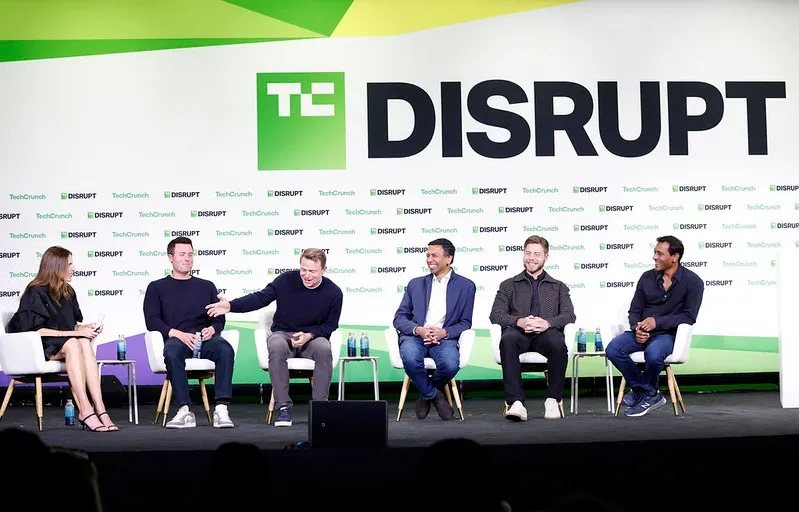
Speaking onstage at TechCrunch Disrupt, all five general partners of venture capital firm Benchmark detailed how the storied Silicon Valley firm is navigating an aggressive market environment while maintaining its core investment philosophy. The panel featured longtime partners Peter Fenton, Eric Vishria, and Chethan Puttagunta, alongside recent additions Ev Randall, who joined late last year, and Jack Altman, who joined in February.
Despite recent changes in personnel and fund scale, the partners emphasized that Benchmark remains committed to a low-volume, concentrated investment style. Three years ago, a similar panel included four partners, three of whom have since departed. Meanwhile, the firm announced $2 billion in capital commitments across two funds this summer. The move marks only the second time in Benchmark's 31-year history that it has departed from raising smaller, early-stage funds.
Fund Expansion and Portfolio Concentration
Addressing the firm's evolving fund structure, Fenton explained that Benchmark held its core early-stage fund at $500 million for two decades before expanding it to align with broader economic inflation. He described early-stage investing as a 10-to-15-year hands-on commitment with founders that inherently cannot scale. In addition to the core fund, Benchmark launched a $1.25 billion growth fund to capture opportunities beyond its traditional early-stage focus.
Regarding the deployment of the growth vehicle, Fenton noted that the partnership aims for a concentrated portfolio. Citing research from J.P. Morgan on portfolio dynamics, he stated that if the fund is successful, one or two investments will ultimately generate 90% of the returns. Consequently, Fenton expects the growth fund to make between four and eight total investments.
Preserving a Small Partnership Dynamic
The partners highlighted the advantages of maintaining a small, five-person equal partnership. Randall, who previously worked at Founders Fund, Bond, and Kleiner Perkins, noted that small partnerships eliminate Byzantine corporate structures and allow for higher fidelity in decision-making. Altman, who previously operated as an individual investor and raised a $275 million fund for his own firm, echoed the value of learning alongside a small, dedicated team.
Benchmark's weekly routine reflects this lack of rigid bureaucracy. The firm's Monday partner meetings continue to operate without a formal agenda. Vishria explained that because the team is small, ongoing discussions about emerging technology and portfolio company updates do not require heavy systematization or complex voting procedures. Puttagunta added that omitting an agenda leaves room to react quickly when portfolio founders need immediate help with hiring or partnerships.
Navigating Market Pace, Competition, and Early Investments
Despite rapid deal-making across the venture industry, Benchmark maintains its historical pacing of two to three new investments per partner each year. Puttagunta stated that the firm accepts it will not back every successful company, focusing instead on identifying and amplifying specific founder strengths regardless of capital requirements or company location.
Addressing the topic of competitive conflicts in the AI era, Vishria acknowledged that companies are evolving faster and expanding into adjacent product areas as software development costs decline. While Benchmark maintains strict confidentiality and seeks to avoid direct portfolio conflicts, Vishria noted that natural overlaps occur as companies adapt. On individual investment experience, Altman shared that his early bets for Benchmark spanned hardware chips, robotics, and infrastructure, noting that the partnership's joint dynamic was critical to winning those deals.
Public Market Volatility and the Role of San Francisco
Reflecting on Benchmark's early-stage investment in AI chipmaker Cerebras in 2016, Vishria and Fenton emphasized the importance of backing unorthodox founder theses. Discussing Cerebras's public market performance—which saw its stock price swing between $185 and $350 after raising $6 billion in its IPO—Vishria observed that extreme price swings are standard for high-growth tech equities. He also noted that direct listings are unlikely for current AI companies due to their massive capital requirements.
Addressing wider economic concerns, Randall argued that fears of an AI market downturn are often amplified by online echo chambers rather than fundamentals. He cited public reactions to Character.AI's Chapter 11 filing as misinformed, noting the company's core team and IP were acquired by Google a year and a half prior for $2.3 billion. Randall pointed to strong underlying customer demand and revenue generation at major AI firms like OpenAI and Anthropic.
Finally, the partners affirmed their strong geographical bias toward San Francisco. Fenton pointed out that historically, over 90% of venture capital returns have originated from companies founded in the region due to its dense network of talent and executives. Randall added that non-local founders increasingly spend significant time or open offices in San Francisco to stay competitive in the AI sector.