
Villagers in Raigad Protest Against Proposed Third Mumbai Project

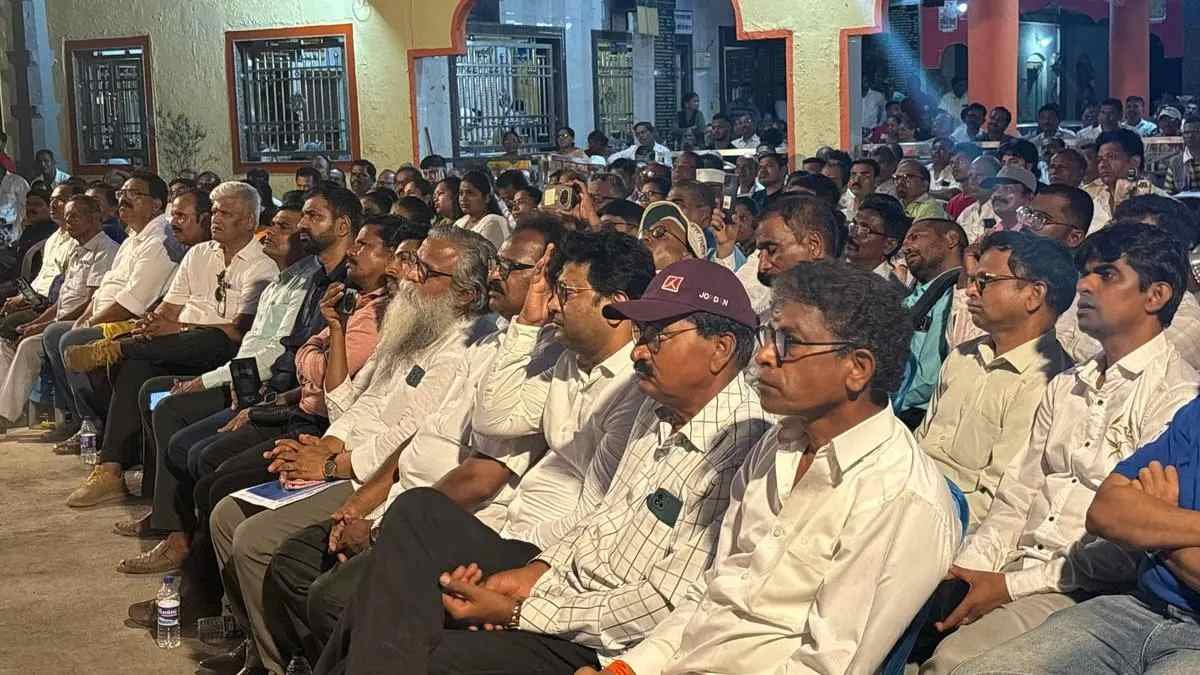
Villagers from the Uran, Pen, and Panvel talukas of Maharashtra's Raigad district have launched protests against the proposed Karnala Sai Chirner (KSC) New Town project, commonly referred to as Third Mumbai. On June 7, 2026, residents gathered at Chirner village to voice their opposition to the state-led expansion, which seeks to acquire land across 124 villages.
The location of the protest carries historical significance. In September 1930, Chirner was the site of the Jungle Satyagraha, a civil disobedience movement against British forest laws where colonial police killed eight villagers. Dr. B.R. Ambedkar later represented the villagers in court. Nearly a century later, local residents are once again organizing against government land acquisition plans.
The conflict began escalating after the Mumbai Metropolitan Region Development Authority (MMRDA) issued a notification in October 2024. The notification appointed the New Town Development Authority (NTDA) as the special planning authority for the 323-square-kilometer project. The proposed development area spans 29 villages in Uran, seven in Panvel, and 88 in Pen.
The Vision for KSC New Town
The Maharashtra government has positioned the KSC New Town as a major urban hub to help decongest Mumbai. The project site is located within a 20-kilometer radius of three major infrastructure projects: the Atal Setu (Mumbai Trans Harbour Link) is 14 kilometers away, the upcoming Navi Mumbai airport is 12 kilometers away, and the Jawaharlal Nehru Port Trust is 16 kilometers away.
At the World Economic Forum in Davos, Chief Minister Devendra Fadnavis pitched the project to global investors, comparing its potential scale to Singapore or Dubai. He described it as an urban agglomeration designed for data centres and new-technology growth engines. Following these announcements, the MMRDA signed a memorandum of understanding with Singapore-based urban planning consultancy Surbana Jurong, an appointment approved by the state cabinet in June.
In July 2026, the cabinet approved a land acquisition and distribution policy for the project area. However, local landowners have strongly rejected the plans. On Independence Day, residents from all 124 affected villages gathered outside the Konkan Bhavan commissioner's office in Navi Mumbai to protest. Sudhakar Patil, head of the villagers' committee, stated that the government ignored 25,000 formal objections submitted after the initial urban development notification on March 16, 2026.
Compensation and Land Value Discrepancies
Raigad is one of Maharashtra's primary rice-producing districts, characterized by fertile paddy fields situated between the Sahyadri hills and the Arabian Sea. Farmers are highly reluctant to part with their agricultural land. The government has offered compensation options under the 2013 Land Acquisition Act, alongside an option for landowners to receive 22.5 percent of the developed land back, but local residents have declined these terms.
The primary dispute lies in the valuation of the land. Under the government's ready-reckoner rate, compensation is calculated at Rs. 1 lakh per guntha (where 40 gunthas equal one acre). However, local residents point out that the actual market rate across these villages ranges from Rs. 5 lakh to Rs. 7 lakh per guntha, rising to Rs. 15 lakh per guntha near Panvel and along the Mumbai-Goa highway.
Local representatives argue that the compensation formulas do not match current economic realities. Many landowners currently generate steady annual income by renting their properties for commercial uses like warehouses or hotels. Villagers also point to the historical precedent of Navi Mumbai's development in the 1970s, where similar land-return promises led to decades of unresolved litigation between farmers and the City and Industrial Development Corporation (CIDCO).
Environmental and Cultural Concerns
Beyond financial compensation, the project faces scrutiny over its environmental impact. Raigad district has experienced two major landslides in the past five years. Additionally, Karnala village is situated near the Karnala Bird Sanctuary, an area already affected by rapid urban development. The proposed city is also slated to host large-scale data centres, including a proposed Rs. 92,000 crore "Innovation City" by the Tata group, which environmentalists warn will demand massive volumes of water.
Political and cultural objections have also emerged. Activists note that the state is simultaneously pushing massive infrastructure projects in neighboring Thane and Palghar districts, such as the Vadhavan port and the Alibaug-Virar corridor, collectively referred to as Fourth Mumbai. Some Marathi language organizations and intellectuals express concern that these developments economically and culturally distance the Mumbai metropolitan region from the rest of Maharashtra.
This is not the first time Chirner and surrounding areas have resisted large-scale development. In 2005-06, the state and central governments proposed the 35,000-acre Maha Mumbai Special Economic Zone (Raigad SEZ) led by Reliance Industries. Following five years of sustained protests by local farmers, the government eventually scrapped the SEZ project. Community leaders indicate they plan to maintain a similar unified front against the current KSC New Town proposals.