Union Education Minister Dharmendra Pradhan Resigns Following Nationwide Youth Protests
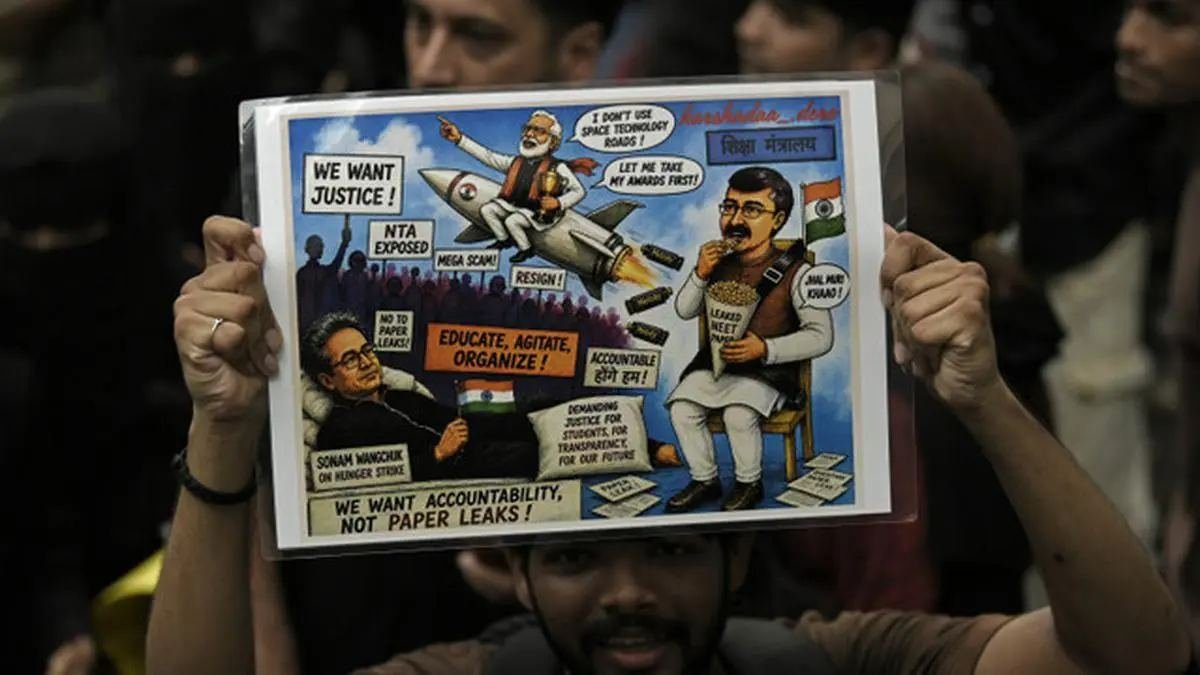
On July 25, 2026, Union Education Minister Dharmendra Pradhan announced his resignation, meeting a key demand of protesters who had gathered under the banner of the Cockroach Janata Party (CJP) at Jantar Mantar in New Delhi for 36 days. The development represents the third major climbdown by the Narendra Modi government in the face of street protests since coming to power in 2014.
In his resignation letter, Pradhan stated that stepping down was "not a matter of personal prestige" and that he was doing so, "saddened" by developments over the preceding ten days, to deny "anti-national forces" room to exploit the situation. Following the announcement, CJP representatives held a joint press conference with Union Ministers Jitendra Singh and J.P. Nadda, declaring an end to the agitation at Jantar Mantar and stating that all their demands had been met.
Escalation of Nationwide Demonstrations
The resignation followed a rapid escalation of anger across India, with demonstrations spreading from the roads leading to Parliament in New Delhi and the financial hub of Mumbai to Chennai, Bihar, and other regions. The CJP had called for nationwide protests in every district on July 24, prompting swift action from the government. Prior to the resignation, Prime Minister Modi announced a fast-track court and a stricter law against paper leaks, alongside a reshuffle of officials, including the Education Secretary.
The protests intensified after a police lathi-charge during the Sansad Chalo March on July 20. Activist Sonam Wangchuk, a prominent figure in the agitation who had been removed from the Jantar Mantar protest site on July 18, ended a 26-day hunger strike on July 23 after losing 11 kg, stating, "I am still alive." Despite his fast ending, the street protests continued to swell, leading the government to conclude that an unresolved standoff could erode its support across voter demographics.
Political Reactions and Regional Impact
Manoj Kumar Jha, a Rajya Sabha MP from the Rashtriya Janata Dal (RJD), criticized the government's initial response to the student-led movement, describing it as "an unfortunate combination of casualness and callousness." Jha stated that the government initially dismissed the movement as politically orchestrated and amplified conspiracy theories through sections of the media. He noted that the protests evolved from a localized issue into a broader expression of frustration over unemployment and the perceived erosion of fairness in public institutions.
The impact of the protests was felt heavily in Bihar, where students clashed with police and protested against the July 20 lathi-charge in Delhi. On July 22, Bihar BJP MLAs Vinay Bihari and Rohit Pandey were attacked during demonstrations in Patna. The issue triggered heated debates in the Bihar State Assembly between the ruling National Democratic Alliance (NDA) and the opposition INDIA bloc on July 23 and 24, leading the state government to sound a high alert ahead of a bandh call on July 25 by Left-wing student bodies.
Rajaram Singh, Communist Party of India (Marxist–Leninist) Liberation Lok Sabha MP from Karakat in Bihar, highlighted that the paper leak incidents fueled deep anxieties in a state already suffering from high unemployment and a lack of private industry, where students prepare for years to secure public jobs.
Context of Previous Government Climbdowns
This is not the first time the Modi administration has reversed its stance due to public pressure. The first major climbdown occurred in 2015 when the government withdrew six of nine proposed amendments to the 2013 Land Acquisition Act after months of nationwide protests, including a two-day agitation led by social activists Anna Hazare and Medha Patkar. The second occurred in November 2021, when the government repealed three controversial farm laws after a year of sustained protests by farmers, a move that came ahead of crucial assembly elections in Uttar Pradesh, Punjab, and Uttarakhand.
More recently, in 2024, the government suspended a plan to open lateral entry into the bureaucratic civil services following friction over reservation norms, which had been flagged by NDA ally Chirag Paswan of the Lok Janshakti Party. Additionally, the resignation of Union Minister M.J. Akbar in 2018 during the #MeToo movement marked the first time a Union Minister resigned under public pressure during this administration, while the resignation of Health Minister Harsh Vardhan in July 2021 was incorporated into a larger cabinet reshuffle.
Opposition Leaders Demand Accountability
Following Pradhan's resignation, Leader of the Opposition Rahul Gandhi described the move as a major step toward overhauling the country's education system and demanded accountability for the violence directed at students. Gandhi called the development "a warning from the students of India" against the government's current methods of governance.
Congress general secretary Priyanka Gandhi, speaking in Wayanad, Kerala, welcomed the resignation, stating that the government was forced to bend to the will of the people. She praised the students and young people for demonstrating the strength of non-violent protest despite facing police action, including pellet guns, tear gas, and lathi-charges.