
Two Dead and 14 Missing After Flash Floods Hit Grand Canyon

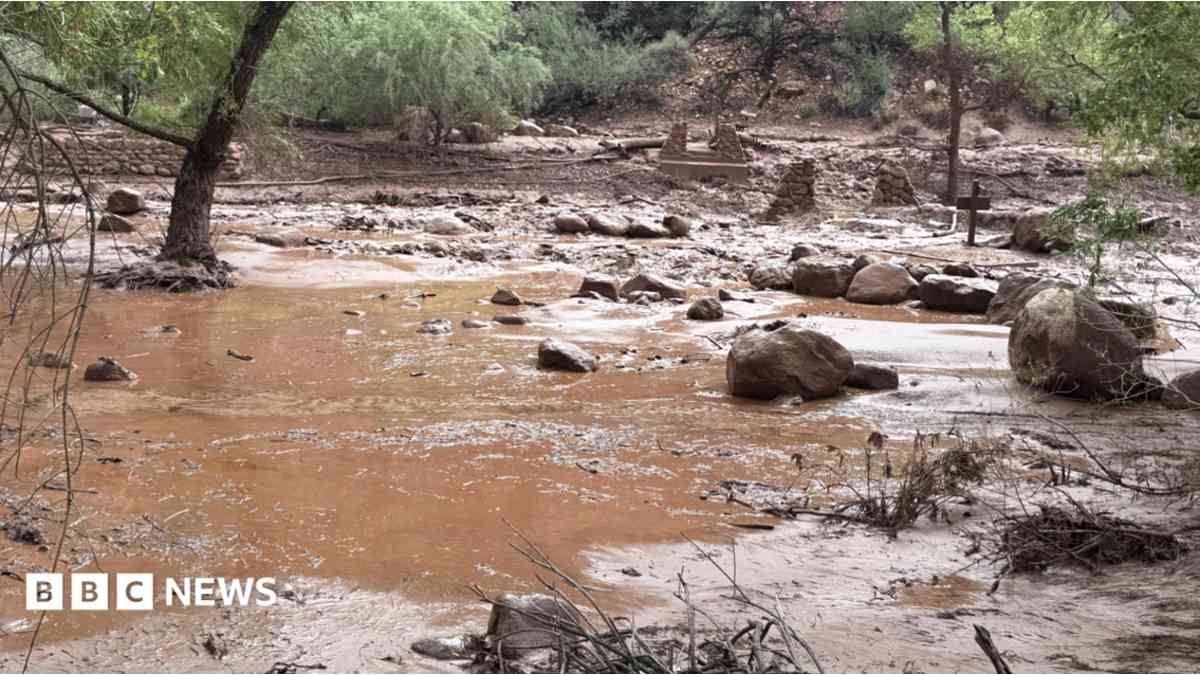
Two people have died and 14 others remain missing or unaccounted for after sudden flash flooding swept through parts of the Grand Canyon on Saturday afternoon. The National Park Service (NPS) reported that the flood hit the Bright Angel Canyon and Phantom Ranch areas, destroying footbridges and sending large boulders downstream.
Search and rescue operations are ongoing. On Sunday evening, rescue teams recovered the body of a 46-year-old man near Crystal Rapids along the Colorado River. According to park officials, 62 people have been successfully airlifted out of the affected areas since the flooding began.
Eyewitnesses Describe Sudden Torrent
Visitors and workers in the canyon described a rapid transition from clear weather to dangerous conditions. Nikki Baggs, 41, who was evacuated from the bottom of the canyon with two friends, recalled that the storm struck without warning. She and her friends had just arrived at a cabin in Phantom Ranch, a remote lodge at the canyon floor, when the water began to rise.
"It was a beautiful day and then people were screaming, running," Baggs said. She and her group sought higher ground at a picnic table before park rangers directed them to a higher ledge. They waited there for several hours before being evacuated by helicopter at approximately 21:30 local time (04:30 GMT). Baggs praised the quick response of the park rangers, describing the evacuation as a highly coordinated effort that helped them feel safe.
Joey Martin, who was working on a transcanyon pipeline project in the area, also witnessed the flood. He reported that dense, grey clouds rolled in, bringing rain so heavy that it completely obscured the canyon walls. Within 30 minutes, the nearby creek rose rapidly, turning into a torrent of mud and debris.
"From where we were standing, it looked to be about 15ft tall," Martin said, describing the wall of debris that ultimately destroyed a bridge connecting his work site to his living quarters. Martin and approximately 16 other workers coordinated with the NPS to gather nearby hikers and move to higher ground before being airlifted out.
Infrastructure Damage and Closures
The flooding has caused severe damage to the national park's infrastructure, leading to immediate closures. The NPS announced that overnight guest lodgings on the South Rim have been suspended from Monday until further notice. This suspension is due to extensive damage to the park's water infrastructure.
Preliminary assessments indicate that approximately 40% of the Transcanyon Waterline has been damaged or destroyed. This critical pipeline delivers water to park visitors and about 2,500 local residents. Additionally, several trails in the affected areas have been closed to the public.
The NPS has requested that anyone with information regarding hikers or backpackers who were in the inner canyon along the Bright Angel Creek corridor on Saturday contact authorities.
Monsoon Season and Weather Outlook
The severe weather is part of the North American monsoon season, which typically runs through the end of September. During this period, a shift in wind direction draws warm, moist air northward from the Gulf of California and the tropical Pacific, causing sudden storms over mountainous regions.
Meteorologists note that these localized storms are difficult to predict accurately and can strike with little warning. Because the ground in the region is generally very dry, heavy rainfall quickly triggers dangerous flash floods and debris flows. The storms also bring frequent lightning, which increases the risk of wildfires.
The National Weather Service has issued flood watches covering significant portions of Arizona, New Mexico, Utah, and Colorado. The NPS warned that further thunderstorms and heavy rain forecast for Monday could cause additional flash flooding, rockfalls, and hazardous trail conditions. The Grand Canyon attracts approximately five million visitors annually, with the Bright Angel trail being its most popular hiking route.