Tribal Artists in India Face Loss of Rights, Little Credit, and Less Pay in the Mainstream Music Industry

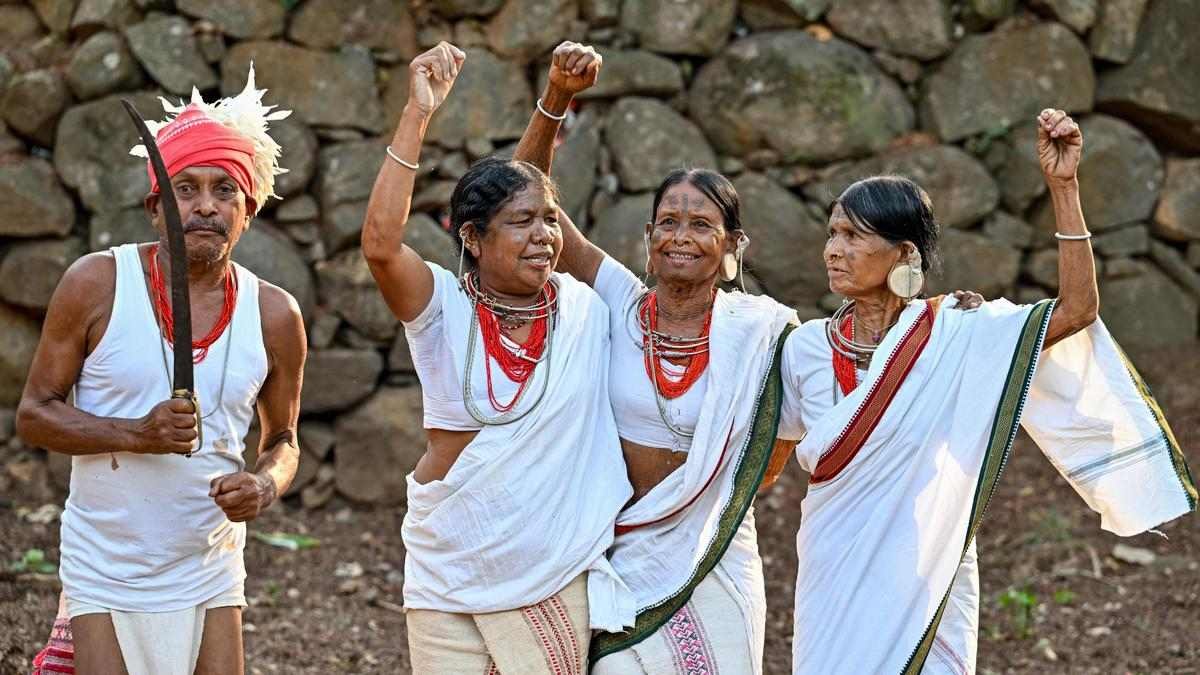
Members of the Lanjia Saora, a Particularly Vulnerable Tribal Group, in Rayagada district of Odisha, are among those affected by the issue. K.R. Deepak The Hindu
Inadequate credit and compensation, unfair contracts, and lost royalties often leave tribal creators and communities shortchanged.
Historical Treatment of Tribal Knowledge
Tribal knowledge, from art to music, has traditionally been treated in India as a collective inheritance, with little recognition of individual creators, says Jitendra Kumar Meena, assistant professor at Delhi University's Department of History.
During the colonial period, this knowledge was documented and claimed by institutions, a practice that continues to this day. The government of India calls it 'indigenous knowledge', without acknowledging its tribal origins.
'We don't naturally deliver someone's due share to them, because our society has not treated people with that kind of justice; it has never treated everyone equally,' says Meena, who is also the national spokesperson of the Bharat Adivasi Party.
Legal Framework and Copyright Protection
India's legal framework allows for the protection of original work, but not for traditional knowledge, says Xerxes Ranina, author of Who Owns What?: The Definitive Legal Guide for Musicians, Writers, Film-Makers and Content Creators (2026).
Copyright of a musical work generally lasts for the creator's lifetime plus 60 years after their death. Traditional songs or compositions whose copyright term has expired are generally in the public domain and can be used or recreated freely.
'Let's say the style of singing or the style of the music or the instruments, that can be old. So anyway there's no copyright on that. But if these singers come up with their own composition, then that can be protected. Then no one is allowed to use their original composition,' adds Ranina.
Practices in the Music Industry
Practices in the music industry often lead to tribal artists being left out of the recognition and rewards for their work. Production houses often convince creators to sign away royalties and moral rights for a bigger upfront payment, says Siddharth Chandrashekhar, a Mumbai-based lawyer who specialises in Intellectual Property Rights.
'Legally, creators are owed royalties. But production houses covertly insert royalty write-offs from creators within the contract. Realistically, no one wants to pick a fight with the big players because, on one hand, there's a lot more money on the table and, on the other hand, there's the risk of getting blacklisted and burning bridges,' he says.
Initiatives to Address the Issue
Initiatives such as the Indian Performing Right Society Limited (IPRS) 'Living Roots Originals' songwriting and creator rights camp in Kolkata aim to address the challenges faced by artists from tribal communities and provide guidance.
At the camp, the rights to the songs were assigned to the artists and registered in their names. Under the programme's format, 50% of the royalties will go to the creators, while the remaining 50% will go to Living Roots Originals, to be channelled back into the community for artist development and the preservation of its music.
Challenges and the Way Forward
The problem is not limited to films. Nearly 2,000 km away in Jharkhand, Ho community artist Shyam Bobonga has had a similar experience in the digital space. The 41-year-old, who has been involved with music for nearly 25 years, says he and other musicians have worked with multiple YouTube productions over the years but have never signed an agreement with any of their collaborators.
While individual artists are stripped of ownership when their original works are used by others, the community's oral traditions, too, suffer when they go mainstream. Bindhu Irulam, a Kerala-based poet, lyricist, and researcher from the Kattunayakan community, says that members of her tribe, including herself, are often approached by people claiming to be from the film industry and by professional folk singers seeking traditional oral songs (vaamozhi).
She says the work that later appears in the public domain is sometimes altered, while the community itself is not credited or fairly compensated.
The way forward may lie in learning from countries that have sought to balance the preservation of tribal identity with the need to bring it to a wider audience. Kenya's Protection of Traditional Knowledge and Cultural Expressions Act, 2016, for instance, recognises communities as the owners of their oral traditions, music, dances, and folklore.
It requires outside users to obtain the community's prior informed consent and agree to fair benefit-sharing, with county governments playing a key role in its implementation.