The Enduring Legacy of Gulzar: Seven Decades of Poetic and Cinematic Excellence

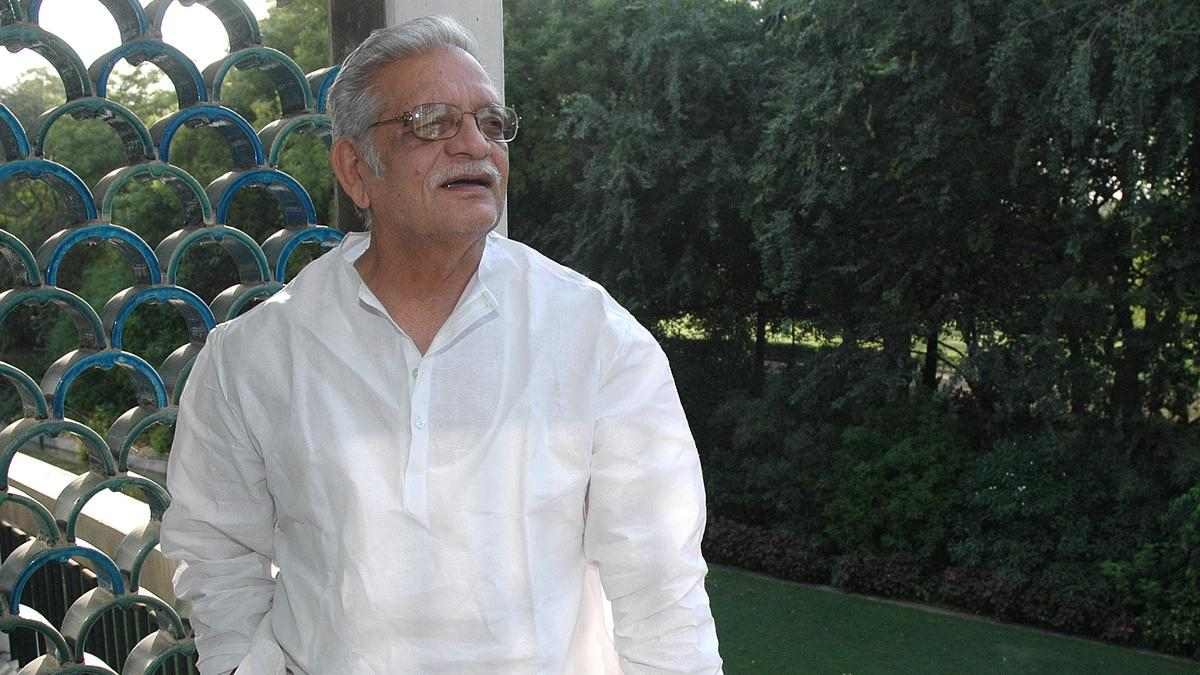
On August 18, 2026, the legendary Indian poet, lyricist, and filmmaker Gulzar celebrated his 92nd birthday. Over a career spanning more than seven decades, Gulzar has remained at the summit of multiple public crafts, continuously reinventing his creative vocabulary. From Urdu poetry and film songwriting to screenwriting, direction, and translation, his extensive body of work has earned him prestigious national and international accolades, including the Dadasaheb Phalke Award, the Jnanpith Award, an Oscar, and a Grammy.
Gulzar entered the film songwriting industry during an era dominated by formidable masters such as Shailendra, Sahir Ludhianvi, Shakeel Badayuni, and Rajendra Krishan. He wrote his first film song, "Mora Gora Ang Laile," for Bimal Roy’s film Bandini. Set in Vaishnava verse, the song immediately established his unique niche among the titans of the industry.
A Singular Idiom in Indian Film Songwriting
Despite the rigid constraints of film songwriting—such as adhering to meter, rhyming, specific situations, and pre-composed tunes—Gulzar developed a highly distinctive and recognizable style. His lyrics are characterized by a blend of abstraction, symbolism, and vivid imagery. Examples of his diverse songwriting include the symbolic "Wo Yaar hai Jo Khushboo Ki Tarah" from Dil Se, the poetic "Do Nainon Mein Aansoo Bhare Hain" from Khushboo, and the politically charged "Haal Chaal Thik Thaak Hain" from Mere Apne.
His work also ranges from nature-inspired imagery in "Hawaaon Pe Likh Do" (Do Dooni Chaar) to the dark humor of "Goli Maar Bheje Mein" (Satya) and the arcane vocabulary of "Aab-o-dana dhoondhte hain" (Gharonda). While some critics have argued that such literary sophistication might be too complex for mainstream cinema, Gulzar’s songs have achieved massive popular appeal. His school prayer song "Humko Mann Ki Shakti Dena" from Guddi remains a staple in schools today, while high-energy tracks like "Beedi Jalaile" from Omkara and "Kajra Re" from Bunty Aur Babli have found universal acceptance. His lyrics have been seamlessly set to music by legendary composers such as R.D. Burman, A.R. Rahman, and Vishal Bharadwaj.
Progressive Themes and Bold Choices in Cinema
As a filmmaker and screenwriter, Gulzar has frequently adapted literary works, bringing sensitivity to language, character development, and subtext. His films have consistently championed progressive values and addressed complex social issues without becoming preachy. His directorial debut, Mere Apne, focused on the disillusionment and loneliness of disaffected youth. In Aandhi, a political thriller, he created a strong female lead who held significant agency, while the male lead played a supporting role.
Gulzar also tackled highly sensitive subjects that other directors of his era avoided. His film Mausam explored the complex emotional dynamics of a sex worker who develops a misplaced romantic affection for her biological father. Later, his film Maachis offered a bold, layered exploration of radicalization set against the backdrop of the Punjab insurgency, examining deep societal wounds without pointing fingers.
Literary Contributions and the Phenomenon of Misattribution
Beyond cinema, Gulzar is a highly prolific poet and prose writer. Having experienced the Partition first-hand, his stories on the subject carry deep emotional authority. He writes for children with the same sincerity he brings to adult literature. His poetry transitions between the formal structures of the Urdu ghazal and nazm and the freedom of free verse. He also created the "Triveni," a three-line poetic form similar to an Indian Haiku, where the third line introduces a twist that alters the emotional meaning of the first two lines.
Translation remains a significant part of his literary legacy. Gulzar has translated works by literary giants like Rabindranath Tagore and Kusumagraj, as well as contemporary poets from various Indian languages, compiled in his anthology A Poem a Day. His television work includes acclaimed serials such as Mirza Ghalib and Tehrir Munshi Premchand Ki, reflecting his deep respect for his literary predecessors.
In the digital age, Gulzar's immense popularity has led to a unique modern challenge. The internet is frequently flooded with mediocre poetry falsely attributed to his name to gain credibility. To combat this widespread digital misattribution, a dedicated community of admirers actively uses the hashtag #NotByGulzar to clarify which works are genuinely his, highlighting how deeply his poetic persona has permeated public consciousness.