Spanish Startup Liux Unveils Sustainable Microcar to Challenge Chinese Rivals

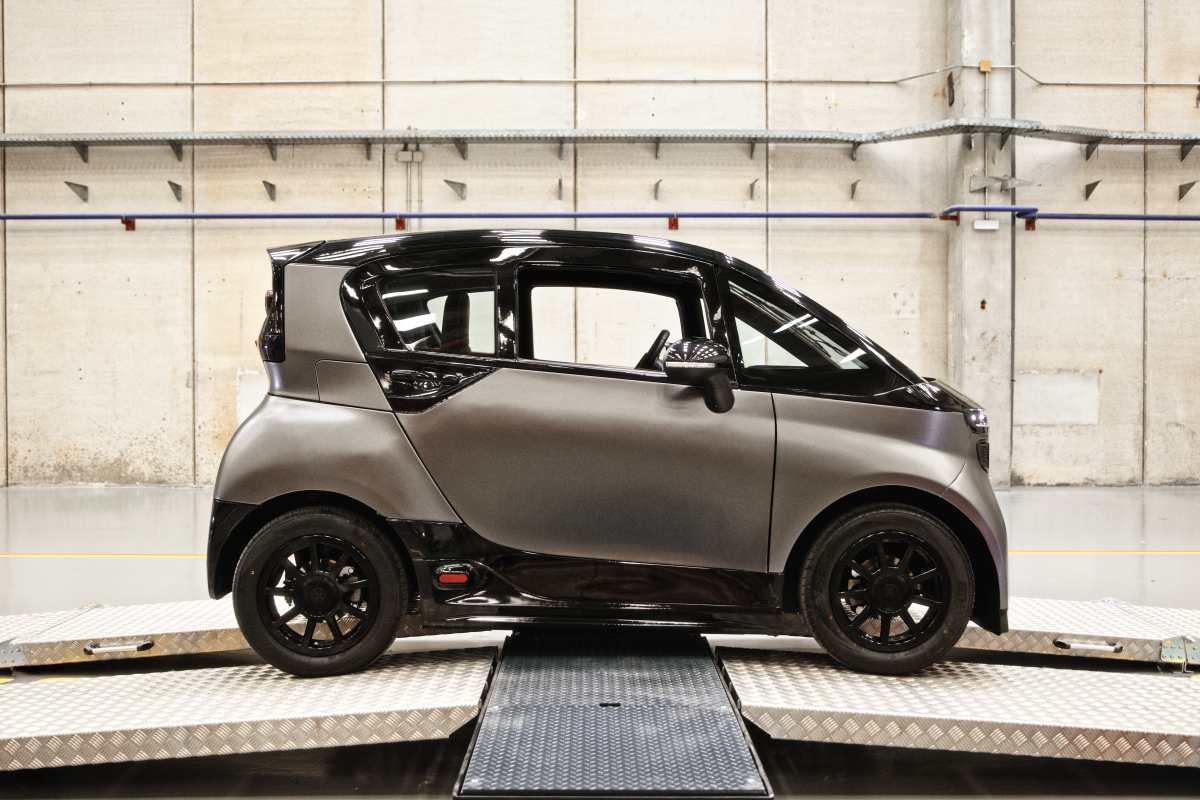
As European cities see a growing appetite for microcars, the market has increasingly transitioned from classic European designs to small Chinese electric vehicles (EVs). Even the iconic ultracompact brand Smart has shifted its manufacturing operations to China. In response to this crowded landscape, Spanish startup Liux is preparing to enter the market with its upcoming sustainable microcar, the Liux Big.
Despite its name, the Liux Big is small enough to park at a right angle to the curb. The company has secured Europe-wide homologation for the vehicle and expects to begin sales in the first half of next year. Liux has raised €16 million (approximately $18.5 million), which includes European funding, to bring the urban version of the vehicle to market through partnerships with car dealerships across Europe.
Focus on Circularity and Materials
Founded by Antonio Espinosa de los Monteros and David Sancho, Liux is prioritizing sustainability and circularity over a fully sovereign European supply chain, which the founders concluded is unattainable. While the vehicle's batteries are not manufactured in Europe, they are designed to be rechargeable at home, including with solar power. The car is also engineered for easy maintenance to prevent rapid obsolescence.
A key feature of the Liux Big is its fiber body, which is constructed from a novel linen-based biocomposite. This material is designed to allow for extraction and recycling at the end of its lifecycle. Espinosa, who previously co-founded the recycled bottle brand Auara, emphasized that real circularity depends on how a product is built to preserve the integrity of its components for a second life.
Pivot from SUV to Microcar
Prior to the Liux Big, the startup developed a fully electric five-seater prototype called the Animal, which was made almost entirely from recycled or plant-based materials. Following its reveal in 2022, the co-founders decided to pivot to a smaller vehicle, determining that a microcar would have a much higher probability of completing the homologation process.
Sancho, who specializes in engineering electric vehicles and previously developed the Bóreas hybrid supercar, leads the vehicle's engineering. The startup has now grown to 65 employees and is preparing to scale up production across three facilities in Spain. This includes a plant in Azuqueca de Henares, near Madrid, which utilizes Toyota's "lean management" principles to perform the final steps of assembly. Liux projects its production capacity could reach 20,000 cars annually by 2030.
Market Position and Specifications
While final pricing has not been confirmed, Liux stated the vehicle will cost below €18,000 (about $21,000) before potential EV subsidies. This positions the Liux Big at the higher end of the microcar price range. Currently, more than 7,500 people have joined a fee-free waiting list, with the primary demographic consisting of city dwellers aged 55 to 60 who are expected to use the vehicle as a household's second car.
The Liux Big is homologated under the European L7e category. To maximize space within these regulatory constraints, the vehicle features a 260-liter trunk. The startup has also focused on safety and handling, conducting tests for slaloming and braking to ensure a stable driving experience. The main model will be offered in 15 kWh and 20 kWh versions, with plans for a cargo variant and an off-road version in the future.