
Spain Investigates Suspected Shotgun Attack on Gibraltar Orca Toñi

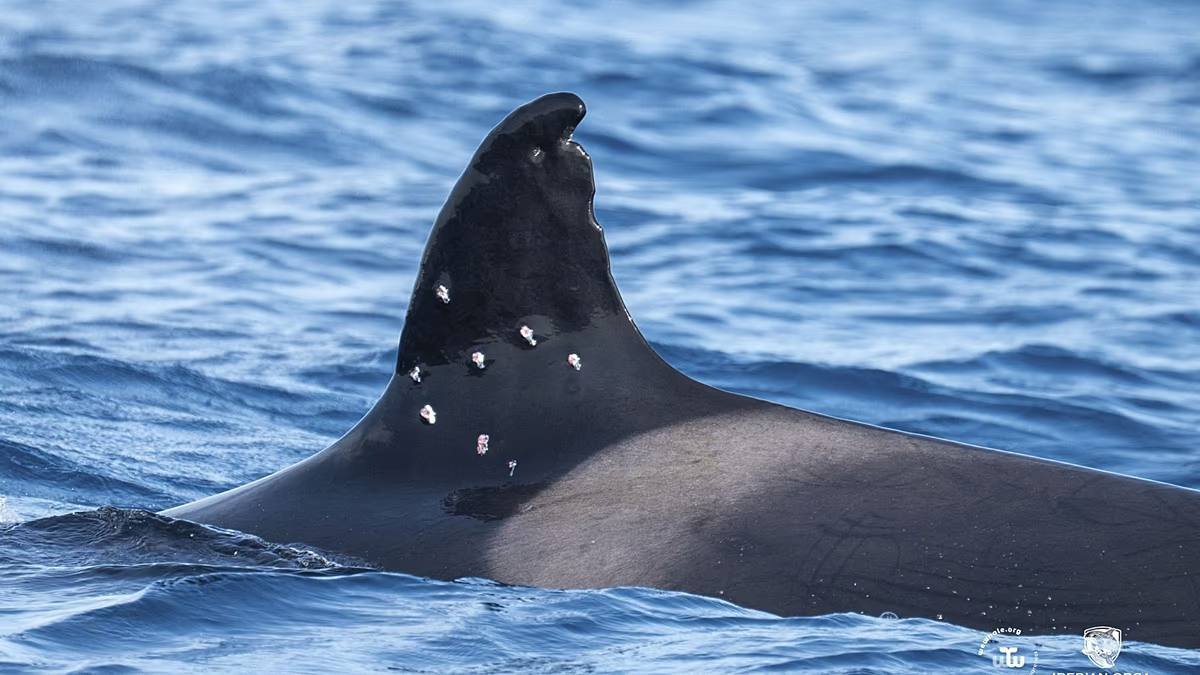
Spain's Ministry for Ecological Transition has launched an investigation after Toñi, the oldest known orca in the Strait of Gibraltar, was found with injuries consistent with a shotgun blast. The animal, estimated to be around 60 years old and known to researchers as the "grandmother" of the local population, was spotted with approximately a dozen marks on her dorsal fin and back.
The conservation group WeWhale raised the alarm after comparing recent photographs of Toñi with images taken just a few weeks earlier, which did not show the injuries. Janek Andre, the founder of WeWhale and Iberian Orca Guardians, stated that the newly visible wounds on the orca's fin and back appear consistent with the impact of a shotgun blast.
The Atlantic Orca Working Group provided a further technical assessment of the injuries. The collective noted that the marks could correspond to nine-millimetre lead pellets, which are typically used in buckshot cartridges for hunting wild boar. This type of ammunition generally disperses nine projectiles in a pattern of three rows of three, an arrangement that the group believes matches the marks observed on Toñi.
Investigation and Scientific Analysis
The Ministry for the Ecological Transition and the Demographic Challenge was notified of the situation on the afternoon of August 11 through information provided by WeWhale. The following day, the Directorate-General for Biodiversity, Forests and Desertification initiated preliminary proceedings to investigate the incident and determine if sanctions should be pursued against those responsible.
Sara Aagesen, the vice-president and minister for the Ecological Transition, confirmed the investigation on the social network Bluesky. She noted that the orca showed marks consistent with pellet shots and emphasized that because the species is classified as vulnerable, any harm inflicted upon them constitutes a serious offence.
The Conservation, Information and Research on Cetaceans (CIRCE) organization, which has conducted scientific monitoring of Iberian orcas since 1999, is also participating in the assessment. CIRCE, which maintains a photographic archive of Toñi spanning over two decades, stressed the need to thoroughly examine the images, compare them with historical records, and conduct direct monitoring of the animal and her group before officially confirming the origin of the wounds. Currently, authorities have not officially confirmed the cause, though a gunshot remains the primary working hypothesis.
Legal Protections and Strict Penalties
The orca population inhabiting the Strait of Gibraltar and the Gulf of Cádiz is officially listed as vulnerable under the Spanish Catalogue of Endangered Species. According to Article 57 of Law 42/2007 on Natural Heritage and Biodiversity, any action intended to kill, capture, pursue, or harass these protected animals is strictly prohibited.
Specific cetacean protection regulations impose strict limits on maritime activities. Vessels are prohibited from approaching within 500 metres of the animals, making contact, swimming with them, feeding them, or obstructing their path. Additionally, mariners must not split up groups of orcas or use loud noises to attract or deter them.
In critical conservation zones, including the Ensenada de Barbate, Conil, and the Banco Majuán, active orca watching is entirely banned between March 1 and August 31. Violations of these environmental protection measures can result in criminal liability and administrative fines of up to two million euros.
Managing Vessel Interactions
The incident occurs amid a documented rise in interactions between Iberian orcas and maritime vessels in the Strait of Gibraltar and the Gulf of Cádiz since 2020. In response, the Ministry of Transport and the Ministry for Ecological Transition recommend that vessels avoid navigating these waters between April and August.
If an encounter with an orca occurs, authorities advise mariners to steer their vessels toward the coast, avoid any manoeuvres that could injure the animals, keep passengers away from the gunwale, and immediately contact the Maritime Rescue Coordination Centre. Conservation groups operating in the region emphasize that these vulnerable marine mammals require active protection rather than retaliatory actions.