
Spain Faces Crisis Over Leaked Report on Morocco's Role in Ceuta Migrant Influx

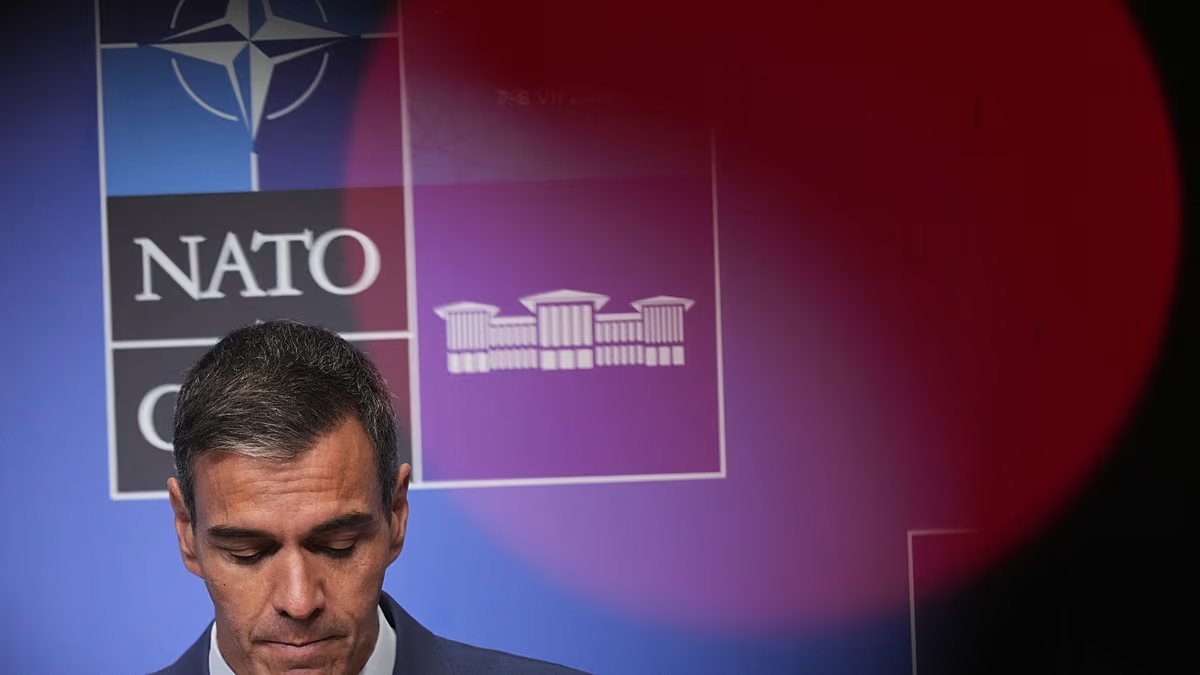
The Spanish government was plunged into a political crisis on Wednesday following the leak of a law enforcement document suggesting Moroccan forces played an active role in a recent mass migrant influx into the enclave of Ceuta. The leaked report alleges that Moroccan authorities assisted migrants by sea and acted passively during the border breach, concluding that the entry of approximately 80,000 migrants was not accidental.
The revelations have put Spain’s Interior Ministry on the defensive, sparking intense political debate over what the government knew prior to the border violation. Interior Minister Fernando Grande-Marlaska has ordered police to clarify the claims, which directly contradict the official government narrative. Although a senior police official subsequently denied the existence of any report directly blaming Morocco, the statement has done little to ease political tensions.
Political Fallout and Conflicting Reports
The controversy has intensified scrutiny on Prime Minister Pedro Sánchez’s administration, which faces its most significant national security challenge ahead of the 2027 elections. Opposition leader Alberto Núñez Feijóo accused the government of withholding information, stating that officials "knew it — and covered it up." The political fallout has also raised questions about internal divisions, with the "war of leaks" suggesting the Interior Ministry may have lost control over elements within the police force seeking to embarrass the government.
Amid the growing political pressure, protests in support of Ceuta were held across Spain on Wednesday. Spanish ministers have provided conflicting accounts regarding what intelligence was received in the days leading up to the border breach. Any evidence of failure to act on warnings could lead to allegations of serious negligence and potential calls for a vote of no confidence against the prime minister.
Despite the internal pressure, the Spanish government has refrained from officially blaming Morocco for the border breach, even after describing the events—which resulted in more than 150 deaths at sea—as a violation of Spain's territorial integrity. Instead, Madrid has attributed the mass influx to human traffickers and false social media claims linked to a court ruling.
Diplomatic Stances and Disinformation Claims
The European Commission has aligned with Madrid's official stance, continuing to describe Morocco as a "trusted partner" in managing irregular migration. A spokesperson for the European Commission declined to comment on the leaked police report, classifying it as a national matter. Meanwhile, Prime Minister Sánchez has suggested that external actors, specifically Russia and Israel, played a role in amplifying disinformation surrounding the crisis.
However, observers and former officials have questioned how Moroccan border patrols failed to detect the buildup of migrants. Juan Fernando López Aguilar, a member of the European Parliament and former socialist justice minister, stated that the influx "couldn't have happened without some overlooking by the Moroccan authorities," calling it a matter of "common sense" while noting the government must act on concrete evidence. For its part, Morocco has argued that Spain's recently announced mass regularisation plan served as an incentive for the crossings.
Operational Crisis on the Ground in Ceuta
On the ground, the enclave of Ceuta remains under severe strain. Local authorities estimate that between 5,000 and 10,000 migrants remain stranded in the city, with approximately half of them believed to be minors. Ceuta President Juan Jesús Vivas declared that the city is at a "breaking point," accusing Morocco of a deliberate strategy to "suffocate, harass and bring down" Ceuta and Melilla. Vivas has demanded the immediate return of all migrants to restore normalcy.
The Spanish government faces significant legal and operational hurdles in resolving the situation. Strict laws protecting minors prevent immediate returns, and local administrative delays in setting up identification spaces have slowed the process. Furthermore, to reassure European partners that the Schengen free-movement zone will not be compromised, Madrid is limiting the transfer of migrants to mainland Spain, compounding the pressure on Ceuta. In response to the operational challenges, Spanish authorities have requested assistance from the European border agency, Frontex.