
Severe Shortages and Conflict Push Gaza's Healthcare System to Breaking Point

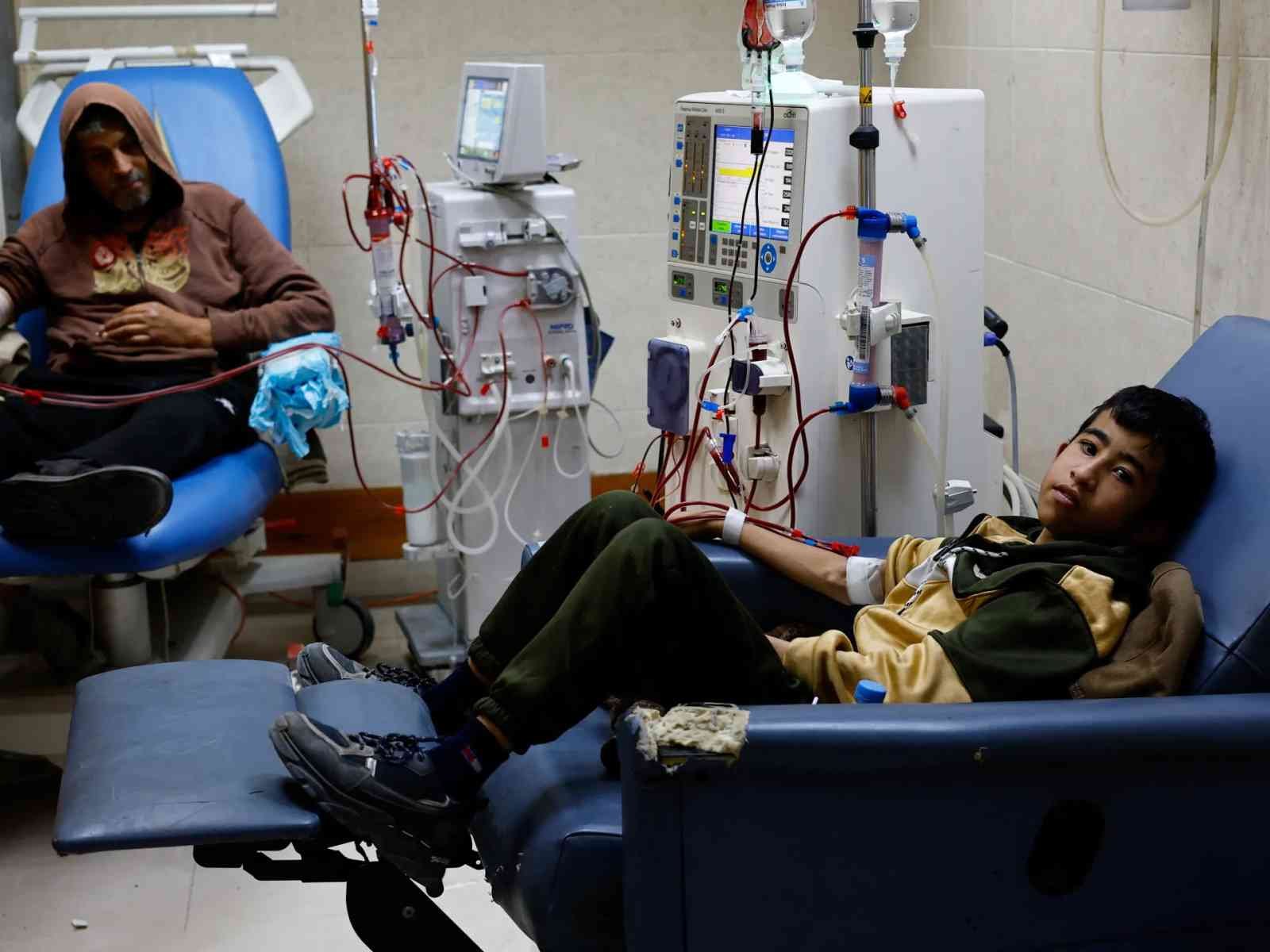
On the dialysis floor of Gaza City’s al-Shifa Hospital, medical machines run continuously as patients sit in closely arranged rows. Among them is 14-year-old Ruwaa Muntasir Abdul Karim, from Jabalia in northern Gaza, whose left hand is connected to a dialysis machine. Her father, Muntasir, sits beside her, watching her condition deteriorate. Ruwaa’s weight has dropped from 65kg to 35kg, and her weekly dialysis sessions have been reduced from three to two.
“My daughter used to walk and play before the illness. Her life changed after surgeries and dialysis,” Muntasir said. “Every dialysis session keeps her alive. Any interruption causes her severe fatigue and shortness of breath.” The department keeping Ruwaa alive is operating under severe resource constraints. According to the Palestinian Ministry of Health, 50 percent of the dialysis machines in Gaza have stopped working entirely. This shutdown is driven by an ongoing shortage of sodium bicarbonate, an essential chemical required to operate the machines.
Dialysis Infrastructure Decimated
The number of hospitals in Gaza equipped to treat kidney failure patients has fallen from seven to four. Some facilities, such as the Noura al-Kaabi Dialysis Centre, were destroyed by Israeli forces during the war. These shortages have led to a high mortality rate among kidney failure patients. Data from the Ministry of Health indicates that Gaza had 1,200 kidney failure patients before the war. According to the Palestinian Centre for Human Rights, that number has decreased to approximately 700, following the deaths of more than 470 patients due to missed dialysis sessions and a lack of essential medications.
At Al-Aqsa Hospital in central Gaza, one of the four remaining facilities capable of treating kidney failure, the pressure is immense. Osama Abu Rahma, the head of the hospital's kidney department, reported that 25 of their 51 dialysis machines are completely out of service. This has forced the hospital to reduce both the frequency and duration of dialysis sessions for its 240 patients, leading to rising medical complications such as general weakness, shortness of breath, heart and lung issues, and dangerously high potassium levels in the blood.
For patients like Ruwaa, the only permanent solution is a kidney transplant. “Everything is ready for a kidney transplant,” Muntasir said. “Her mother is the donor. The tests match.” However, the procedure cannot be performed within Gaza. Ruwaa’s travel abroad, which requires approval from Israeli authorities, has been pending for six months, leaving her dependent on the struggling dialysis system.
Shortages of Mobility Aids and Prosthetics
The healthcare crisis extends beyond kidney care to physical rehabilitation. The World Health Organization (WHO) reports that more than 43,000 people in Gaza have sustained life-changing injuries, including thousands of severe limb injuries resulting in amputations and permanent disabilities. Once initial injuries are treated, patients face severe difficulties accessing rehabilitation and basic mobility aids.
In Khan Younis, southern Gaza, physiotherapist Aya al-Shaltouni highlighted a critical shortage of prosthetics, wheelchairs, and crutches. She explained that demand far exceeds supply, leaving many patients waiting for long periods without receiving any assistance. “There is a clear and major shortage of mobility aids,” al-Shaltouni said. “Many patients wait for long periods, and some do not receive anything. We create treatment plans, but without proper assistive tools we cannot reach the desired results, and progress remains limited.”
Zaki Jumaa Salem Abu Harb, a 60-year-old farmer from northern Gaza, lost a leg after being injured in an Israeli attack in March 2025. “My whole day changed in a moment,” he said. “After the attack, I woke up injured and couldn’t move like before.” Previously active in his fields, he became dependent on others for basic movement. Although he recently received a prosthetic limb after months of waiting, he noted that many others remain without help.
WHO estimates that there were between 5,000 and 6,000 amputees in Gaza as of October 2025, most of whom still lack prosthetics. “There are many people who don’t have wheelchairs or crutches,” Zaki said. “They are forced to find any way to move, sometimes using a tree trunk or any piece of wood. There are children who lost their limbs. Some of them don’t have devices to help them walk properly. When I see them, I feel deeply affected. You feel they’ve been deprived of the simplest rights in life.”
Widespread Mental Health Crisis
Beyond physical injuries, the prolonged conflict has caused widespread psychological trauma. On the outskirts of Al-Aqsa Hospital, 22-year-old Hadeel lives in a small displacement tent. Since her family fled a violent strike that buried her mother under rubble, Hadeel has had to care for her seven younger siblings. “That night of the bombing, we woke up to the sound of children and women screaming … we were running and trying to find each other,” Hadeel said. “My mother was under the rubble … only her fingers were visible. Neighbours helped us pull her out. The sound of my mother calling our names and her image never left me.”
Hadeel experiences severe emotional exhaustion, frequent crying episodes, and difficulty sleeping due to the weight of her responsibilities and memories of the bombardment. “Some days I feel depressed, and other days I have to continue and take care of them,” she said.
Asil Abu Shaweesh, a 27-year-old psychologist working with an international organisation in central Gaza, stated that the mental health crisis is widespread across the enclave. Repeated displacement, loss of loved ones, and the destruction of homes have left the population in desperate need of psychological support. Abu Shaweesh has observed high rates of depression, anxiety, post-traumatic stress disorder, insomnia, and panic attacks among adults, alongside bedwetting, aggressive behaviour, and nightmares among children.
Providing mental health services remains highly challenging. Abu Shaweesh noted that mental health workers face constant psychological pressure, a lack of safety, high demand, a shortage of resources, and significant difficulties in reaching patients who require care.