
Russian Strikes Hit Six Energy Facilities Following Trump Ceasefire Announcement, Ukraine Says

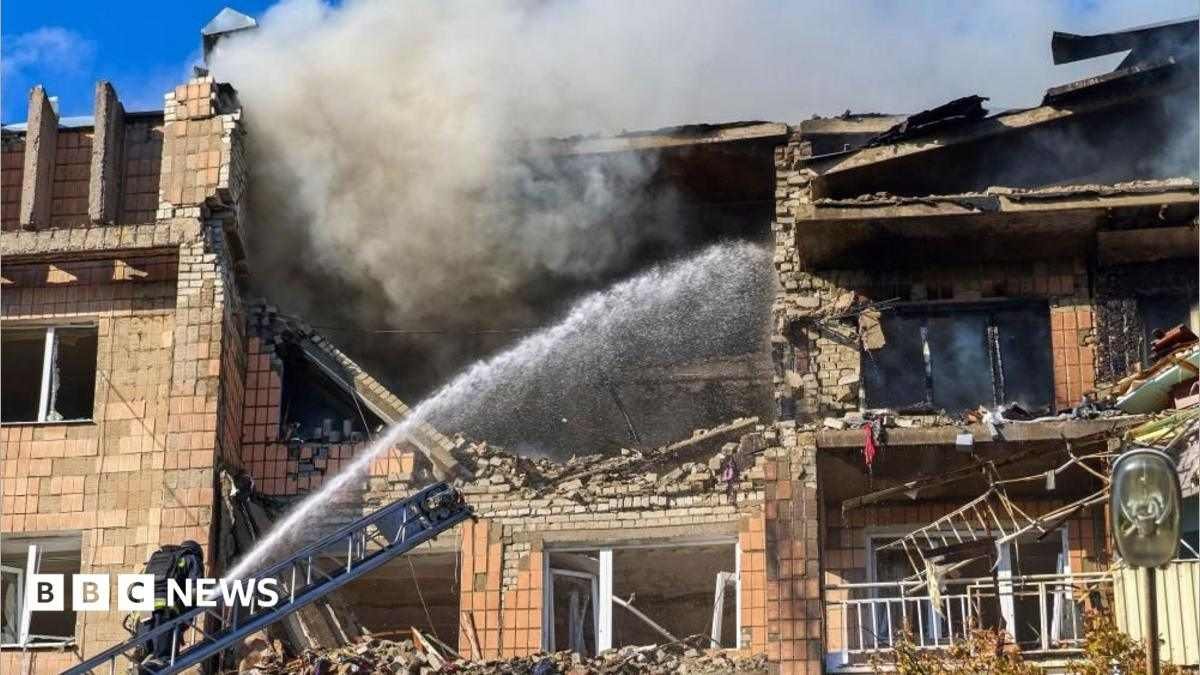
Russian forces have struck six Ukrainian energy facilities hours after US President Donald Trump announced that Moscow and Kyiv had agreed to an energy ceasefire, according to Ukrainian President Volodymyr Zelensky.
Despite President Trump stating on Sunday that the truce would take effect immediately, President Zelensky reported that Russian attacks targeted gas stations, power infrastructure, and other sites across the country, leaving 33 people injured. Speaking to Fox News, Zelensky stated that Ukraine had not launched attacks and described the Russian strikes as President Vladimir Putin's answer to President Trump.
Impact on Power Grids and Civilian Infrastructure
The strikes caused localized blackouts, including in the city of Izyum, where destruction of power grids disrupted electricity supplies, according to Ukrainian state news agency Ukrinform. Russian attacks overnight also targeted railway and energy infrastructure in western Ukraine.
Ukraine's state-owned grid operator, Ukrenergo, reported new power cuts in the Kharkiv, Donetsk, and Zaporizhzhia regions due to damage to energy equipment. Ukrenergo subsequently implemented electricity rationing in parts of the country to prevent overloading the damaged power network. Writing on X, Zelensky stated that the continued bombardment was evidence of Russia's unwillingness to accept an energy ceasefire.
In Kyiv, Mayor Vitali Klitschko reported on Telegram that a drone struck a 25-story residential building in the Darnytskyi district on Monday evening. The attack killed one person, injured 11 others, and set several vehicles in the building's courtyard on fire.
Diplomatic Responses and Sanctions Easing
Russian Foreign Minister Sergei Lavrov stated on Monday that Ukraine does not deserve the respite that a ceasefire would bring. Meanwhile, when asked about the ceasefire on Monday, President Trump reiterated that both sides agreed because he instructed them to, adding that the war has to be settled.
The ceasefire announcement follows a plan declared by Trump on Friday to import Russian diesel into the United States, temporarily relaxing US sanctions on Russian energy imports. Trump has urged Ukraine to halt strikes on Russian oil infrastructure so Moscow can fulfill its commitment to supply diesel to global markets. Zelensky described the easing of sanctions as a gift to the Russian president.
Initial reactions from international leaders have been mixed. UK Prime Minister Andy Burnham stated that Britain strongly supports Trump's call for an immediate and sustained energy ceasefire, with additional support expressed by France, Canada, and the European Union. However, EU foreign policy chief Kaja Kallas noted that the bloc would welcome the ceasefire when it holds, adding that there is no indication yet that Russia will abide by it. Estonia's foreign minister stated directly that the ceasefire was not working.
Escalation in Long-Range Energy Strikes
For months, both nations have engaged in reciprocal strikes against energy infrastructure, causing widespread disruptions to power supplies. Moscow has maintained that Ukrainian energy targets are legitimate military objectives, while Zelensky has stated that Ukrainian attacks inside Russian territory aim to reduce Moscow's ability to fund its war effort.
Data verified by BBC Verify indicates an increase in targeting ahead of winter. In 2026, 273 strikes were recorded against Russian-controlled oil and gas facilities, compared to 124 during the same period in 2025. Concurrently, data from the Armed Conflict Location and Event Data project recorded 2.4 times as many Russian attacks affecting Ukraine's energy grid so far this year.