
Police Investigate Pakistan Financial Links in Kochi Synagogue Arson Attack

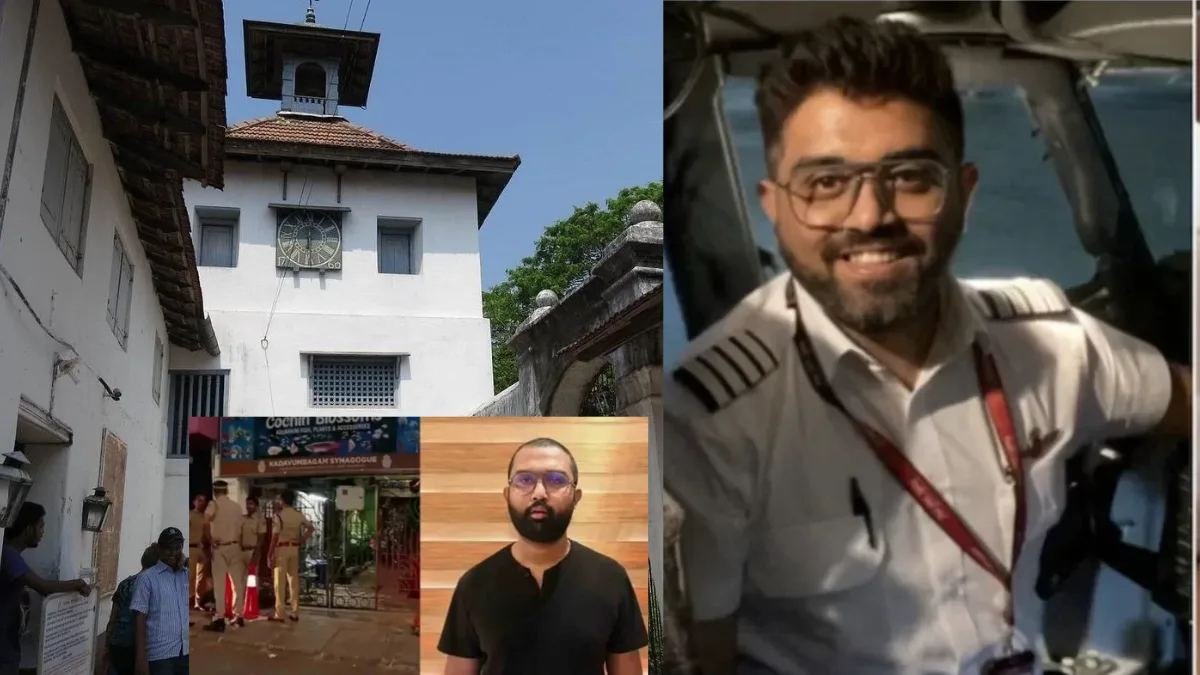
Investigators probing an attack on a synagogue in Kochi have uncovered details regarding direct foreign financial transactions linked to the accused, identified as Ebin P. Paul. According to reports, Paul received ₹2 lakh in his bank account within minutes of committing the act on the religious site, with the funds reportedly transferred by a handler based in Pakistan.
Police authorities uncovered the financial trail after conducting a detailed examination of the suspect's mobile device, which revealed that he had been in continuous contact with individuals in Pakistan. Central security agencies are now assisting in the investigation, examining Paul's digital communications, financial records, and foreign connections to uncover the broader network operating behind the crime.
Details of the Incident and Alleged Foreign Directives
According to police sources, Paul reached the Kochi synagogue by car during the early hours of October 12. He allegedly set fire to flex boards and banners on the premises and immediately transmitted video recordings and visuals of the incident to another individual. Because the site's CCTV cameras were reportedly non-functional at the time of the incident, law enforcement authorities apprehended Paul with technical assistance from the Cyber department. A subsequent police search of his residence resulted in the seizure of illicit drugs.
Prior financial records indicate that Paul had earlier received a payment of ₹5,000 after setting fire to a used-car showroom in Muvattupuzha on March 18, 2026. Investigators suspect that the initial minor transaction served as a preliminary assignment to establish his reliability to foreign handlers before larger operations were assigned. The subsequent payment of ₹2 lakh shortly after the synagogue arson attack is being analyzed as a potential tactic by handlers to incentivize further extremist acts on Indian soil.
Broader Plots and Foreign Motives Under Scrutiny
Investigative agencies suspect that Paul had explored multiple plans for terror activities across India, including potential blasts in New Delhi, Amritsar, and Mumbai. Security officials are attempting to trace the exact operational network and identify the high-level handler who directed Paul to execute the attack.
Authorities are examining several potential foreign motives behind targeting the Jewish place of worship. Investigators suspect the attack may have been planned to counter international recognition received by Indian Captain Smit Machchhar, who thwarted a major plot compared to the September 11 attacks on Israeli soil. Analysts note that had the attack achieved greater destruction, foreign networks and proxies might have attempted to push narratives through media channels characterizing the event as an internal act aimed at defaming India internationally.
Central Agency Involvement and Political Reactions
Central intelligence and investigative agencies are interrogating Paul in the context of earlier cases involving individuals in Kerala maintaining links with overseas Islamic terrorist organizations. Security experts have highlighted concerns regarding attacks on religious institutions, noting that such acts are frequently used by radical networks to identify, recruit, and radicalize individuals before involving them in larger terror activities.
Reports indicate that leadership from the ruling Congress-led United Democratic Front (UDF), the Opposition CPM-led Left Democratic Front (LDF), and the state government have not issued official public statements regarding the incident, raising discussions concerning responses to targeted bias and antisemitism. Meanwhile, certain media outlets sympathetic to fundamentalist positions described the incident as a minor occurrence, pointing out that the fire occurred on adjacent property rather than inside the main structure of the synagogue.