PM Modi Warns Cyberattacks Can Weaken Economy, Inaugurates RBI Facilities in Bhubaneswar

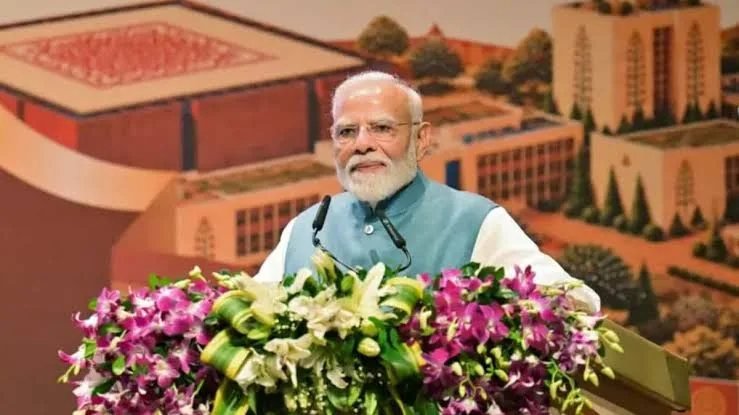
Prime Minister Narendra Modi warned that modern warfare has expanded beyond conventional weaponry, with cyberattacks increasingly capable of disrupting a country’s economic stability and critical infrastructure. Speaking on Sunday, October 25, in Bhubaneswar, Odisha, he emphasized that safeguarding India’s banking network from cybercriminals and cyberterrorists is essential as the nation expands its digital economy and financial services.
“Wars are no longer fought with weapons alone,” Modi said during the inauguration of the Reserve Bank of India’s (RBI) new data centre and Cybersecurity Training Institute in Bhubaneswar. He cautioned that a nation could be weakened by hostile actors targeting its economy and financial systems. He noted that India’s rising economic stature makes the security of its financial infrastructure increasingly critical.
Cybersecurity Emerges as National Security Priority
Addressing the shifting landscape of digital risks, the Prime Minister stated that dealing with modern threats requires advanced infrastructure, enhanced computing capabilities, and a workforce trained to address emerging challenges. He stressed that India cannot effectively defend its financial ecosystem using outdated tools, systems, or training methods. The newly established RBI facilities, constructed at a reported cost of Rs 169 crore, are designed to boost the security and resilience of the nation's banking networks.
The inauguration comes at a time when digital payments, online banking, and technology-driven services have become central to daily financial transactions in India. With millions of citizens and businesses relying on digital channels, any disruption to banking networks could negatively affect commercial operations, public confidence, and financial services. The Prime Minister’s remarks underlined the direct connection between cybersecurity, national security, and economic stability.
Financial institutions remain key targets for cybercriminals and hostile entities because they manage vital services, including payments, deposits, and credit. Attacks on these networks can cause operational halts, expose sensitive data, or foster widespread economic uncertainty. As financial platforms become more interconnected, a vulnerability in one system or technology provider can potentially spread across other services. Addressing these vulnerabilities requires protective hardware, continuous monitoring, threat detection, rapid incident response, and skilled professionals.
Expanding Digital Access and Financial Inclusion
In addition to cybersecurity concerns, the Prime Minister highlighted the growth of banking access across the country. He remarked that India’s past development model concentrated infrastructure primarily in major cities, leaving smaller towns and remote areas with limited access to facilities and connectivity. He stated that the government has worked to correct this disparity by expanding digital connectivity, roads, expressways, healthcare services, and medical colleges into smaller towns and rural areas.
Reflecting on the reach of formal banking in earlier decades, Modi pointed out that a significant portion of the population remained excluded from the banking system despite nationalisation efforts in the 1960s and 1970s. He noted that the expansion of digital banking has fundamentally changed how financial assistance and government benefits are delivered to citizens.
Modi cited the opening of nearly 59 to 60 crore Jan Dhan accounts under the Pradhan Mantri Jan Dhan Yojana as a landmark milestone in financial inclusion. The scheme was launched to provide basic banking access to underserved populations, creating a direct channel for welfare transfers and reducing reliance on intermediaries.
Contrasting the current direct benefit transfer system with past welfare distribution models, Modi recalled a statement by a former prime minister that only 15 paise of every rupee allocated by the central government reached its intended beneficiary. “Now, when Rs 1 leaves Delhi, the entire Rs 1 reaches the bank account of the intended beneficiary,” Modi said. He noted that while the past decade focused on bringing unbanked citizens into the formal financial fold, the next decade must focus on making the banking system more efficient and reliable.
Political Remarks and Odisha’s Technological Transition
During his address, the Prime Minister criticised past Congress-led governments, accusing them of engaging in “phone banking.” He alleged that under previous administrations, large loans worth thousands of crores of rupees were approved over phone calls for select individuals close to political leaders. Modi contrasted those alleged practices with his government's focus on transparency, digital transfers, and systemic financial reforms.
Modi also spoke on Odisha’s economic trajectory, identifying eastern India as a key driver of the country’s broader development goals. He stated that Odisha is expanding its economic base beyond its traditional strength in mineral resources to embrace technology and modern industries.
“Odisha is poised to write a new chapter in its future, moving from mines to microchips,” Modi remarked, adding that investments in data centres and advanced computing facilities will create new employment and skill-building opportunities for the state's youth. He concluded that as India continues its transition toward a technology-driven economy, ensuring the security, reliability, and resilience of its digital infrastructure remains essential for long-term growth.