Physicist Deepak Dhar Named Co-Recipient of 2026 Dirac Medal
Prestigious Recognition for Theoretical Physics
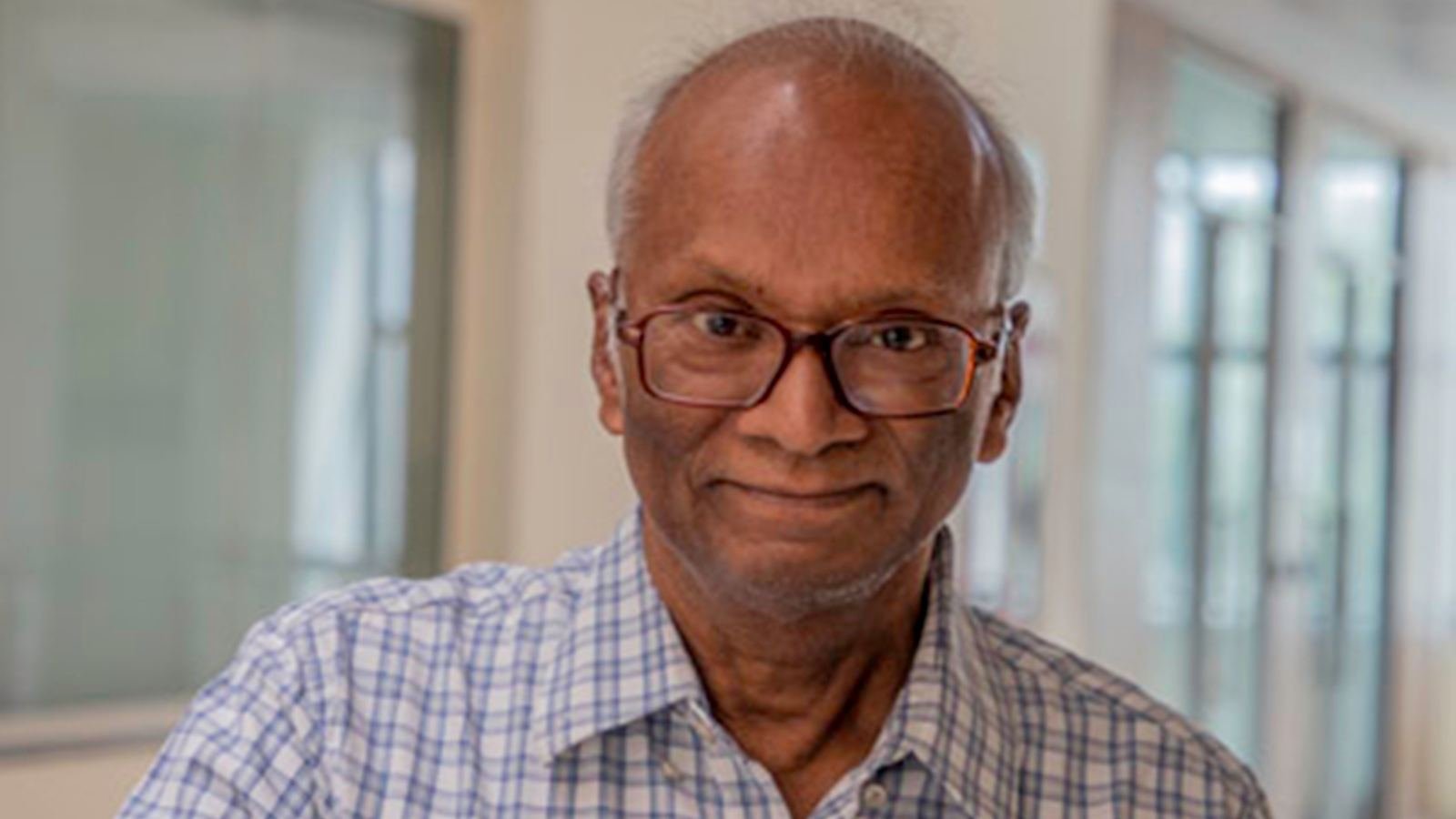
Indian theoretical physicist Deepak Dhar has been named a co-recipient of the 2026 Dirac Medal, one of the highest honours in the field of physics. The 75-year-old academic currently serves as the Indian National Science Academy (INSA) distinguished professor at the International Centre for Theoretical Sciences (ICTS) in Bengaluru.
The Dirac Medal was instituted in 1985 by the Abdus Salam International Centre for Theoretical Physics in Italy. Named after Paul Dirac, a central figure in the development of quantum theory, the award recognizes significant contributions to theoretical physics. Reacting to the announcement, Dhar noted that researchers do not work for medals or recognition, but added that it is gratifying to know his work remains relevant more than 25 years after it was conducted.
A Distinguished Career in Fundamental Research
With this latest honour, Dhar joins an elite group of only ten scientists globally who have won both the Dirac Medal and the Boltzmann Medal. Dhar was the co-winner of the Boltzmann Medal in 2022, making him the first Indian to receive that award. Several members of this select group of dual-recipients have subsequently gone on to win the Nobel Prize in Physics.
Dhar's research focuses on explaining how simple interactions can lead to complex and sometimes unpredictable behaviour in large systems. According to the award citation, his theoretical models have been applied to understand diverse systems, including earthquakes, traffic jams, and fluctuations in financial markets.
Born in 1951 in Pratapgarh, Uttar Pradesh, Dhar completed his early education at the University of Allahabad and IIT-Kanpur. He then moved to the United States for his doctoral studies at the California Institute of Technology (Caltech), where he worked as a teaching assistant for the renowned 20th-century physicist Richard Feynman. Unlike many of his contemporaries, Dhar chose to return to India, where he has spent more than four decades conducting fundamental research. Over his career, he has held positions at the Tata Institute of Fundamental Research (TIFR) in Mumbai and the Indian Institute of Science Education and Research (IISER) in Pune.
Perspectives on Science and Education in India
Reflecting on the evolution of scientific research in India, Dhar observed that the country now provides significantly better opportunities for fundamental research than it did when he first returned from his doctoral studies. He pointed out that while past researchers had to spend long hours searching through university library books to understand complex subjects, the younger generation now enjoys much quicker and more equal access to information.
However, Dhar cautioned that access to information alone is not enough, stating that young researchers still need to dedicate substantial time to develop their interests and understand subjects in greater depth. He described working in science as deeply rewarding, noting that there are always new things to learn and discover.
Dhar also expressed concern regarding the broader educational landscape in India. While new universities continue to open across the country, he emphasized that the state of primary school education remains a critical concern. He stated that the progress of the country is directly linked to its scientific progress, highlighting the need to promote science at various levels and, most importantly, to focus on strengthening primary school education.
Outside of his academic pursuits, Dhar enjoys reading fiction but does not read self-help books. Although he has had less time for reading recently, he maintains a routine of taking walks in the morning and occasionally in the evening, which he uses as a time to think and generate fresh ideas.