Patriotism is not surrender: The danger of a 'dimagi naxal' mindset

The symbols of the Republic belong to citizens, and their deepest meaning lies in giving those citizens the freedom to question the government in the name of the country they share.
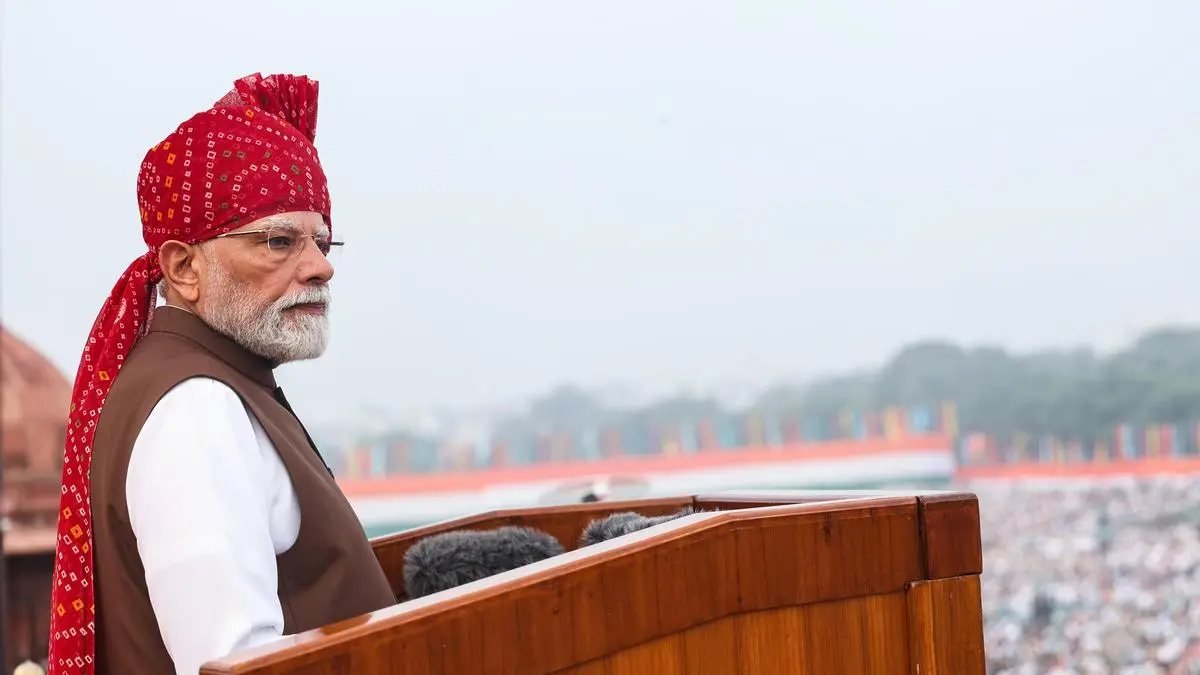
Prime Minister Narendra Modi's recent speech from the ramparts of the Red Fort on Independence Day has sparked a debate on patriotism and dissent in India. In his address, the Prime Minister said that armed naxalism was nearing its end but warned of a 'dimagi naxal' mindset. Such people, he said, must be identified and isolated.
However, critics argue that this mindset is a threat to India's democracy and that the government is trying to silence dissent by labeling critics as 'dimagi naxals'. They argue that patriotism does not require silence and that citizens have the right to question the government and its institutions.
The Constitution and its founding premise
The Constitution of India was founded on the premise that citizens possess judgment and that their judgment matters. It establishes the conditions under which pride can become a democratic responsibility—a framework within which people may speak, question, disagree, associate, protest, vote, and demand accountability.
Dissent, in that framework, is not an interruption of patriotism but one of the ways citizens take part in the life of the Republic. Citizens, the enduring sovereigns, have the right to question the government and its institutions, and this is not anti-national.
The danger of a 'dimagi naxal' mindset
The 'dimagi naxal' mindset is a threat to India's democracy because it seeks to silence dissent and label critics as unpatriotic. This mindset is a form of obedience, where citizens are expected to conform to the government's ideology without questioning it.
However, this is not the kind of patriotism that India needs. Patriotism that requires silence is no longer patriotism; it is obedience. The Republic was not founded on the proposition that citizens would surrender their judgment at the sight of a flag or the sound of an anthem.
Living by democratic and constitutional values
The deepest respect we can show these symbols is to live by the democratic and constitutional values they represent rather than to turn them into tests of conformity. There is a further danger in such tests: once patriotism is defined as agreement, the political community begins to shrink.
The critic is called unpatriotic, then the dissenter, the protester, the inconvenient journalist, the questioning student. Eventually, ordinary citizens learn to censor their own concerns. A democracy should fear that silence more than any noise.
Our plurality is our inheritance
India is too large, too diverse, and too old a civilisation for so narrow an idea of patriotism. Our plurality is not an inconvenience to be managed but an inheritance to be protected. The person who speaks one language and the person who speaks another, the believer and the non-believer, the government's supporter and its critic, the urban professional and the rural worker all inhabit the same Republic.
They may profoundly disagree about politics, faith, economics, or the country's direction, and not one of them has a lesser claim to India. The Republic grows stronger not when these differences vanish but when it makes room for them to coexist with dignity.