NurExone Biologic Advances Exosome Platform for Central Nervous System Repair

NurExone Biologic Inc. is developing non-invasive biological therapies targeting complex central nervous system (CNS) injuries, utilizing exosome technology to overcome long-standing challenges in regenerative medicine. Founded in 2020 based on research from the Technion – Israel’s Institute of Technology and Tel Aviv University, the company utilizes microscopic cellular messengers to deliver targeted therapeutic molecules directly to damaged tissue.
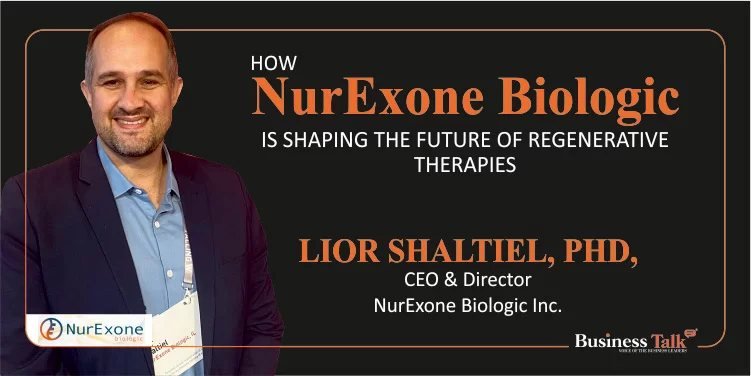
Under the leadership of Chief Executive Officer and Director Lior Shaltiel, alongside Head of R&D Dr. Tali Kizhner and Director of Clinical and Regulatory Affairs Dr. Ina Sarel, NurExone is working to address conditions that currently offer limited recovery options. Traditional drug delivery systems often manage symptoms without restoring lost function, particularly in protected areas such as the brain and spinal cord. The company’s proprietary ExoTherapy platform aims to fill this gap by loading cell-free exosomes with specific treatments designed to repair tissue and restore sensory and motor functions.
Preclinical Progress and Lead Candidate ExoPTEN
The company’s lead candidate, ExoPTEN, is a proprietary nanodrug engineered for CNS injury repair. It combines exosome-driven neural regeneration with small interfering RNA (siRNA) targeting PTEN inhibition to reduce inflammation and promote tissue recovery. In preclinical spinal cord injury (SCI) models, brief intranasal administration of ExoPTEN fully restored motor function and blood flow, with all animal models in high-dose cohorts regaining locomotion as measured by the CatWalk XT system. Beyond spinal cord trauma, preclinical testing has demonstrated potential in optic nerve regeneration and early facial nerve recovery.
The global demand for effective SCI treatments remains significant. Recent data from 2024 indicates approximately 18,000 new traumatic SCI cases occur annually in the United States, while global estimates from 2019 placed total incident cases at roughly 0.9 million. Traumatic events such as sports injuries and workplace accidents account for around 90 percent of spinal cord injuries worldwide.
Manufacturing Infrastructure and Growth Plans
To support clinical transition and commercial scalability, NurExone has raised over $18 million, directing the majority of funds into research and development. To solve biotech manufacturing challenges associated with exosome reproducibility, the company acquired a Master Cell Bank to serve as its stem-cell source. This cell-free exosome approach avoids the large bioreactors and labor-intensive handling required by traditional live-cell therapies, establishing a compact and linear process for Good Manufacturing Practice (GMP)-grade production.
As part of its long-term strategic plan, NurExone intends to launch Exo-Top, a U.S. subsidiary tasked with producing GMP-grade naïve exosomes for internal development as well as research, aesthetic, and regenerative applications. The company has also established strategic research collaborations, including partnerships with the Sheba Medical Center and the Goldschleger Eye Institute, to validate its optic nerve injury applications while expanding its intellectual property portfolio.