
Meenakshi Natarajan Assumes Control of Telangana Congress to Centralise Decision-Making

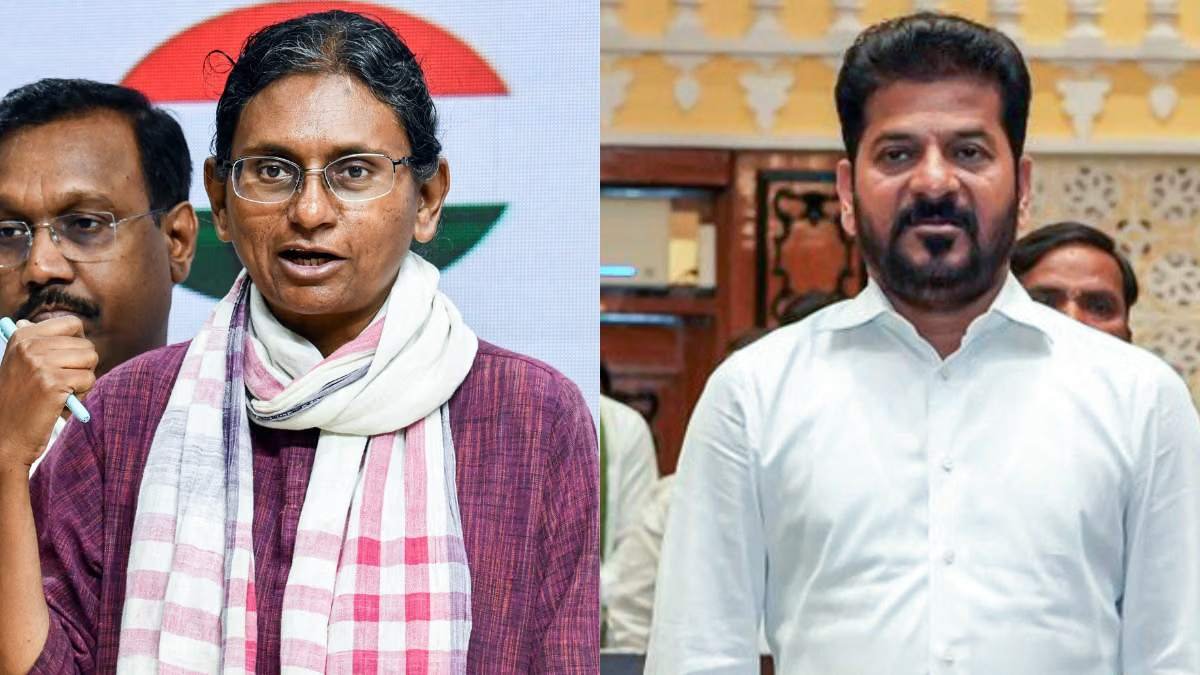
Armed with a directive from former Congress president Rahul Gandhi, Meenakshi Natarajan, the All-India Congress Committee’s (AICC) representative to Telangana, is implementing structural changes within the state unit. Party leaders state that the AICC in-charge is streamlining decision-making and strengthening the party’s base to ensure the cadre looks to the central leadership in Delhi rather than the state leadership in Hyderabad.
Natarajan’s recent visit to Telangana follows the rejection of her Rajya Sabha nomination in June, which occurred due to an alleged failure to disclose a pending case in a district court. Shrugging off the embarrassment, her return marks a shift in strategy aimed at building a loyal framework of personnel dedicated to the Congress party’s ideology, the Gandhis, and the AICC.
Structural Changes and Performance Audits
To address internal factionalism, Natarajan organised small-group meetings with district Congress committee (DCC) presidents. During these closed-door sessions, DCC heads were questioned about why reports and proof of their meetings with village and constituency cadres had not been uploaded to the state party website or sent to the party president.
In addition to DCC heads, Natarajan held one-on-one meetings with MLAs and ministers to conduct strict performance audits. Party sources revealed that she warned elected representatives they would be replaced if found to be underperforming. She also encouraged cadres to submit anonymous complaints regarding leaders who fail to address their grievances. A district-wise survey form circulated among the cadres even allowed them to name the chief minister if he was found unconcerned with responding to the cadre.
Ministers and MLAs belonging to the "original Congress"—those who were in the party before and during the tenure of the late chief minister Y.S. Rajasekhara Reddy—have welcomed the strengthening of Natarajan's office. They compare her functioning to the era when Ghulam Nabi Azad and Digvijay Singh managed the state. This group stands in contrast to leaders from the Telugu Desam Party (TDP) and Bharat Rashtra Samithi (BRS) who joined the Congress alongside Chief Minister A. Revanth Reddy since 2017.
Addressing Grievances and Upcoming Elections
Natarajan's active role has assured the party cadre of fair accommodation for over 100 nominated posts waiting to be allocated across districts. State Congress Working Committee member Jagga Reddy noted that one of her major tasks is to pacify rebels and cabinet aspirants through personal mediation and assurances of speedy intervention.
With the Greater Hyderabad Municipal Corporation (GHMC) elections, as well as the Zilla Parishad and Mandal Parishad elections approaching, Natarajan has instructed leaders to launch intensive village-stay outreach programmes. These initiatives are intended to allow citizens to share grievances if welfare schemes have not reached them.
While original Congress leaders like Jagga Reddy and K. Rajagopal Reddy support this realignment with the central chain of command, the streamlining of protocols has reportedly caused discomfort within Chief Minister Revanth Reddy’s camp. According to a former minister from the YSR era, Natarajan arrived in the state just as Revanth Reddy departed for Delhi, subsequently informing office bearers that all decisions must bear her approval and that of the high command.
The Challenge of Revanth Reddy’s Popularity
Despite the internal pushback, the central leadership faces the reality of Revanth Reddy’s popularity and electoral utility. Political observer Kalyan Chandra noted that the Congress cannot easily sanction the chief minister because it has failed to establish a strong secondary command centre in the state, unlike past eras which featured prominent leaders with direct lines of communication to the Gandhis.
Chandra highlighted that Revanth Reddy remains a leader capable of expending resources for the party. While older party members could potentially shoulder such responsibilities, they remain reluctant to do so while Reddy is in office. Consequently, while Natarajan continues to centralise control, the party may still need to rely on Revanth Reddy to assist state-level units in upcoming elections in other states, such as Karnataka and Uttar Pradesh.