Madras High Court Disposes Petition Against TVK Candidate Over Use of Children in Campaign

The Madras High Court has disposed of an election petition challenging the victory of a Tamilaga Vettri Kazhagam (TVK) candidate in the Salem North constituency, holding that allegations regarding the involvement of children in election campaigning did not disclose a triable issue of undue influence. Justice Bharatha Chakravarthy pronounced the order on October 15, after having reserved judgment on September 15.
The petition was filed by K. Sivakumar, the Dravida Munnetra Kazhagam (DMK) candidate who contested the 2026 Tamil Nadu Assembly elections from Salem North. Sivakumar had challenged the election of TVK candidate Rajendran R., who won the seat after securing 85,710 votes against Sivakumar's 71,676 votes.
Allegations of Emotional Pressure and Social Media Campaigning
The election petition was primarily grounded on complaints regarding the deployment of children during electioneering. According to the petitioner, M. Karthikeyan of the DMK Legal Wing lodged a complaint on April 11, 2026, stating that children were being used for campaigning on behalf of the returned candidate. The complaint, accompanied by two videos showing children participating in rallies, was forwarded to the Returning Officer. The materials were submitted as evidence alongside certificates under Section 63(4)(c) of the Bharatiya Sakshya Adhiniyam, 2023 (BSA).
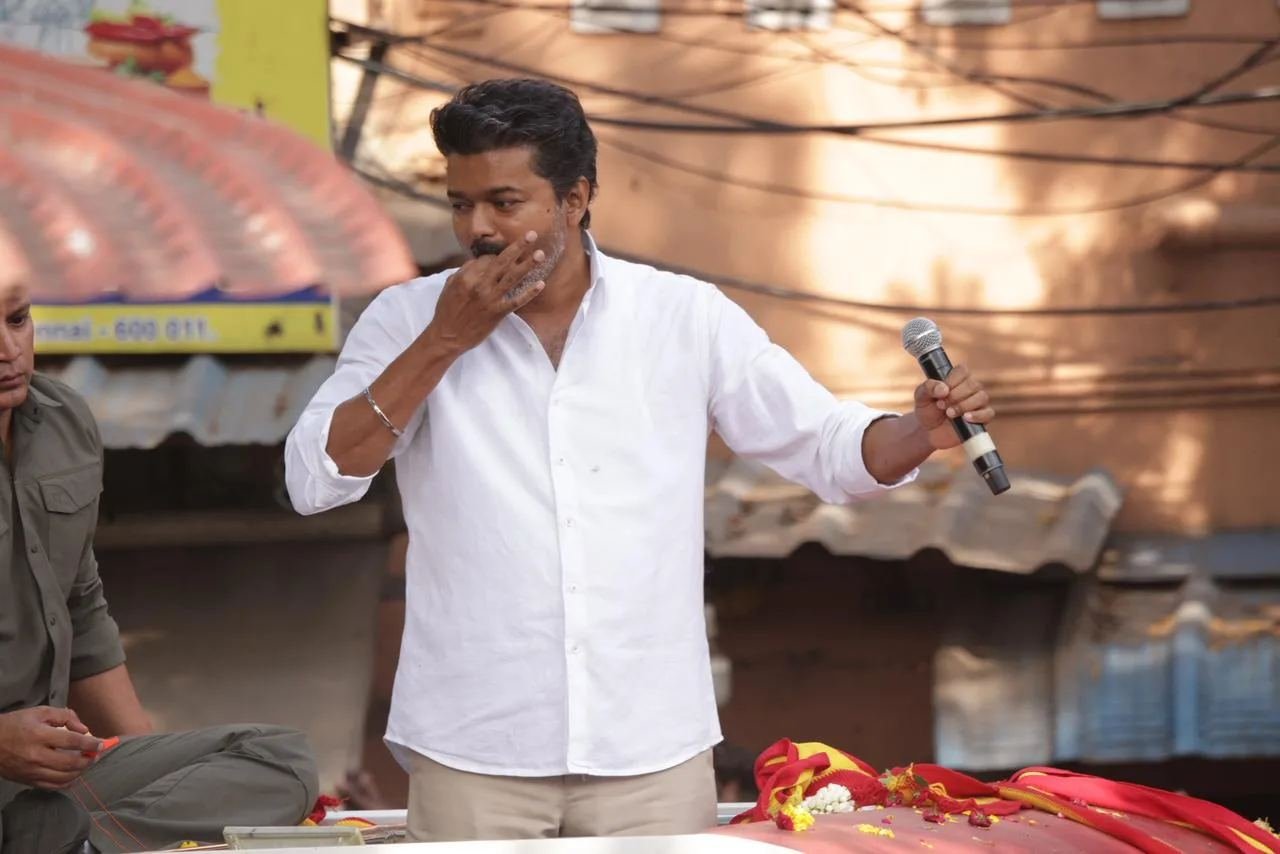
The petitioner further cited a speech delivered on April 21, 2026, at the YMCA Grounds by Joseph Vijay, president of the TVK. In his address, Vijay made a direct appeal to children, encouraging them to persuade their family members to vote for the TVK and its Whistle symbol. He drew an analogy to children persistently demanding chocolates like Kinder Joy, urging them to similarly pester their parents to vote for TVK for "Vijay Mama" (Vijay Uncle). The petitioner contended that this appeal sought to exploit emotional familial bonds to exert pressure on eligible voters.
Following the speech, various social media materials, including Instagram Reels, circulated depicting minors and young adults pressuring or threatening family members to vote for the candidate. The petition cited several specific instances submitted as evidence under Section 63 of the BSA:
- A minor boy threatening to fling cow dung at a parent unless they voted for the TVK Whistle symbol.
- A young woman threatening to poison her father's food unless he voted for Vijay or TVK.
- A minor child threatening suicide if grandparents did not agree to vote for TVK.
- A minor child physically striking an adult family member while demanding a vote for TVK.
- A minor child threatening to break an adult's phone and spectacles unless they voted for TVK.
- Multiple instances of children shouting at elderly family members who intended to vote for other political parties.
The petitioner noted that campaigning was videographed by Manikandan, the official in charge of the Video Surveillance Team, leading to the registration of a case under Crime No. 84 of 2026. It was also noted that Vijay publicly thanked children after the election for campaigning on his party's behalf.
Respondent's Defense and Legal Counterarguments
In response, the returned candidate, Rajendran R., argued that circulars issued by the Election Commission of India (ECI) along with the Model Code of Conduct serve as guidelines rather than statutory law. Consequently, he contended that a violation of such circulars per se does not constitute a violation of an order or law issued by the Election Commission.
High Court Observations and Ruling
In his 36-page order, Justice Bharatha Chakravarthy commented critically on the practice of involving young children in political campaigning, calling the entire act in "bad taste" and stating that the tasks assigned to them reflected "poor parenting." The judge remarked that creating social media reels out of such actions was cheap and politically motivated, calling for a broader national debate by Parliament on whether to prohibit such practices or make them statutory grounds to set aside an election.
However, on the legal merits of the election petition, the court held that even if the uncontroverted allegations in the petition were assumed to be true, they did not establish a cause of action or a triable issue of undue influence to grant relief to the petitioner.
The court observed that the children's actions could not be viewed as a sole act of overpowering an adult's volition or committing tyranny over the mind. Instead, at best, it amounted to convincing adults to vote for a candidate, even if not based on informed consideration. While noting that minor children have no electoral rights and that using them in campaigns exploits emotional bonds within families under Section 123(2) of the Representation of the People Act, the court concluded that the petition failed to disclose a triable issue to set aside the election result.