
Israel Accelerates West Bank Settlement Expansion with Controversial E1 Project Tenders

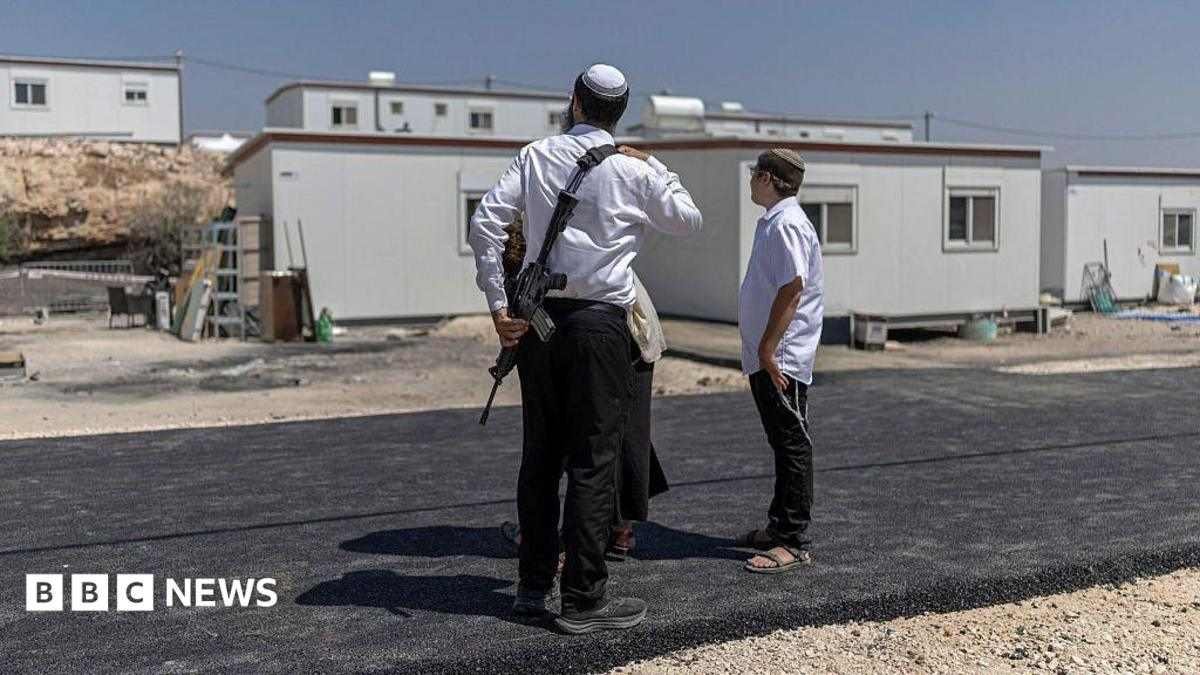
Israeli Prime Minister Benjamin Netanyahu has advanced plans to expand a highly controversial settlement in the occupied West Bank, declaring his intention to prevent the creation of a Palestinian state. The move follows the opening of tenders for the construction of approximately 1,200 settlement homes in a strategically critical area known as E1, located just east of Jerusalem.
During a ceremony at a West Bank settlement last September, Netanyahu signed an agreement to push forward with the E1 expansion. "We are going to fulfill our promise that there will be no Palestinian state," Netanyahu stated at the time. "This place belongs to us."
The recent announcement of the construction tenders has drawn widespread international condemnation. While all settlements are considered illegal under international law, Israel had held off on building in the E1 area for decades due to global pressure. Following the latest development, the United Nations Secretary General warned that the plans pose an "existential threat" to a future Palestinian state.
Strategic Impact of the E1 Development
The proposed E1 development is highly contentious because of its geographical implications. Maps of the project show that the construction would effectively divide the West Bank into two separate parts and isolate East Jerusalem from the rest of the territory.
Opponents of the project warn that the development would block the establishment of a viable, contiguous Palestinian state. By cutting off the northern West Bank from the south, the project would prevent the growth of a continuous Palestinian urban area connecting the key hubs of Ramallah, East Jerusalem, and Bethlehem.
A joint statement issued by the United Kingdom, France, Germany, Italy, and Canada described the plans as "unacceptable," warning they would "drive a wedge through the West Bank." The European Union echoed these concerns. Mahmoud Abbas, the president of the Palestinian Authority, welcomed the international opposition and urged the signatory nations to take "concrete measures to halt the implementation of the E1 plan."
Accelerated Growth and Infrastructure Expansion
Israel has controlled the West Bank since capturing it during the 1967 war against a coalition of Arab states. Although international law prohibits an occupying power from settling occupied land, Israel has built approximately 160 settlements housing around 700,000 Jewish residents since 1967.
The pace of settlement construction has accelerated significantly since 2022, when Netanyahu returned to office at the head of a right-wing, pro-settler coalition. This expansion further escalated following the outbreak of the Gaza war, which was triggered by the Hamas attack on Israel on October 7, 2023.
Satellite imagery analyzed by BBC Verify highlights the scale of recent construction. In Tzofim, a settlement in the northwestern West Bank, approximately 185 new buildings have been constructed since 2022. Similar expansion is visible around Kochav Hashahar, where roads, houses, and a new settler outpost have been built on surrounding land.
In addition to official settlements, hundreds of outposts—which are illegal under both Israeli and international law—have been set up since the 1990s. Dozens of these outposts have been retrospectively legalised by the Israeli government.
Administrative Shifts and Rising Tension
Over the past few years, administrative control of the West Bank has increasingly shifted from military authorities to a civilian administration. This civilian authority is headed by Bezalel Smotrich, Israel's far-right finance minister.
Under this administration, there has been a major increase in the construction of roads that connect Israeli settlements but bisect Palestinian towns and villages. Smotrich stated that this infrastructure "ensures that the settlements will not remain on paper - but will be established on the ground."
In May of this year, the Israeli government announced more than 1 billion shekels (approximately $360 million or £246 million) in funding for new road construction in the West Bank. An official press release stated the funding was intended for the "strengthening of their grip on the territory."
Alongside infrastructure growth, there has been an escalation of settler violence against Palestinians. Recently, settlers besieged two Palestinian homes, cutting off their water and electricity. The attack was denounced as a "criminal and terrorist act" by US Ambassador Mike Huckabee, who is typically a prominent supporter of settlements.
Political Objectives and Upcoming Elections
The acceleration of these projects has raised fears among Palestinians and advocates of a two-state solution that physical changes on the ground will make a Palestinian state impossible. Some senior Israeli ministers have openly confirmed this as their strategic goal.
Speaking in 2024, Smotrich stated that the E1 construction would help "establish sovereignty in Judea and Samaria, first on the ground and then through legislation." He added, "My life's mission is to thwart the establishment of a Palestinian state."
The timing of the E1 tender comes just a couple of months before highly contested elections in Israel. Peace Now, an Israeli anti-settlement watchdog challenging the plans in court, stated that the government is attempting to sign contracts with builders before the upcoming October elections to make it harder for any future government to cancel the construction. Netanyahu and his coalition partners are reportedly hoping these moves will appeal to their political base or establish permanent "facts on the ground" that cannot be undone.