Irish Finance Minister Blames Strait of Hormuz Closure for Global Energy Crisis

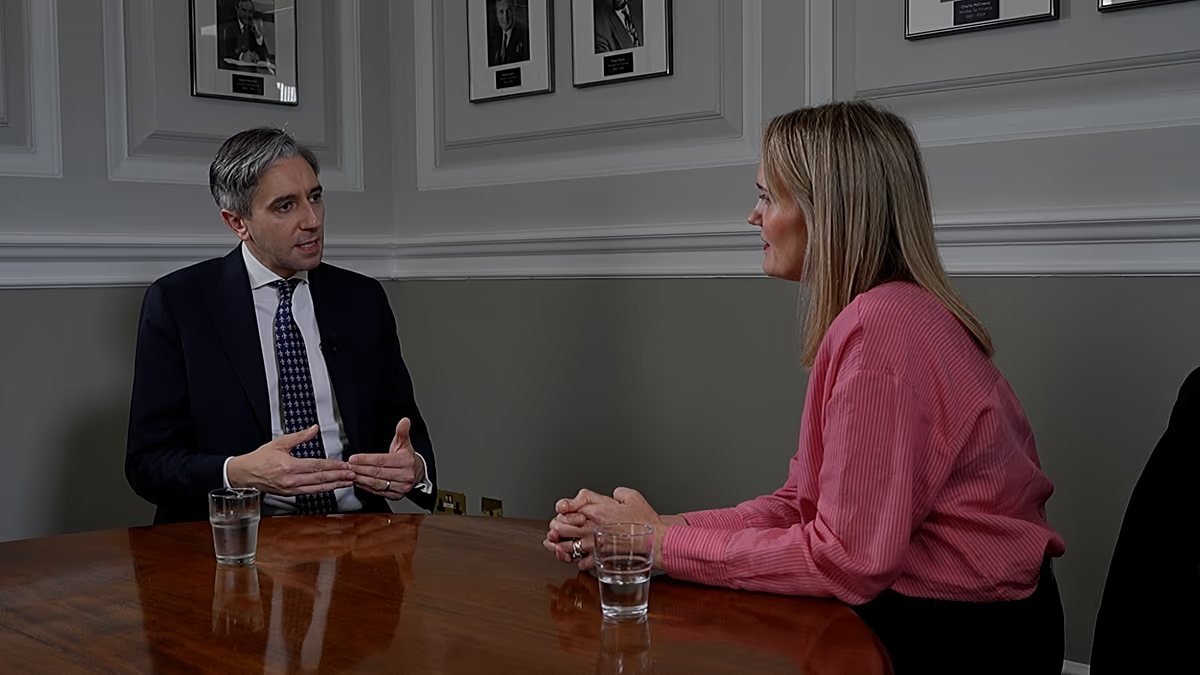
Irish Finance Minister and Deputy Prime Minister (Tánaiste) Simon Harris has rejected claims made by US President Donald Trump that Ukraine is responsible for the ongoing global energy crisis. Speaking in an interview with Euronews on the program "12 Minutes With," Harris argued that the primary driver of the turmoil in global energy markets is the closure of the Strait of Hormuz and geopolitical tensions involving Iran, rather than Ukrainian strikes on Russian diesel refineries.
The remarks come as global oil prices hover around $108 per barrel. While US President Trump has blamed Ukraine's targeted strikes on Russian diesel refineries for creating global supply shortages, Harris pointed to the Middle East as the core source of the economic strain, calling for immediate de-escalation in the region.
The Strait of Hormuz and Market Turmoil
"The reason there's a major energy crisis in the world right now is because the Strait of Hormuz is closed," Harris stated during the interview. He emphasized that the most effective economic remedy would be a reduction of hostilities in the Middle East, noting that a brief period of de-escalation during the summer led to a rapid decline in commodity markets and lower prices for consumers at the pump.
While Ukrainian attacks on Russian oil and gas infrastructure have impacted Moscow's oil output, energy experts agree that the primary disruption stems from the effective closure of the Strait of Hormuz. The strait serves as the transit route for approximately 20 percent of the world's oil and gas supplies. The situation deteriorated further after Saudi Arabia shut down its East-West pipeline, known as Petroline, following drone attacks launched earlier this month by Iran-backed Houthi forces and groups in Iraq.
Harris expressed deep concern over recent developments in the oil markets, noting that instead of de-escalation, the situation is escalating with new complications emerging across multiple fronts.
Eurozone Ministers Debate Windfall Tax
The energy crisis formed the backdrop for a meeting of eurozone finance ministers in Dublin, where officials gathered to discuss measures to shield citizens from rising costs. Among the proposals under consideration is a windfall tax on energy companies that have seen their profits surge due to market volatility.
"Some energy companies are making extraordinarily large profits on the back of this energy crisis," Harris said. He clarified that these profits are not the result of innovation, but rather the market chaos caused by the closure of the Strait of Hormuz.
As Ireland currently holds the rotating presidency of the EU Council, Harris is leading initial discussions on the proposed windfall tax. He indicated that eurozone ministers are likely to request the European Commission to conduct a detailed examination of the measure, with plans to formally debate the issue at the next Economic and Finance Council meeting in Brussels this October.
Stance on Gaza and West Bank Settlements
Beyond the economic ramifications, Harris urged the international community not to become desensitized to the human cost of global conflicts. He emphasized the need for broader de-escalation, referencing the loss of life in Ukraine, Gaza, and the wider Middle East.
Addressing the issue of settler violence against Palestinians in the West Bank, Harris called for a firmer international stance against Israeli settlements, which are illegal under international law. While expressing his strong support for the European Union, he described the bloc's coordinated response to the situation in Gaza as disappointing.
Several European nations, including Ireland and the United Kingdom, have recently implemented national bans on importing goods produced in illegal West Bank settlements. Harris noted that while individual member states are responding to public sentiment by taking unilateral action, a coordinated EU-wide measure would carry significantly more impact. EU High Representative Kaja Kallas has recently proposed a bloc-wide ban on trade with illegal settlements, drawing a comparison between the West Bank settlements and Russia's occupation of Crimea.