How the Secret Service Uses Decoys and Deception to Protect US Presidents

On July 8, observers watched as US President Donald Trump boarded Air Force One in full view of television cameras, departing from the NATO summit in Turkey. However, reports indicate that by the time the Boeing aircraft departed Ankara, the president was no longer on board. Instead, he had been secretly transferred via a catering truck to a C-32A—a military version of the Boeing 757—which transported him to RAF Mildenhall in the United Kingdom. Those remaining on the original aircraft served as unwitting decoys, entirely unaware that the president was not traveling with them.
According to security experts, such elaborate measures are part of a long-standing strategy to protect the US president from potential threats. Ronald Kessler, an author who has written extensively about the Secret Service, noted that these types of deception are very common. He explained that there is a long history of strategies designed to mislead anyone who might attempt to harm the president.
The 'Shell Game' of Daily Operations
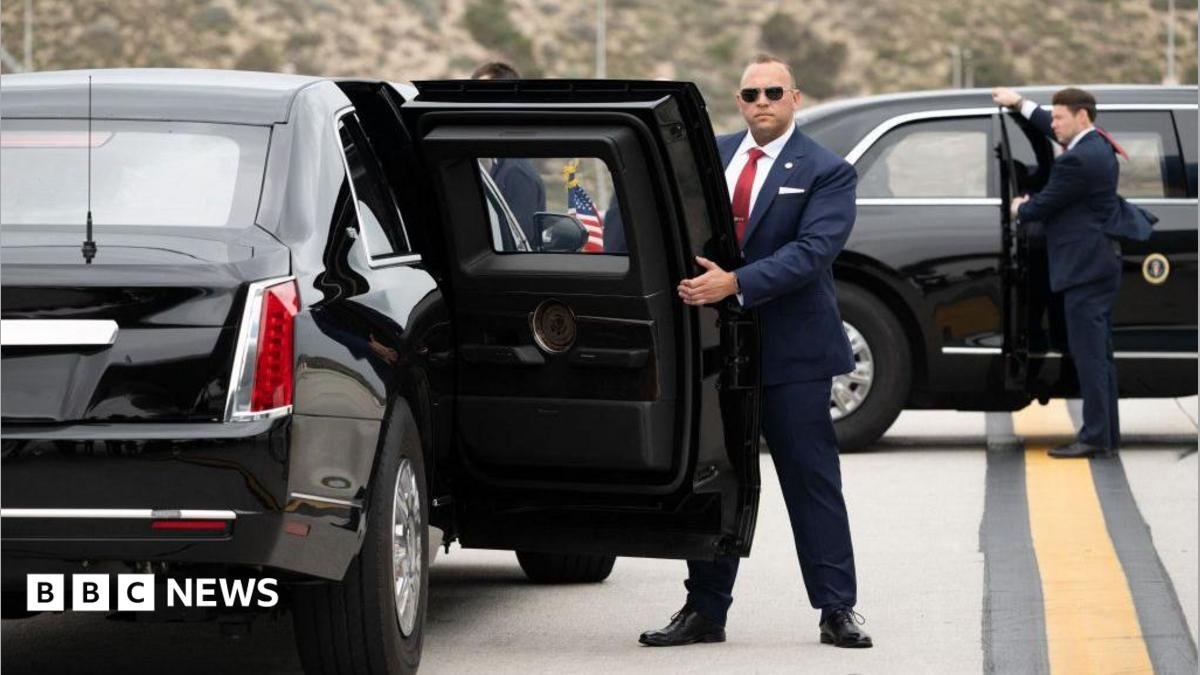
While aircraft switches are rare, smaller-scale deceptions are a routine part of presidential security. Robert McDonald, a former high-ranking Secret Service agent with experience on presidential security details, described these tactics as a "shell game." During motorcade operations, which typically feature dozens of security vehicles, support vehicles, ambulances, and press vans, the Secret Service routinely employs two identical enhanced limousines known as "the Beasts."
While the president travels in one of the limousines, the second vehicle acts as a decoy. The two vehicles frequently switch positions while en route to their destination. McDonald, who drove one of these vehicles during the Bush administration, recalled that even during routine trips to Joint Base Andrews in Washington, D.C., the two limousines would swap positions out of public view, such as under a highway overpass or inside a tunnel, to confuse potential adversaries.
A similar tactic is used in the air with Marine One, the presidential helicopter. Marine One routinely flies in groups of three. The helicopters continuously change positions during flight, ensuring that any potential threat on the ground cannot easily identify which aircraft is carrying the US leader.
Historical Precedents of Presidential Deception
For complex and high-risk international travel, the Secret Service and executive protection teams sometimes deploy more elaborate, large-scale deceptions. Former Secret Service agent Paul Eckloff told the BBC World Service's Newshour programme that while aircraft switches do not happen often, they remain a constant option for security details. He noted that when a president travels to active war zones, security teams frequently use tactics and techniques to create doubt in an adversary's mind regarding which aircraft or movement the president is making.
Several historical instances highlight these high-stakes operations:
- In March 2000, President Bill Clinton traveled from India to Islamabad, Pakistan. He flew on an unmarked executive jet that landed only after a decoy aircraft painted in the full livery of Air Force One had already touched down.
- In 2003, the White House claimed that President George W. Bush would spend Thanksgiving at his ranch in Texas. Instead, the president secretly flew to Baghdad, Iraq, aboard a blacked-out Air Force One.
- In 2023, President Joe Biden was secretly transported to Ukraine. For this trip, a highly restricted press pool consisting of only one reporter and one photographer accompanied him.
In all three of these historical cases, the members of the media who were on board the aircraft were aware of the deception. However, they had been instructed not to report on the movements in real time to preserve operational security.
Threat Assessments and the Duty to Warn
The precise nature of the threat that prompted the recent aircraft switch in Turkey remains unclear. The Secret Service has declined to comment on the incident, and the White House has neither confirmed nor denied the reports, stating only that it utilizes every available tool to ensure the president's safety. Security experts emphasize that while contingency plans are prepared well in advance, the Secret Service must remain flexible and ready to improvise when new threats emerge, particularly during overseas travel.
McDonald suggested that the decision to secretly transfer President Trump to a different aircraft indicates that multiple security agencies assessed the potential danger as serious. He noted that the threat level in Turkey was likely deemed relatively substantial and high, prompting an immediate meeting between the president's staff, the Secret Service, and the White House Military Office to formulate a plan to neutralize the threat based on the intelligence received.
Marc Polymeropoulos, a 26-year veteran of the CIA who oversaw clandestine operations in Iraq and Afghanistan, raised questions regarding the potential risk to those left on the decoy aircraft. He questioned whether the government and intelligence community had a duty to warn the passengers on board. Polymeropoulos pointed out that US intelligence routinely warns foreign adversaries, such as Russia, of impending terrorist threats to protect American citizens, raising questions about the safety of the unwitting decoys left on the primary plane.
During the flight from Turkey, journalists on board the decoy aircraft reported being repeatedly instructed to keep their window blinds pulled down. McDonald explained that this is a common safety measure. Keeping the shades down prevents observers on the ground from identifying the specific type of aircraft by its illuminated windows, helping to ensure that all passengers return home safely. He added that the Secret Service is under no legal obligation to disclose potential threats or operational details to the public or the press, as the agency's primary focus is security rather than public relations.