
How Student Protests and Paper Leak Agitations Challenge the Political Establishment

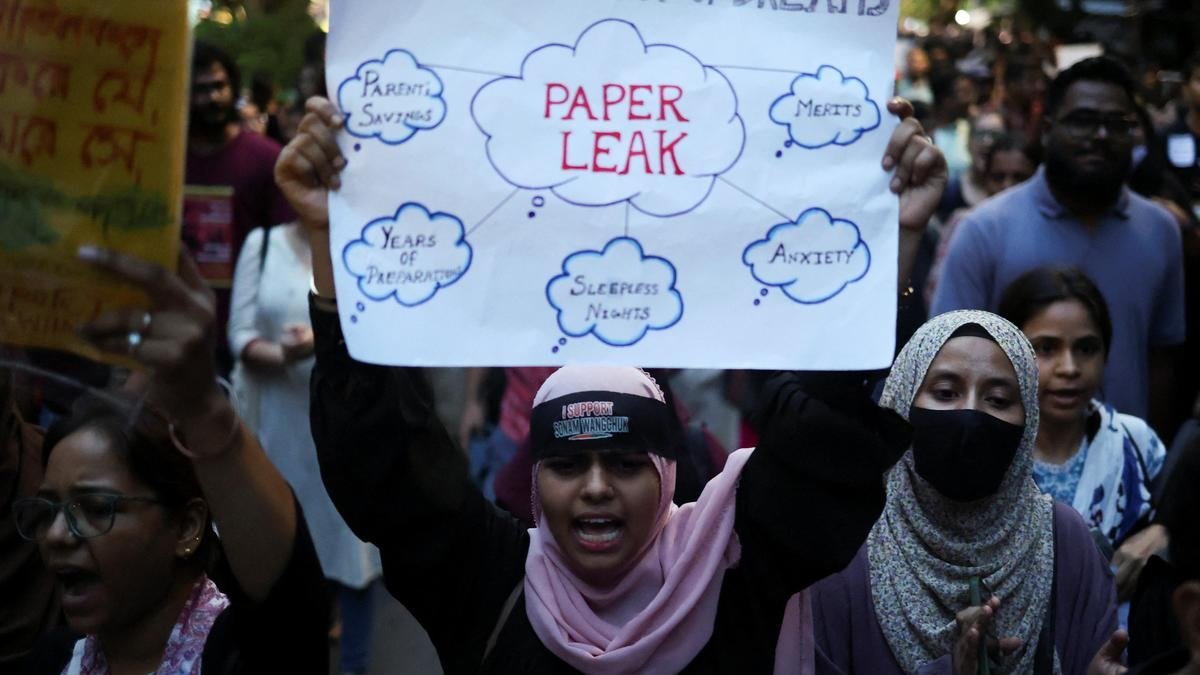
The ongoing student-led protests concerning recurring examination paper leaks and the conduct of the National Eligibility cum Entrance Test (NEET) have drawn comparisons to the India Against Corruption (IAC) movement. The IAC movement significantly impacted the second United Progressive Alliance (UPA) government between 2011 and 2013.
While the immediate triggers of the two movements differ, both represent an outsider's challenge to the political establishment. The IAC movement was driven by allegations of corruption under the UPA, which came to symbolise perceived governance failures during the latter years of the Manmohan Singh administration. In contrast, the current protests focus on the credibility of public examinations under the National Democratic Alliance (NDA), testing the BJP-led government's promise of efficient and transparent governance.
The Narrative of Political Independence
Established political parties often find it difficult to convincingly direct public anger against the political system due to their ideological baggage, electoral compulsions, and the trappings of power. During the IAC movement, organizers consciously projected the campaign as a citizens' initiative. This was maintained despite assertions from the Congress-led UPA that the movement represented a collaboration between the Rashtriya Swayamsevak Sangh (RSS) and civil society activists.
This carefully maintained narrative of political independence allowed the IAC to attract widespread support across social and ideological divides. A similar dynamic is visible in the current student-led protests. Although opposition parties have expressed support for the students' demands, the movement derives its primary legitimacy from remaining student-led rather than party-led. Innovator-turned-activist Sonam Wangchuk has emerged as the principal public face of the agitation.
When a public movement is perceived as an extension of an opposition party, governments can more easily dismiss it as routine political mobilization. Consequently, sections of BJP supporters have alleged that the Cockroach Janta Party (CJP), a key force behind the Delhi protests, is being guided by the Aam Aadmi Party (AAP). CJP founder Abhijeet Dipke previously volunteered for AAP and worked alongside Manish Sisodia.
The Battle Over Ownership and History
Whether these allegations are substantiated or not, they reflect a familiar political strategy of portraying independent movements as proxies for established political rivals. Meanwhile, the Congress party has sought to establish its own role in the narrative, reminding students that it has been raising the issue of paper leaks for years rather than just weeks or months.
Indian political history highlights a recurring paradox for anti-establishment movements. While their moral authority is derived from standing outside the political system, translating public anger into policy changes ultimately requires entering the electoral arena. This transition often alters the character of the movement.
For example, the Assam Agitation led to the formation of the Asom Gana Parishad (AGP), which assumed power in 1985 with promises to redefine regional politics. Over time, however, the AGP became another participant in the conventional political system it had set out to transform.
The Transition from Protest to Governance
The Aam Aadmi Party followed a comparable trajectory. Emerging directly from the anti-corruption movement, AAP built its political identity around clean politics and public accountability. However, after taking office, the party faced its own challenges, including corruption allegations related to the Delhi excise policy case.
The BJP has used these allegations to question AAP's anti-corruption credentials, while AAP has consistently maintained that the investigations are politically motivated. Regardless of the legal outcomes, these developments highlight how protest movements are judged by the standards of governance once they transition into power.
While movements gain initial legitimacy by challenging the establishment, maintaining long-term political influence often requires joining it. In doing so, they inevitably face the same public scrutiny, political compromises, and accusations of wrongdoing that they once directed at those in power.