How Rahul Gandhi is Shaping a New Political Narrative Around Women and Dalits

A new political narrative is taking shape under the leadership of Rahul Gandhi, the Leader of the Opposition in the Lok Sabha. Focused on a constituency he describes as "90% of India," Gandhi is stepping up efforts to win over Dalits, women, Gen Z, Other Backward Classes (OBCs), and minorities. This strategy, centered on the "shuddhikaran" (purification) controversy, the Manusmriti, the "Chhatron ki Goonj" events, and the demand for a caste census, is geared toward the 2027 assembly elections in Uttar Pradesh and other states, which could subsequently influence the 2029 general elections.
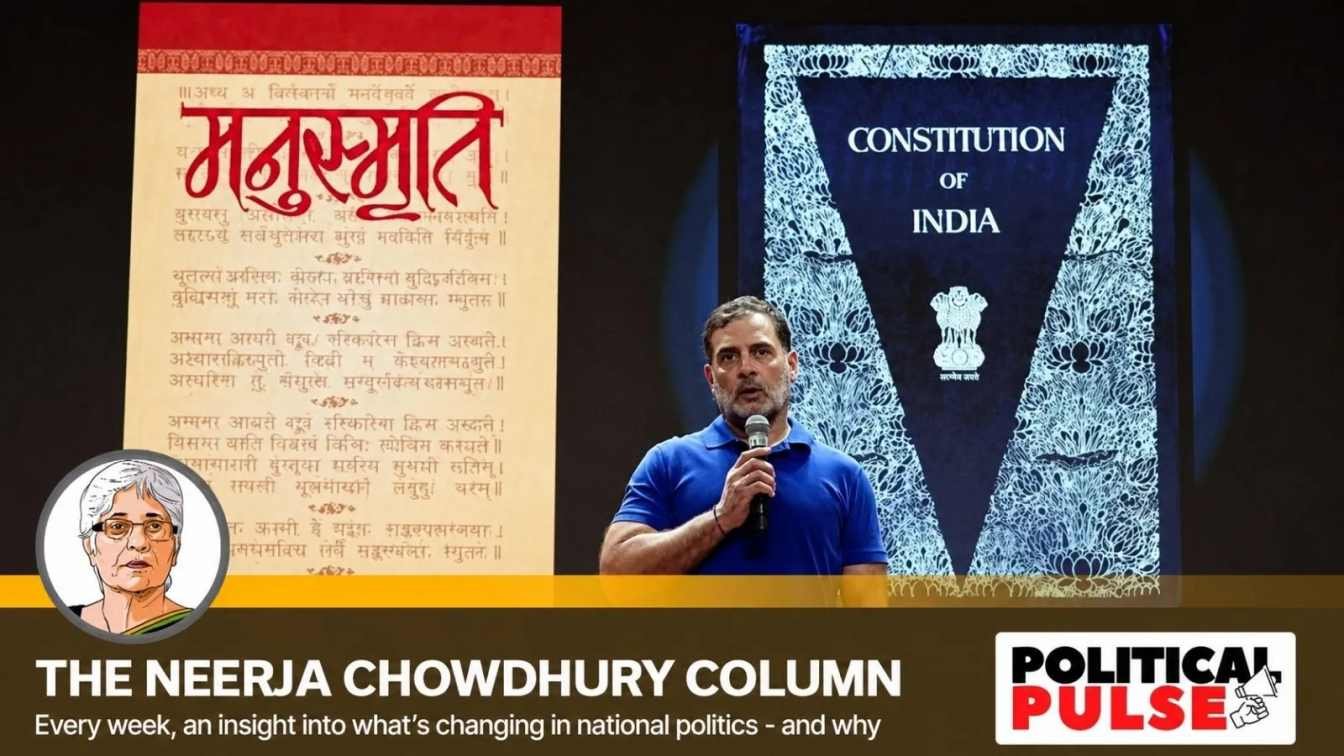
Gandhi recently drew sharp criticism from the Bharatiya Janata Party (BJP) after he criticized the Manusmriti, an ancient Hindu text, arguing that it views women merely as extensions of their fathers, husbands, or sons. The ruling party accused him of being derisive toward the Hindu faith, setting the stage for a political confrontation as both parties reach out to key voting blocs ahead of the upcoming state polls.
A Shift in Congress Strategy and Gen Z Appeal
Gandhi’s remarks at his "Chhatron ki Goonj" event in Pune signaled a distinct shift in the Congress party's approach. Moving away from conventional political terminology such as "welfare" and "empowerment," the Leader of the Opposition spoke of "smashing patriarchy" and accused the Rashtriya Swayamsevak Sangh (RSS) and the BJP of harboring a "Manusmriti mindset."
The format of these interactions and Gandhi's personal presentation have also undergone changes. In Pune, he wore a stylish yellow shirt instead of his usual white T-shirt and beige trousers. During a previous "Chhatron ki Goonj" address in Prayagraj, he wore a pink flowing shirt. Congress insiders suggest this makeover is part of an effort to connect with Gen Z, particularly young women, a demographic the party believes it has previously overlooked.
During the Pune event, Gandhi walked across the stage with a microphone, inviting groups of young women to join him. The participants discussed safety concerns affecting their education and employment, financial limitations, and their struggles to make independent decisions. While some spoke in English, most communicated in Marathi and Hindi, drawing applause from the audience.
The Significance of the Manusmriti and Dalit Outreach
The decision to bring up the Manusmriti was aimed at appealing to both Gen Z women and Dalits. A century ago, in 1927, B. R. Ambedkar publicly burned the Manusmriti to protest its teachings, which he criticized for promoting untouchability and denying equality and autonomy to women and lower castes.
In addition to this, Gandhi escalated his political campaign on August 29 by targeting the BJP over an incident in Haldwani. He criticized the ruling party for failing to act against individuals who reportedly washed a stage after Congress president Mallikarjun Kharge, who is a Dalit, had addressed a gathering there. Gandhi equated this "purification" act with the practice of untouchability, arguing that despite the BJP's efforts to court Dalits and OBCs since 2014, it remains an upper-caste party at its core.
While the BJP distanced itself from the Haldwani incident, Gandhi has continued to raise the issue, questioning how ordinary Dalits in rural areas are treated if the Dalit president of the country's largest opposition party faces such actions. The Congress party views the return of Dalit voters to its fold as crucial to its electoral revival, noting that concerns over the preservation of constitutionally guaranteed reservations contributed to the BJP failing to secure a majority on its own in the 2024 general elections.
OBC Mobilization and BJP's Counter-Strategy
Alongside his outreach to Dalits and women, Gandhi is maintaining his focus on OBC mobilization. He and Kharge recently sent a letter to Prime Minister Narendra Modi requesting a reframing of the questions in the upcoming caste census, arguing that the current format may not deliver justice to OBC communities.
However, the Congress party faces a significant challenge in its organizational weakness across large parts of India. Observers note that generating political momentum may not translate into electoral victories without a robust party machinery capable of converting public goodwill into votes.
Meanwhile, the BJP has used the Manusmriti debate to counter Gandhi's narrative. BJP leaders have accused the Leader of the Opposition of selectively targeting Hindu religious texts. Newly appointed BJP general secretary Smriti Irani, who defeated Gandhi in Amethi in 2019, challenged him to support the implementation of the Women’s Reservation Act and to induct more women ministers into the Congress-led Karnataka Cabinet. Additionally, Uttar Pradesh Chief Minister Yogi Adityanath accused Gandhi of insulting the country's religious traditions.
The controversy could also help the BJP consolidate its support among upper castes, who have recently felt uneasy about the party's outreach to OBCs, the now-stayed UGC equity norms, and the ongoing caste census. As in 2018, when the government introduced a 10% quota for the economically weaker sections (EWS) after restoring the SC-ST Act, the BJP continues to navigate a delicate balance among different social groups.