How Ideological Movements and Cultural Marxism Shape Modern Protest Politics

Political revolutions and major social upheavals rarely begin on the streets. Instead, history indicates that these significant shifts start much earlier within classrooms, universities, media platforms, cultural institutions, and intellectual circles. These are the spaces where ideas are cultivated, debated, and eventually transformed into active political movements. This gradual process of ideological change, which can span years or decades, fundamentally reshapes how societies view their history, identity, institutions, and future.
One increasingly influential framework used to interpret this phenomenon in contemporary global political debates is "Cultural Marxism." According to this perspective, modern ideological struggles have shifted away from violent class revolutions. Instead, the focus has turned toward influencing culture, education, media, and public discourse. The primary objective under this framework is not merely winning elections or replacing governments, but reshaping the moral, cultural, and intellectual foundations of society itself.
The Role of Academia and Popular Culture
Under this analytical framework, the traditional rivalry between capitalism and communism is often misunderstood. While they appear to be opposing economic systems, both can serve as mechanisms for concentrating power. Capitalism is viewed as influencing finance, markets, and economic institutions. In contrast, communism is seen as seeking influence over culture, education, and social values. Because institutions shape generations long after governments change, gaining ideological influence over them is considered far more significant than achieving temporary electoral victories.
The first stage of this ideological transformation begins within academia. Historically, universities have played a central role in shaping political thought and social movements. Educational institutions increasingly reinterpret history, religion, and national identity through frameworks that encourage students to question or reject traditional cultural values. Proponents of this theory contend that this gradual process weakens civilizational confidence, creates a sense of alienation from one's heritage, and makes younger generations more receptive to radical narratives promising sweeping structural change.
The next stage extends beyond classrooms into popular culture. Cinema, streaming platforms, social media, literature, music, theatre, and digital entertainment serve as influential tools for shaping public opinion. Advocates of the Cultural Marxism thesis argue that these platforms often challenge traditional family structures, religious beliefs, patriotism, and cultural continuity while promoting individualism and identity-based politics. This shift can lead to national identity giving way to narrower identities based on caste, religion, ethnicity, gender, or other social categories, which weakens social cohesion and increases vulnerability to political polarization.
Legitimate Grievances and Political Polarization
Every democratic society contains genuine social inequalities and historical challenges that require thoughtful reform. Issues such as caste, economic inequality, unemployment, education, gender justice, and minority rights deserve serious public discussion and constitutional solutions. However, proponents of the Cultural Marxism framework argue that ideological movements sometimes exploit these legitimate concerns, transforming them into permanent political conflicts by emphasizing identity divisions rather than common national interests. In this view, sustained polarization becomes a deliberate political strategy rather than an unintended consequence.
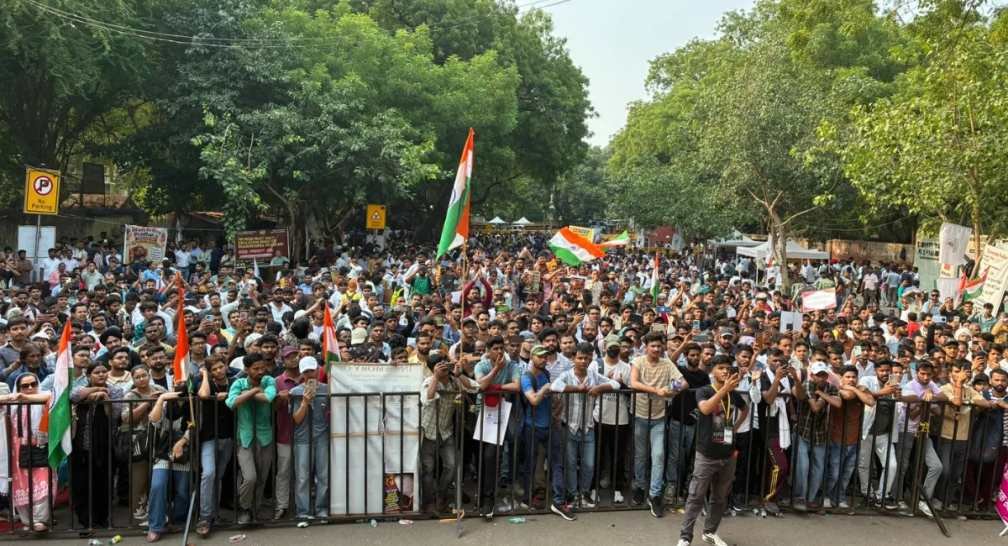
Recent protests associated with the CJP in New Delhi have revived this debate. The immediate concerns raised by participants, including issues relating to the NEET examination and youth aspirations, have generated significant public attention. From one perspective, the subsequent expansion of the movement illustrates how genuine public grievances can evolve into broader political campaigns that extend far beyond their original demands. Conversely, others disagree with this assessment, viewing such movements as legitimate democratic activism. This divergence highlights the necessity of careful, evidence-based analysis rather than simplistic conclusions.
Historical Precedents and Democratic Balance
Supporters of this interpretation frequently cite several historical examples where prolonged political mobilization fundamentally altered existing political systems. These include Ukraine's Euromaidan movement, Bangladesh's student-led quota protests, Sri Lanka's Aragalaya movement, and Nepal's Maoist revolution. While these events remain the subject of extensive scholarly debate—with analysts emphasizing domestic political failures, economic crises, international geopolitics, or ideological organization—they demonstrate how public dissatisfaction can evolve into movements with far-reaching political consequences.
From this perspective, the long-term contest is focused on universities, media organizations, cultural institutions, civil society, public discourse, and the judiciary, as those who shape these institutions also shape the values of future generations. Consequently, democratic societies must constantly balance two equally important principles. Citizens possess the constitutional right to criticize governments, expose corruption, demand educational reforms, question administrative failures, and organize peaceful protests. However, democratic disagreement must remain peaceful, constitutional, and focused on policy solutions rather than violence, intimidation, or attempts to undermine public institutions.
Ultimately, India's future depends on informed public debate rather than perpetual confrontation. Student movements can serve as platforms for discussing educational reforms, employment generation, institutional accountability, examination transparency, economic policy, and governance. Safeguarding democracy requires strong institutions, independent thinking, constitutional values, and informed civic participation, ensuring that democratic freedom is accompanied by intellectual responsibility and social cohesion.