Google Unveils Gemini Robotics 2 to Power Next-Generation Humanoid Robots

Google has introduced Gemini Robotics 2, a new artificial intelligence (AI) model developed by its DeepMind labs. Designed to serve as a brain for humanoid robots, the model aims to give machines the ability to reason, move and complete complex tasks in changing physical environments.
Unlike traditional robots that are programmed for fixed, repetitive tasks, Gemini Robotics 2 acts as an intelligence layer. According to Google, this layer allows robots to understand their surroundings, reason through problems and carry out complex physical tasks on their own, allowing them to walk, think and interact more naturally in the real world.
Whole-Body Control and Enhanced Dexterity
One of the primary upgrades in Gemini Robotics 2 is whole-body control. While its predecessor could only control a robot's upper body, the new model can control the entire humanoid. This capability allows robots to walk, crouch, bend, balance and use their hands simultaneously.
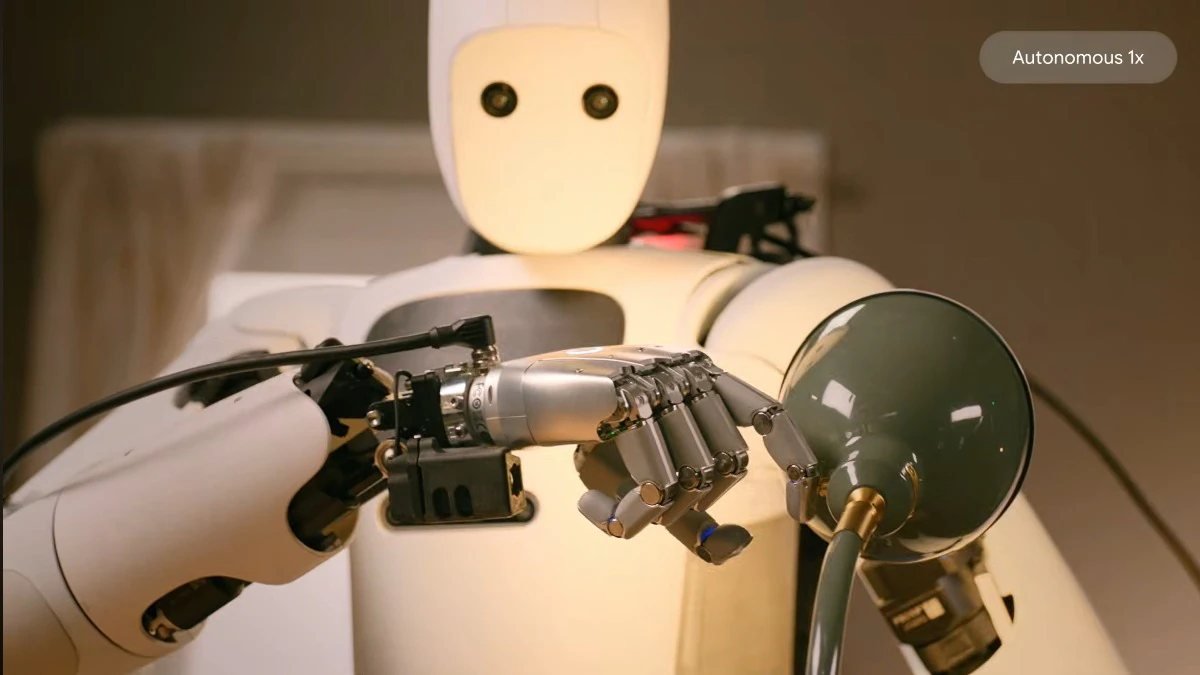
Google has also improved the robot's dexterity. The model enables five-fingered robotic hands to perform delicate tasks, such as tying knots, sealing zip-lock bags and handling small objects. Additionally, it supports simpler two-finger grippers for warehouse tasks, such as tightly packing boxes.
The model is designed to adapt to different types of robots, helping them reason about movement instead of following a fixed list of instructions. This adaptability helps robots perform a wider range of tasks in changing environments without requiring manual programming for every situation. It also addresses the industry challenge of transferring skills learned by one robot to another with a different body shape or design.
Project Management and On-Device Capabilities
Alongside the core model, Google has introduced Gemini Robotics ER 2 to handle more complex tasks. Operating like a project manager, ER 2 does not control movements directly. Instead, it understands spoken instructions, breaks tasks down into smaller steps, tracks progress and adjusts plans if something goes wrong.
Google states that Gemini Robotics ER 2 allows robots to complete longer, multi-step tasks involving hundreds of decisions, and even collaborate with other robots in shared spaces. The company describes ER 2 as a high-level brain that can chat with humans, understand the physical world and plan tasks before handing off motor execution to any given lower-level vision-language-action (VLA) model.
For offline operations, Google unveiled Gemini Robotics On-Device 2. This AI model runs directly on the robot instead of relying on the cloud, allowing machines to continue working when offline. Google notes that developers can customise this model for new robots in just a few hours using fewer than 200 training examples.
Safety Systems and ASIMOV-Agentic Benchmark
Google is also focusing on safety by combining physical safety systems with AI safety checks. The company has introduced a new benchmark called ASIMOV-Agentic to test whether robots can refuse unsafe commands, identify when to ask for human assistance and avoid dangerous situations.
Under these safety protocols, the robots can detect when a person is too close, prompting them to stop automatically and resume work only when it is safe to do so.