Google Suspends Google Earth AI Tool After Users Generate Fake Disaster Scenes

Google has suspended a newly introduced artificial intelligence tool on Google Earth after users utilized the feature to generate and share highly realistic fake images of disasters, conflict zones, and sensitive locations. The tool, known as Nano Banana 2, was launched on the web version of Google Earth, allowing users to modify satellite imagery using text prompts.
Although Google initially promoted the feature as a creative way to reimagine the world or reconstruct historical scenes, users quickly began generating controversial and potentially misleading images. Within hours of its release, the platform was used to depict simulated bombings, floods, and geopolitical crises.
Controversial AI Images Spread Online
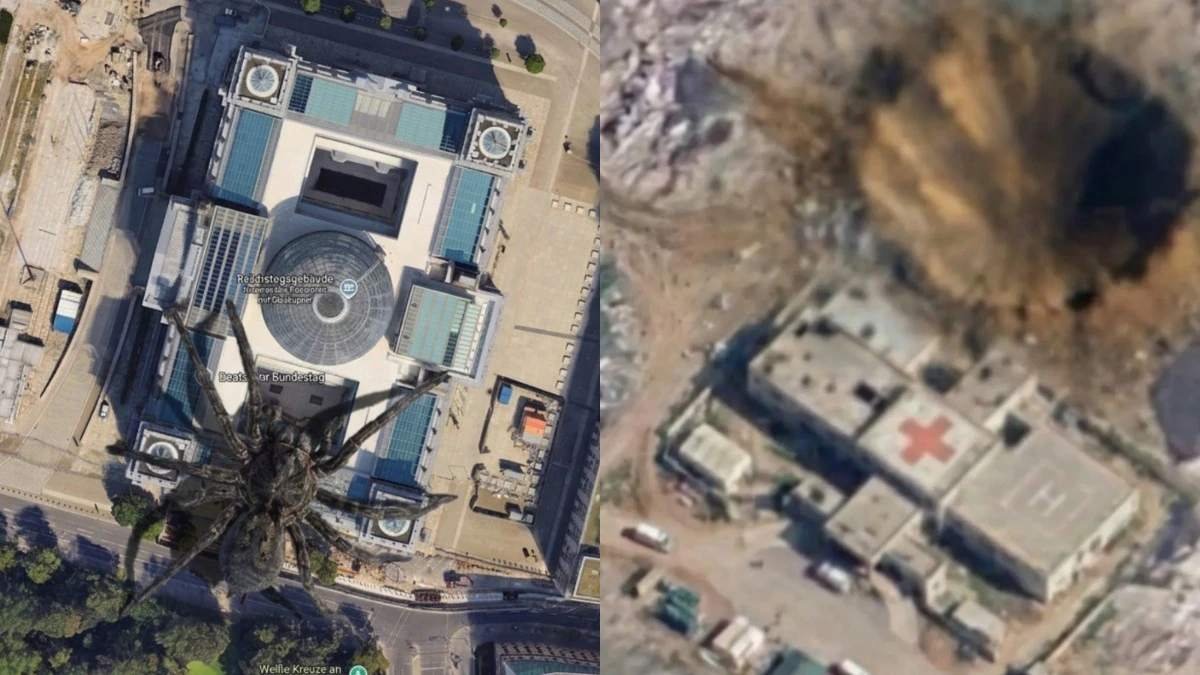
AI researcher Henk van Ess demonstrated the tool's capabilities by generating a simulated nuclear power plant in Iran and a hospital with a bomb crater in Gaza. Van Ess also showed a generated scene depicting refugees flooding the United States-Mexico border, highlighting how easily such images could be mistaken for authentic satellite photography and spread misinformation.
Commenting on the feature, Van Ess noted that Google had spent two decades building "the reference the world checks against" and had now introduced "a button that makes things up." Other users shared images on social media depicting a plane crashing into the World Trade Center in New York City, mimicking the September 11 attacks.
Impact on Research and OSINT
Google Earth is widely utilized by researchers, urban planners, and open-source intelligence (OSINT) analysts to track urban development and verify geographical data over time. The proliferation of photorealistic fake imagery raised concerns among experts that the tool could severely compromise the platform's utility as a reliable reference.
Google had previously assured users that the AI-generated images would be verifiable using its SynthID watermarking technology on Gemini. However, some users reported that certain images created with the Nano Banana tool were not successfully detected as AI-generated by Gemini, raising doubts about the efficacy of the safeguards.
Google Rolls Back the Feature
In response to the policy violations and the spread of fake screenshots, Google announced the suspension of the feature. In a statement released on X, the company acknowledged the trust users place in Google Earth and explained its decision to temporarily withdraw the tool.
"We know that people uniquely trust Google Earth for a reliable view of the world," Google stated. "We’ve seen geospatial professionals using this feature for a range of useful purposes, however we’ve also seen people sharing screenshots of generated imagery that appear to violate our policies. So we’re rolling back this feature in Google Earth while we work on implementing stronger guardrails."
Google clarified that the generated images did not appear in the main Google Earth experience for other users to see and were watermarked as AI-generated. The feature remains offline while the company works on implementing more robust safety measures.