
Glacial Collapse Triggers Devastating Floods and Landslides on Nepal-Tibet Border

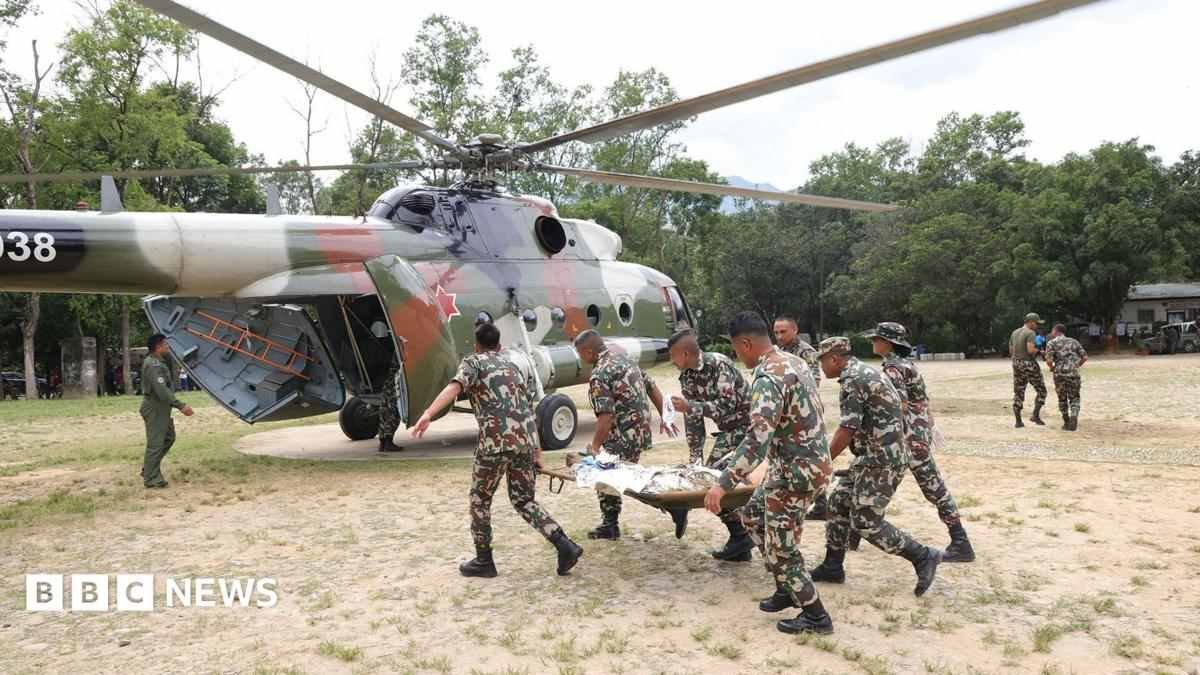
A devastating flash flood and series of landslides along the border of Nepal and Tibet have left hundreds of people dead and thousands more missing. The disaster, which began on Wednesday, has swept away homes, roads, and critical infrastructure, prompting a massive international rescue effort amid fears of secondary flooding.
According to Nepal's National Disaster Risk Reduction and Management Authority and local police, at least 579 people have been confirmed dead in Nepal, while 1,924 people remain unaccounted for. Across the border in Tibet, Chinese state media reports that at least five people have died and another 558 individuals are missing. Officials warn that these figures may continue to change as search and rescue operations proceed under challenging conditions.
Glacial Collapse Identified as Cause of Disaster
While initial reports suggested that an earthquake along the border had triggered the landslides, the US Geological Survey (USGS) later confirmed that the disaster was caused by a "glacial collapse," which occurs when a glacier or a portion of it disintegrates. The impact of the collapsing glacier hitting the valley floor was so intense that it registered a seismic magnitude of 5.2, generating catastrophic downstream effects.
The USGS reported that powerful floodwaters and debris surged approximately 62 miles (100 kilometers) downstream from the Trishuli and Bhote Koshi Rivers. The torrent swept through northern Nepalese towns that are highly popular with mountaineering tourists and pilgrims. Video footage captured a massive wall of mud and rock destroying buildings, roads, and vehicles in the Nuwakot region, while a torrent of water enveloped the multi-storey Rasuwagadhi Border checkpoint on the Nepalese side. Gyirong Port, located on the Tibetan side of the border, was also severely impacted.
Scientists are currently working to establish the exact sequence of events. Mike Searle, a professor of Earth sciences at Oxford University, suggested that the glacier may have collapsed hours or days before the flooding reached Nepal and Tibet. He noted that the immense wave of debris indicates a landslide likely occurred first, damming the river and building up water before bursting into a massive flood.
Threat of Secondary Flooding and Blockages
The International Centre for Integrated Mountain Development (ICIMOD) has issued warnings regarding the potential for secondary flooding in the coming days. The organization is currently assessing whether narrow sections of the Trishuli River have been temporarily blocked by debris, which could create a landslide dam and lead to subsequent outburst floods.
In Tibet, Chinese authorities have warned of a "high risk" that a newly formed barrier lake could burst its banks. The lake, which formed at the confluence of the Chhochen Khola and Purepu Tsangpo rivers, had accumulated an estimated 2.5 million cubic metres of water by Friday, according to state broadcaster CCTV. Rescue operations on the Chinese side were briefly suspended on Friday when the lake overflowed, though water levels subsequently dropped slightly. Heavy rain is forecast for the region over the coming days, though experts noted the lake could potentially drain naturally over time.
Thousands Reported Missing, Including Foreign Tourists
The disaster has affected a large number of foreign nationals visiting the region's mountains and sacred pilgrimage sites. The government of Nepal has released a list of more than 517 foreign citizens who remain out of contact. Additionally, the missing in Nepal include 44 members of the Nepali army and 28 police officers.
According to official government statements and police reports, the missing foreign nationals include:
- India: At least 320 Indian nationals, according to the foreign ministry in Delhi.
- China: Nearly 100 Chinese nationals missing in Nepal, according to the Chinese foreign ministry.
- United States: 90 Americans, according to the US State Department.
- Ukraine: 62 Ukrainian nationals, according to Nepalese police.
- Malaysia: 51 Malaysian tourists travelling with Fishtail Tours and Travels.
- Australia: 39 Australians, with the foreign minister warning this number may rise.
- United Kingdom: 33 British nationals, according to Nepalese police.
- Canada: 30 Canadian citizens and permanent residents, according to Global Affairs Canada.
Smaller numbers of travellers from South Korea, South Africa, Portugal, the Netherlands, and New Zealand are also among those unaccounted for. It remains unclear whether any individuals have been counted twice across the separate Nepalese and Chinese figures.
International Relief and Rescue Operations
Rescue efforts are being severely hampered by unpredictable weather and continuous rainfall. Brigadier General Rajaram Basnet, a spokesman for the Nepal army, stated that the weather conditions are making operations increasingly difficult. In response, the office of Nepal's Prime Minister Balendra Shah announced the deployment of a 1,200-strong team along the riverbanks from Rasuwa to Chitwan to accelerate recovery efforts.
In China, President Xi Jinping chaired an emergency meeting to coordinate rescue and relief operations in the affected Tibetan areas. Access to Tibet remains highly restricted, making independent verification of the situation and communication with local residents extremely difficult for foreign media.
On the international front, Kamal Kishore, the special representative of the UN secretary general for disaster risk reduction, has called on global partners to support the response. The United States has pledged $500,000 in aid, while the United Kingdom has offered £5 million. The Indian Air Force has dispatched military cargo planes carrying nearly 50 tonnes of emergency supplies to Nepal.
The Role of Environmental Factors
Geologists and researchers are examining the potential role of climate change, which is known to accelerate glacier melt in the Hindu Kush Himalaya region. Geologist Daniel Shugar, from the University of Calgary, noted that global warming causes glacial thinning, which can increase the risk of landslides, though he cautioned that it is still too early to definitively link this specific event to climate change.
Simon Cook, a geoscientist at the University of Dundee, agreed that climate change could have played a role. His team identified the likely site of the collapse at the lower section of a glacier near the Langtang Lirung peak in Nepal, about 15 kilometers west of the flood site. Cook explained that warming temperatures are causing permafrost—which helps hold mountainsides together—to thaw and degrade, leading to an increased frequency of landslides.