Gallery Sumukha Celebrates 30 Years of Shaping Bengaluru’s Contemporary Art Scene
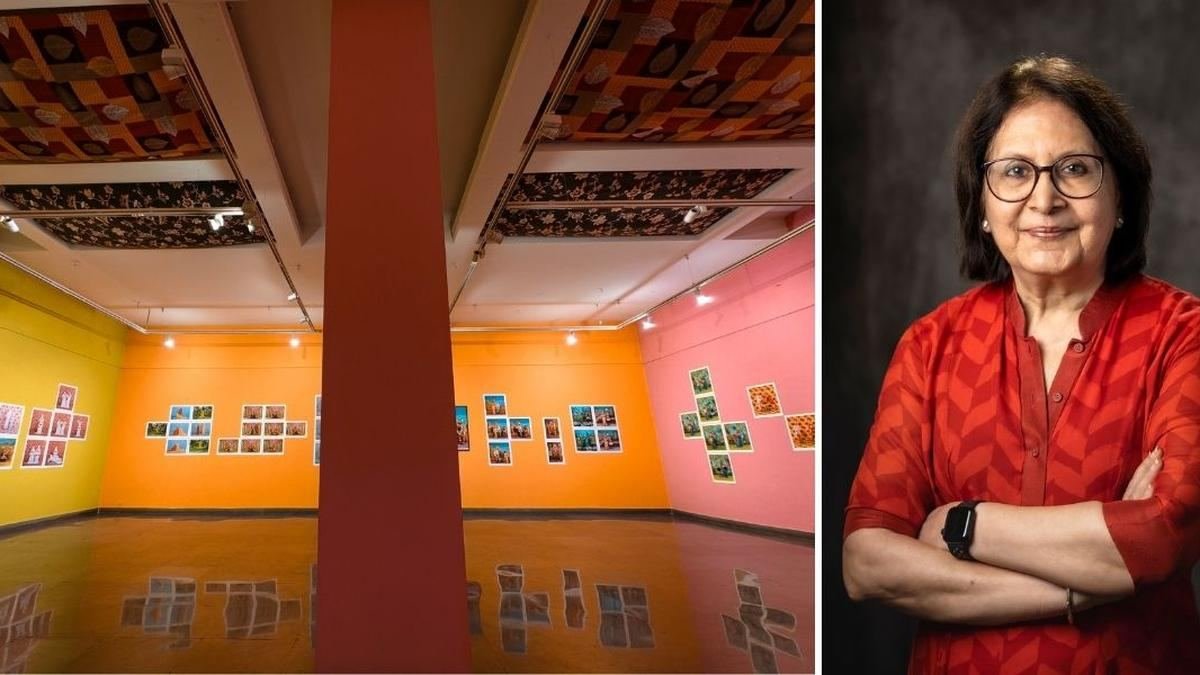
In the neighborhood of Wilson Garden, Bengaluru, patients from a local neuro clinic occasionally wander into the cavernous front room of Gallery Sumukha. Filled with paintings and sculptures, the space often surprises these unexpected visitors. For Premilla Baid, the 73-year-old founder of the gallery, these serendipitous drop-ins remain one of the best ways for the public to engage with art. The gallery shares its premises with the clinic, operating under a generous doctor who has served as Baid’s landlord for decades.
Marking its 30th anniversary, Gallery Sumukha reflects the distinct, unpretentious, and entrepreneurial spirit of Bengaluru’s art ecosystem. While Wilson Garden is located close to the city’s central business district, it is not a typical upmarket area associated with luxury art galleries. Nonetheless, the neighborhood has steadily grown into a cultural hub, hosting spaces such as 1 Shanthiroad, The Courtyard, and the Attakalari Centre for Movement Arts.
From Humble Beginnings to South India’s Largest Private Gallery
Founded in 1996, Gallery Sumukha initially operated out of Baid’s home before moving to the Alliance Francaise building. In 1999, the gallery relocated to its current location. Today, the space spans over 5,000 square feet, making it the largest private gallery space in South India. Designed by architect Vikram Sardesai, the venue was specifically built to accommodate large-scale installations, sculptures, and multimedia showcases that smaller commercial galleries in the region could not host.
Baid’s journey into the art world began after she spent six years in Ireland and returned to India. She was deeply inspired by art doyenne Sara Abraham’s Kala Yatra. Despite being self-taught, Baid organized her first exhibition for a charitable organization at the Oberoi Hotel in 1996. The exhibition successfully sold paintings worth approximately ₹5 lakh, which Baid notes was a significant amount of money at the time. This success motivated her to establish the gallery out of pure passion alongside her medical practice.
Baid prefers to identify as a gallerist rather than a curator, noting that curators typically possess technical training and formal educational backgrounds in art. Instead, she relies on her judgment and the understanding she has built over three decades to put shows together. Initially funded by her personal savings, the gallery has remained self-sustained. Baid chose long-term sustainability over aggressive commercial expansion, reinvesting the gallery's earnings back into its operations. An expansion into Chennai, hosted at her parents' home in 2006, lasted for about six years.
Nurturing Artists and Professionalizing the Local Scene
According to 88-year-old artist-sculptor Balan Nambiar, Bengaluru’s art scene was highly limited until the 1970s. During that era, the Karnataka Chitrakala Parishath held annual exhibitions in the banquet hall of the Vidhana Soudha, and the city had only two freelance artists: Rumale Chennabasavaiah and Nambiar himself. The only private art gallery at the time was Krithika Art Gallery on St. Marks Road, run by Kausalya Dayaram. While other galleries like Sakshi Gallery and Gallery SKE emerged and closed within short spans, Sumukha established itself in the 1990s as one of the first serious contemporary art spaces in the city.
Kiran Mazumdar-Shaw, chairperson of Biocon and a prominent art collector, credits Gallery Sumukha with elevating the standards of art galleries in Bengaluru. She noted that before Sumukha, local galleries often featured a mix of professional and amateur works. Mazumdar-Shaw highlighted that Baid brought a necessary level of professionalism to curation and market engagement that had previously been missing in the city.
Over its 30-year history, Gallery Sumukha has mounted an estimated 230 shows and collaborated with more than 100 artists. Its roster includes veteran local artists such as Yusuf Arakkal and S.G. Vasudev, Vadodara-based Gulammohammed Sheikh, K. Laxma Goud, and prominent contemporary figures like Atul Dodiya, Pushpamala N., G. Ravinder Reddy, and Paresh Maity. The gallery has also nurtured local talent like Ravikumar Kashi, who has worked with Sumukha since the 1990s.
Fostering Experimental Art and Future Outlook
Beyond commercial sales, Sumukha has served as a venue for workshops in printmaking and sculpture, lectures, and experimental projects. Artist Pushpamala N. emphasized that the gallery has consistently encouraged experimental work, installations, live performances, book releases, and educational walkthroughs for school and art students.
The gallery has also played a pivotal role in launching international careers. Shivaraju B.S., also known as Cop Shiva, a former policeman who became an internationally recognized photographer, received his first solo show at Sumukha in 2012. Additionally, Baid credits contemporary artist Paresh Maity as the gallery's biggest "saviour," having showcased his work at numerous international art fairs.
While Bengaluru has grown into one of the three major hubs of the Indian art market, local IT wealth does not easily translate into art sales compared to the more mature markets of Mumbai and Delhi. Abhishek Poddar, Founder-Trustee of the Museum of Art & Photography (MAP), attributes this to Bengaluru being a younger city with less conspicuous consumption, fewer physical galleries, and the rise of geography-agnostic online art sales.
To celebrate its three decades, Gallery Sumukha is hosting a rare solo exhibition of sculptures by G. Ravinder Reddy. Looking ahead, Baid remains committed to traditional gallery practices. She states that the gallery does not engage in e-commerce or focus on technology like AI art, choosing instead to focus on finding promising young artists and producing high-quality exhibitions.