French Authorities Arrest Nearly 1,000 Following Renewed Mass Protests Across Country

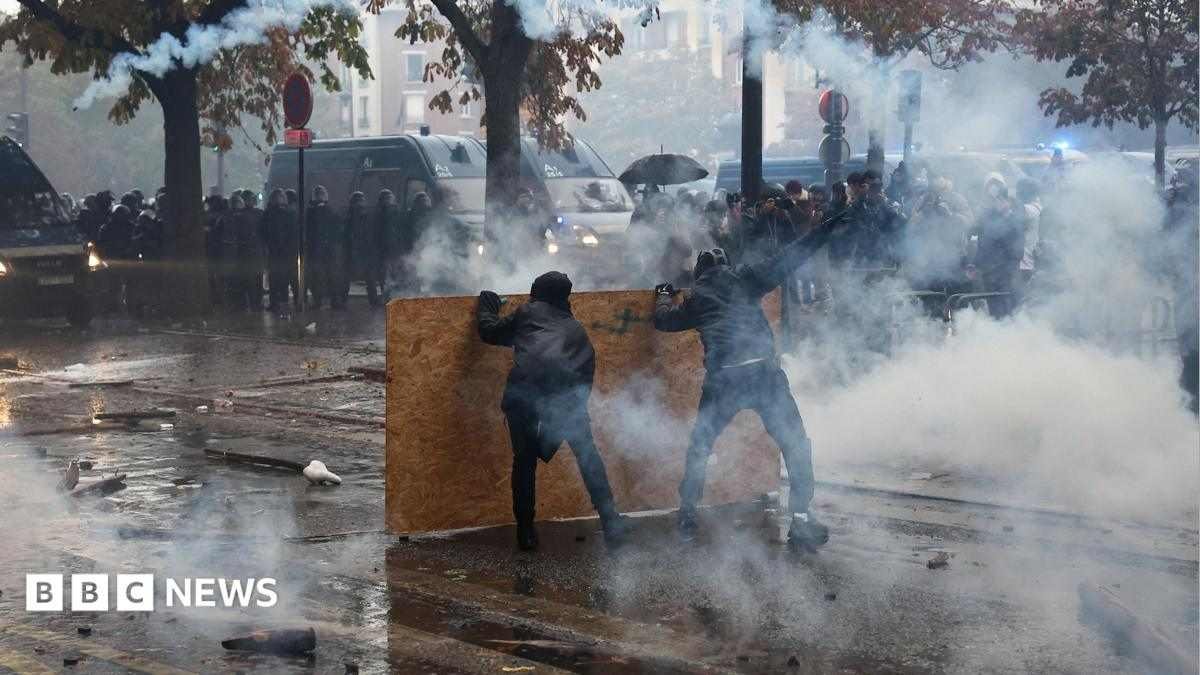
French security forces have arrested nearly 1,000 people as hundreds of thousands took to the streets across France in another day of demonstrations over the cost of living and poor school conditions. The protests, which were largely peaceful throughout the day, were followed by late-evening confrontations between demonstrators and law enforcement officers in several major cities.
According to figures released by the Interior Ministry, an estimated 410,000 people participated in Saturday's demonstrations, while trade union representatives placed the turnout at approximately 800,000. To maintain order and prevent a recurrence of widespread rioting seen in previous weeks, authorities deployed around 70,000 police officers nationwide and enforced strict local security restrictions.
Confrontations and Security Deployments in Major Cities
Despite the heightened security, clashes broke out in several urban centres. In Paris, disturbances occurred at the conclusion of a peaceful march travelling from Porte d'Italie toward Porte de Vincennes. Police operations in the capital included the deployment of an elite unit usually assigned to counter-terrorism and organised crime. Masked youths damaged a car dealership, threw projectiles, and constructed makeshift barricades, prompting police to execute baton charges, fire tear gas, and deploy water cannon.
French Interior Minister Laurent Nuñez stated that several thousand radical activists gathered at the rear of the Paris march, including roughly 500 individuals identified by authorities as rioters. Speaking later in the day, Nuñez confirmed that nearly 1,000 arrests had been made across the country, noting that the figure was expected to rise. He also reported that two people were seriously injured during the unrest, with one case registered in Toulouse and another in Clermont-Ferrand.
Disruptions were reported in other regional hubs as well. In Marseille, protesters set rubbish bins alight and blocked roadways with metal sheets, leading law enforcement vehicles to drive through burning barricades. In Bordeaux, individuals wearing dark clothing and face coverings removed wooden boards from a building to construct street barriers. Meanwhile, in Lyon, police used tear gas grenades against a crowd of roughly 150 secondary school and university students who had gathered in an area designated off-limits by local prefectural authorities.
Public Frustration and Political Fallout
The latest wave of mobilization follows executive action taken earlier in the week by President Emmanuel Macron, who decreed that only demonstrations organized by recognized trade unions would be legally permitted. Recent days have also seen fast-track court proceedings result in hundreds of jail sentences for individuals accused of arson, looting, and vandalism.
Demonstrators voiced widespread frustration with government policy and economic pressure. Zelie, a 26-year-old protester in Paris, said citizens felt silenced and overburdened by heavy taxation since President Macron took office. Teenage demonstrators also expressed despair over poverty and police violence, stating that protests would continue until the government provided a substantive response to their demands.
In Orléans, approximately 13,000 people attended a peaceful rally directed against the hard-right National Rally party. The widespread unrest comes six months prior to France's upcoming presidential election, with leading political contenders aiming direct criticism at President Macron and his cabinet ministers for the continuing turmoil.
Prior Destruction and European Context
Saturday's security measures succeeded in averting the scale of destruction observed during the previous weekend, when an estimated 550,000 people protested rising fuel costs and general living expenses. That earlier wave of disorder resulted in more than 2,500 arrests, left approximately 1,000 police officers injured, and caused severe harm to more than 2,000 businesses across the nation. France's Chambers of Commerce and Industry estimated the resulting economic damage at hundreds of millions of euros, prompting local authorities to enact overnight curfews in Paris and other municipal areas.
The economic and social grievances fueling the unrest in France also reflected in protests across other European capitals on Saturday. In Tirana, Albanian riot police deployed tear gas against thousands of anti-government demonstrators. Clashes were also recorded in Brussels, while a heavy military and police presence prevented planned gatherings in Milan following severe disorder the previous week.