
Extreme Heat and Climate Change Threaten Africa's Resilient Camel Populations

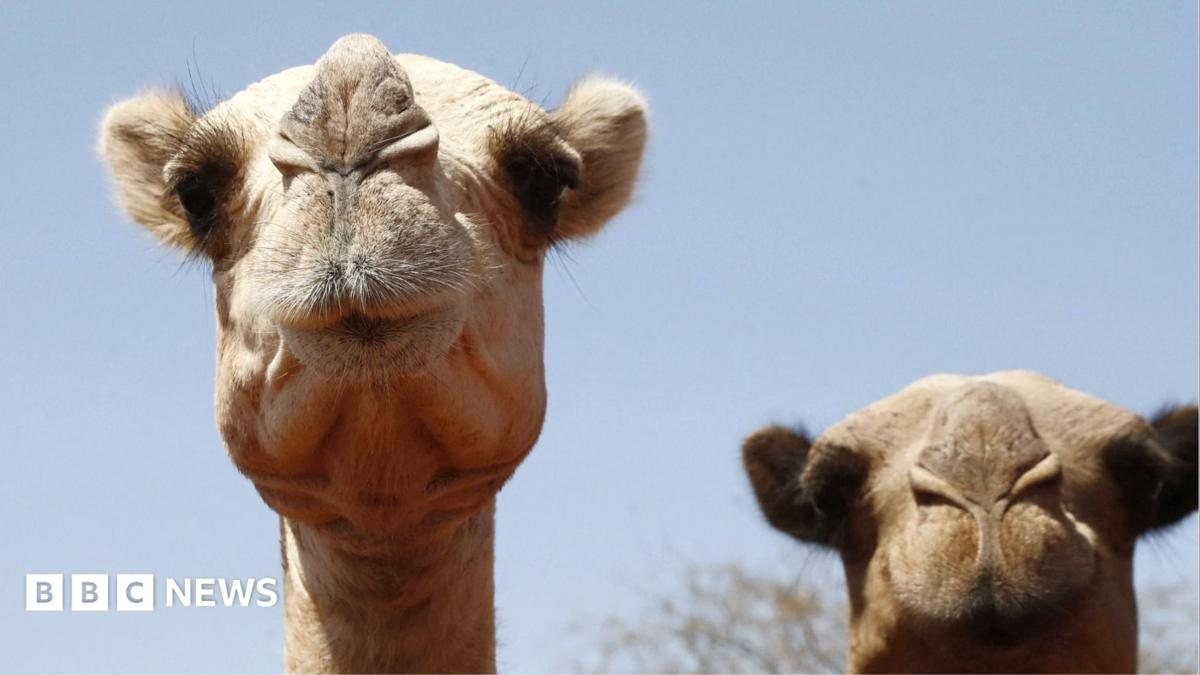
Camels have long been known as the "ships of the desert" due to their ability to survive in some of the harshest environments on Earth. However, rising temperatures across Africa are now testing the limits of these resilient animals, leaving them increasingly vulnerable to extreme heat and drought.
In the Afar region of north-eastern Ethiopia, which is recognized as one of the hottest and driest places on Earth, camel herders are witnessing the direct toll of escalating temperatures. Ali Umer, a 40-year-old camel herder from Semera who owns approximately 500 camels, reported that his animals are suffering severely. According to Umer, the camels develop blisters on their feet, experience watery eyes, and suffer from burnt skin and hair loss caused by sitting on the hot desert sand.
Umer stated that he lost eight camel calves in a single month due to the intense heat. He noted that even the wind, which historically brought cool air to the region, now carries heat, reflecting drastic temperature changes observed in recent years.
Rising Mortality and Health Declines Across the Horn of Africa
The Horn of Africa and North Africa host approximately 80 percent of the world's largest population of dromedary, or one-humped, camels. While many pastoralists and farmers historically switched to camels because of their superior resilience compared to other livestock, recent studies indicate that extreme climate variability is severely impacting the species.
A study published in 2025 on the perceptions of camel herders in southern Ethiopia revealed that climate change has negatively affected camel health, productivity, and reproductive performance. In neighboring Somalia, the crisis is even more pronounced. Research published in June showed that drought-related camel mortality has affected nearly 46 percent of camel-owning households. This mortality is heavily concentrated in northern regions, with the Sool area reporting a mortality rate of nearly 73 percent.
In Marsabit county in north-eastern Kenya, which borders Ethiopia, veterinary officials are treating a growing number of sick animals. Hassan Nuya Guyo, a local veterinary officer, reported a significant rise in cases of hyperthermia, which leads to multiple secondary infections in camels. Guyo stated that camel deaths in Marsabit county have increased by more than 15 percent over the last two years due to extreme heat.
The Biological Limits of Camel Resilience
Biologically, camels are equipped to handle temperatures up to approximately 40 degrees Celsius. They manage this by allowing their body temperature to fluctuate by several degrees throughout the day, which helps them avoid sweating and conserve water. Their systems also produce concentrated urine and dry faeces to minimize fluid loss, while their thick skin coats protect them from solar radiation.
However, these coping mechanisms fail when temperatures exceed their comfort range. Dr. Mohammed Bengoumi, a scientist with the United Nations Food and Agriculture Organization (FAO) specializing in camel health, explained that summer temperatures in many parts of the Sahara now frequently exceed 50 degrees Celsius. This extreme heat, combined with a lack of vegetation, water scarcity, and limited shade, triggers severe heat stress.
Scientific research shows that prolonged exposure to temperatures between 41 and 45 degrees Celsius, during both day and night, directly damages camel cells. Professor Abdelmadjid Chehma of the University of Ghardaia in Algeria stated that such heat levels damage white blood cells and impair the immune system. To limit internal heat production, a camel's metabolism slows down, causing a sharp reduction in food intake, lethargy, generalized fatigue, decreased milk yields, and reproductive disorders.
Widespread Physiological Impacts and Habitat Shifts
The physical toll of heat stress extends to a wide range of illnesses. Professor Mohammed el Khasmi, an animal hydrobiology expert at the University of Casablanca in Morocco, documented various heat-induced conditions in camels, including rapid weight loss, inflammation, muscle and bone illnesses, chemical imbalances caused by kidney malfunction, and increased susceptibility to parasitic infections.
In North Africa, the World Meteorological Organization (WMO) has reported a clear upward trend in heatwaves since 1981. According to the WMO's State of the Climate in Africa report, North Africa recorded the fastest warming rate of the continent's six subregions, rising by 0.43 degrees Celsius per decade between 1991 and 2025. Multiple countries in North Africa and the Middle East reported temperatures exceeding 50 degrees Celsius in 2024.
In response to these shifting conditions, some pastoralists are making permanent changes to their migratory patterns. In Ethiopia, herders are permanently moving their camels from the northern regions to the south, where water and vegetation remain relatively more available. Daniel Gelan, a professor and pastoralist development researcher at Vision University in Ethiopia, confirmed that this is not a temporary seasonal migration, but a permanent abandonment of northern grazing grounds that can no longer sustain camel herding.
Compounding Environmental Pressures
While extreme heat is the primary driver of the current crisis, its effects are worsened by secondary factors such as inadequate veterinary services, poor animal management, and the loss of natural resources. Atmospheric scientists have noted that high temperatures accelerate drought by rapidly evaporating moisture from soil and water bodies, while causing plants to release water vapor into the air.
Although the Horn of Africa recently experienced a brief recovery from a severe drought lasting from 2020 to 2023, the humanitarian organization Oxfam reports that the region is already facing another round of harsh drought conditions. In some parts of Somalia, the scarcity has driven water prices up by more than 2,000 percent.
A 2025 study conducted in Algeria highlighted the seasonal nature of these losses, showing a significant spike in camel deaths during peak summer heatwaves. Researchers emphasized the urgent need for targeted interventions during high-risk periods, including strategic water provisioning, supplemental feeding, and enhanced disease monitoring to protect the remaining herds.