Dynastic Connections Dominate India's Youth Political Representation, Analysis Shows

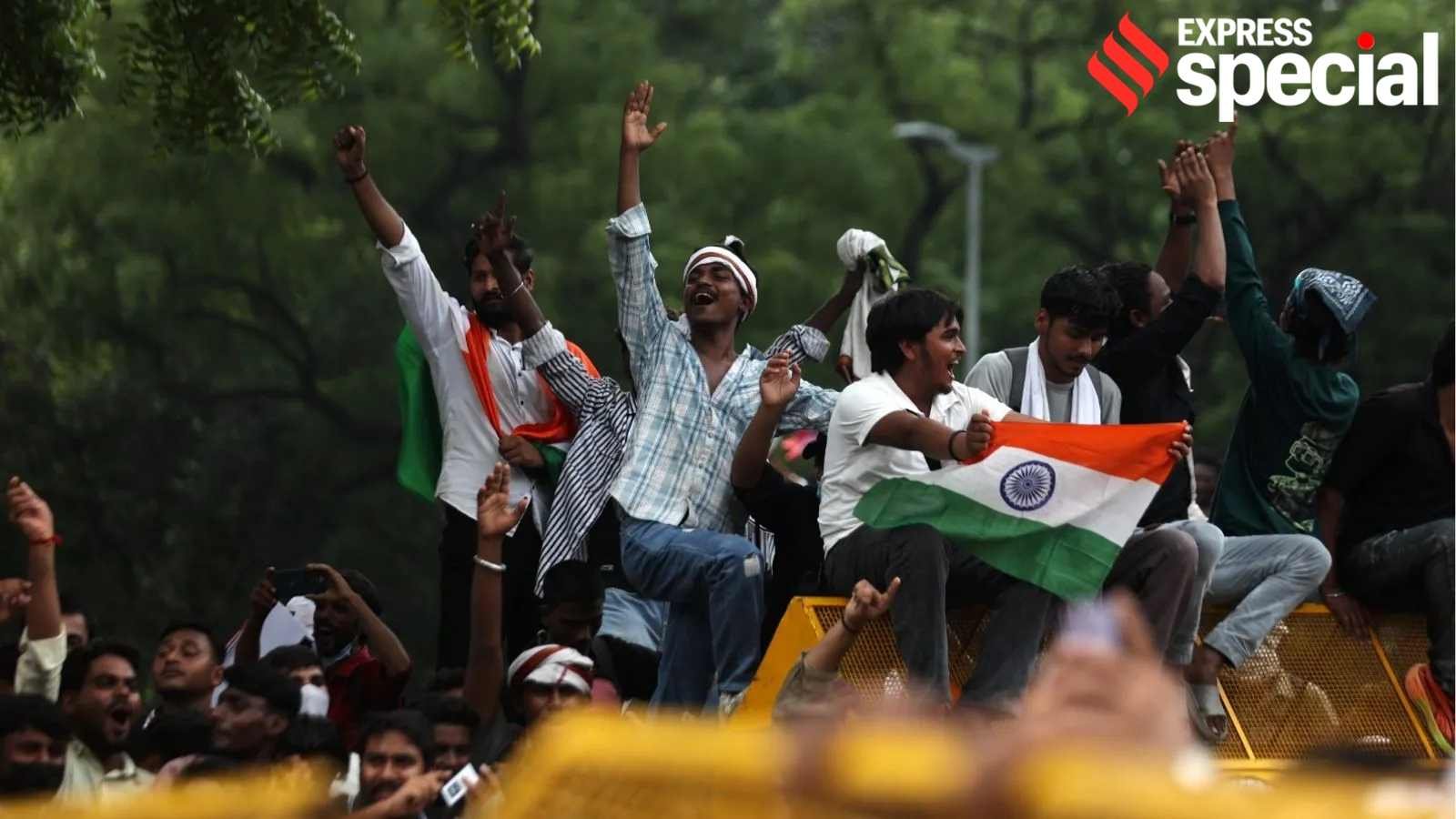
While youth across India have recently taken to the streets in places like Jantar Mantar, Ranchi, and Patna to make their voices heard, their actual representation in legislative bodies remains highly limited. An analysis of public representatives shows that for young citizens aspiring to enter politics, having a family background in public office remains a significant advantage.
According to an analysis of legislative data, Gen Z—defined as individuals born between 1997 and 2012, currently in the 14-to-29 age bracket—holds only 26 seats across Parliament and state Assemblies. Out of these 26 young legislators, exactly half, or 13, are political dynasts. This includes five of the six Gen Z members of the Lok Sabha and eight of the 20 Gen Z members of state legislative assemblies.
The Under-40 Demographic and Dynastic Trends
Because the minimum age required to contest elections in India is 25, a large portion of the Gen Z demographic is legally barred from running for office. However, even when expanding the scope to include all legislators aged 40 or younger (those born in 1986 or later), dynastic ties remain highly prevalent. Out of 384 legislators in this age group, 37.8% (145 individuals) come from political families. This under-40 demographic is projected to constitute 65.4% of India's population, or 93.3 crore people, by 2026.
An examination of major political parties reveals varying levels of youth representation and dynastic influence in the Lok Sabha:
- Bharatiya Janata Party (BJP): Out of 240 Lok Sabha MPs, nine are under the age of 40, and five of them are dynasts.
- Indian National Congress: Out of 98 Lok Sabha MPs, seven are under 40, and four are dynasts.
- Samajwadi Party (SP): Out of 37 Lok Sabha MPs, seven are under 40, and six are dynasts.
- Telugu Desam Party (TDP): Out of 16 Lok Sabha MPs, four are under 40, and all four are dynasts.
In state Assemblies, the BJP, which governs 22 states and Union Territories either directly or through alliances, has 1,811 MLAs. Of these, 121 are aged 40 or under, with 41 belonging to political families. The Congress, governing four states directly and one in alliance, has 662 MLAs. Among them, 52 are aged 40 or under, and 23 are dynasts.
Youth and Gender Dynamics in the Lok Sabha
In the Lok Sabha, there are 40 MPs aged 40 or younger, a group that includes the six Gen Z parliamentarians. While five of the six Gen Z MPs are dynasts, 19 of the 34 MPs in the 30-to-40 age bracket also come from political families.
This group of 40 young MPs includes 11 women, representing 27.5% of the under-40 cohort. This is significantly higher than the overall proportion of women in the Lok Sabha, which stands at 14%. Among these 11 young women MPs, eight are political dynasts.
Notable under-40 MPs with political lineages include Abhishek Banerjee (38), nephew of Trinamool Congress chairperson Mamata Banerjee; Yaduveer Wadiyar (34), a BJP MP from the erstwhile royal family of Mysore; and Raksha Khadse (39), daughter-in-law of former Maharashtra Cabinet minister Eknath Khadse. Other prominent names include Karan Bhushan Singh (35), son of former Wrestling Federation of India chief Brij Bhushan Sharan Singh, and Priyanka Jarkiholi (29), daughter of Karnataka minister Satish Jarkiholi.
State Assemblies and Regional Variations
Across India's 31 legislative Assemblies, there are 344 MLAs aged 40 or younger, representing 8.3% of the country's total 4,131 MLAs. Of these 344 young MLAs, 121 (35.2%) are dynasts. Only three states have no MLAs aged 40 or younger, while another two states have no young MLAs with a political family background.
In seven states, dynastic MLAs outnumber those without political connections in the under-40 bracket. Conversely, in 21 states, the majority of young legislators have no direct political family ties. Odisha has the highest proportion of dynastic young MLAs, with 14 out of 16 under-40 legislators coming from political families. This is followed by Maharashtra (12 of 16), Uttar Pradesh (23 of 32), and Karnataka and Haryana (five of nine each).
In contrast, states like Tamil Nadu, West Bengal, Kerala, and Punjab serve as outliers, featuring a notable number of young MLAs but very few dynasts. In Tamil Nadu, only three of the 47 MLAs under 40 are dynasts. In West Bengal, only five of the 45 young MLAs have political family backgrounds. Kerala has 16 young MLAs, with only one from a political family, while Punjab also has just one dynastic legislator among its 12 under-40 MLAs.
Prominent Young MLAs Across States
Several high-profile young MLAs across the country belong to established political families. In Bihar, 36-year-old Tejashwi Yadav serves as the de facto leader of the RJD, founded by his father Lalu Prasad. In Haryana, Aditya Surjewala (27) is the state's sole Gen Z MLA and the son of Congress leader Randeep Surjewala, while Arjun Chautala (34) of the INLD is the grandson of former Chief Minister O P Chautala.
In Maharashtra, Sreejaya Chavan (34) of the BJP and Aaditya Thackeray (36) of the Shiv Sena (UBT)—children of former Chief Ministers Ashok Chavan and Uddhav Thackeray, respectively—are sitting MLAs. Rohit Patil (27) of the NCP (SP), son of former Deputy Chief Minister R R Patil, is the state's only Gen Z MLA.
Other notable state legislators include Himachal Pradesh Cabinet minister Vikramaditya Singh (36), son of former Chief Minister Virbhadra Singh; Devyani Rana (31) of the BJP in Jammu & Kashmir, niece of Union minister Jitendra Singh; and Jaivardhan Singh (40) of the Congress in Madhya Pradesh, son of former Chief Minister Digvijaya Singh.