Delhi Sees Mass Crackdown as Protests Target Electoral Roll Revisions and ECI Leadership

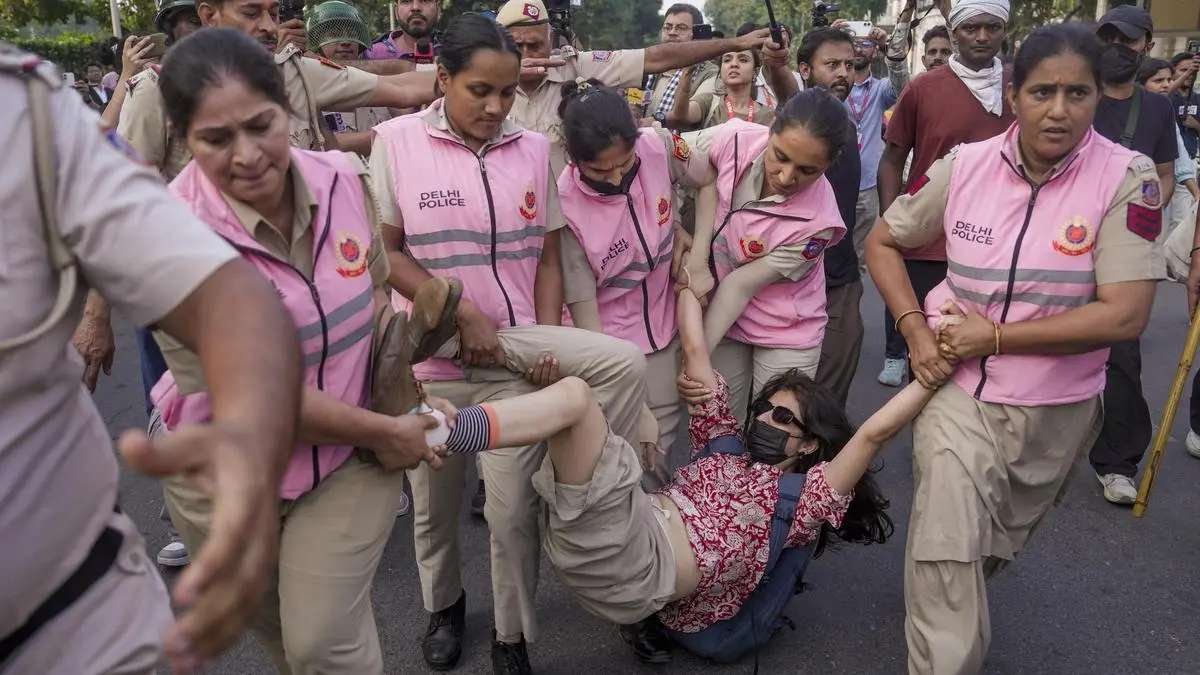
Authorities implemented widespread security restrictions across Delhi on October 10, 2026, sealing parts of the capital and detaining demonstrators to block a national protest called by the Cockroach Janta Party (CJP). The CJP had organized the demonstration at Jantar Mantar to demand the resignation of Chief Election Commissioner (CEC) Gyanesh Kumar over allegations of electoral roll manipulation during the Election Commission of India's (ECI) Special Intensive Revision (SIR) exercise.
Multiple metro stations in the capital were closed or restricted, train services were affected, and mobile internet was suspended in central Delhi. Security personnel deployed barricades, cameras, and water cannons around Jantar Mantar, using buses to take detained activists into custody. Similar actions were reported across multiple states, including Maharashtra, Madhya Pradesh, and Gujarat, where activists and students were intercepted at checkpoints, served preventive notices, or detained on their way to the national capital.
Background of Protests and ECI Allegations
The CJP's mobilization initially began in July around examination paper leaks and broader educational issues, following hunger strikes by activist Sonam Wangchuk and youth groups that culminated in a march on Parliament. Education Minister Dharmendra Pradhan subsequently resigned on July 25. The CJP later launched its "School Thik Karo" campaign before shifting focus toward the Election Commission following controversy over the SIR process.
The ECI has maintained that the SIR is a routine verification exercise. However, critics and opposition groups point to significant voter deletions across several states. In Bihar, the draft electoral roll dropped 65 lakh names, reducing the electorate from 7.89 crore to 7.42 crore ahead of the November 2025 assembly elections. In Delhi, approximately 47 lakh names were removed from an electorate of 1.45 crore, with an additional 33 lakh voters receiving notices. Furthermore, a Right to Information (RTI) response revealed that in West Bengal, 91 per cent of the roughly 82,000 decided appeals—out of 38 lakh filed—resulted in voter names being restored.
Reports indicate that the other two Election Commissioners, Sukhbir Singh Sandhu and Vivek Joshi, formally raised objections on at least 14 occasions regarding SIR decisions advanced by Kumar. Petitioners challenging the process allege that major decisions were executed without the concurrence of the full commission, affecting an estimated 13 crore names nationwide. The ECI has denied claims of partisan manipulation, stating that its decisions, including the implementation of the SIR, were taken unanimously.
Detentions and Political Opposition Engagement
Prior to the October 10 demonstration, police took enforcement measures during an earlier CJP gathering on October 2. On October 3, officers barricaded access to Jantar Mantar and detained participants. Neha Bora, president of the All India Students' Association, was detained four times over two days. Three women identifying themselves as journalists reported instances of physical manhandling and sexual harassment during the security operations, alleging that Assistant Commissioner of Police Vivek Bhagat touched a journalist inappropriately while she filmed a detention. Police stated that no FIR was registered and described a subsequent promotion order involving Bhagat and 11 other officers as routine, though the order was later put on hold for Bhagat after he requested an inquiry prior to assuming the new post.
On October 6, Leader of the Opposition Rahul Gandhi and Priyanka Gandhi staged a sit-in lasting over six hours at Akashvani Bhavan seeking a meeting with Election Commissioners. Both leaders were subsequently detained and booked for entering the premises without permission. On October 10, key CJP leaders Abhijeet Dipke, Saurav Das, and Ashutosh Ranka, along with YouTuber Dhruv Rathee, were detained by police after landing at Delhi airport.
Judicial Challenges and Procedural Delays
The controversy surrounds changes to the selection mechanism for the ECI leadership. In 2023, the Supreme Court directed that Election Commissioners be selected by a panel comprising the Prime Minister, the Leader of the Opposition, and the Chief Justice of India (CJI). Parliament subsequently enacted legislation replacing the CJI with a Union Minister nominated by the Prime Minister. Gyanesh Kumar was appointed CEC in February 2025 following a dissenting vote by the Leader of the Opposition.
Legal challenges to the 2023 law were filed in January 2024. In March 2024, the Supreme Court declined to stay the act, citing potential administrative disruptions. In March 2026, CJI Surya Kant recused himself from the matter because the law removed his office from the selection panel. On September 23, 2026, a two-judge bench split over whether to refer the challenge to a Constitution Bench.
Regarding the SIR exercise, the Supreme Court upheld the process in Bihar in May 2026. On September 22, 2026, the court noted that notices issued to 33 lakh Delhi voters appeared to have been generated mechanically by software, directing the ECI to consider additional procedural safeguards. On October 5, 2026, the court declined to issue interim relief seeking the suspension of the CEC, instead issuing notice to the government and the Commission for further hearings.