
Danube Record Lows Force Hungary Nuclear Shutdown and Disrupt Regional Power

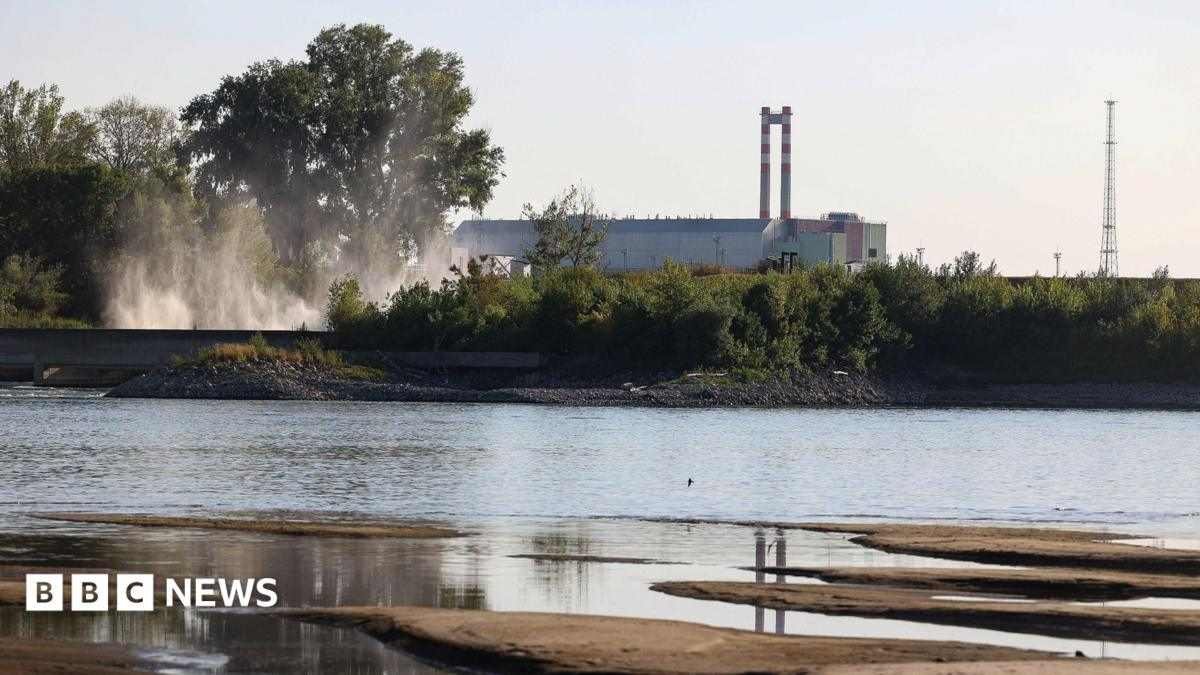
Record low water levels on the River Danube will force Hungary to completely shut down its only nuclear power plant for the first time in its history, according to Prime Minister Péter Magyar. The Soviet-era Paks power plant relies on the Danube for cooling water, but current river levels are so low that the plant's suction nozzles are unable to reach the water.
Magyar warned that Hungary's national energy supply could reach a "critical" state starting Monday due to the Paks shutdown and an ongoing heatwave. Temperatures in the country are forecast to hover around 37 degrees Celsius for a week. Like much of Europe, Hungary has experienced extremely low rainfall and high temperatures throughout the summer season.
Energy Restrictions and Grid Measures in Hungary
In response to the looming energy deficit, Prime Minister Magyar has requested that Hungarian citizens voluntarily limit high-energy activities during peak hours between 17:00 and 22:00. These activities include charging electric vehicles and operating air conditioning units.
Should voluntary conservation efforts prove insufficient to balance the national electricity grid, Magyar indicated that a "rotational shutdown regime" may be implemented. He added that the government is compiling a list of electricity and water consumers whose usage could be restricted to manage the crisis.
Nuclear Disruptions and Hydrological Declines in Romania
The impact of the drying Danube is also affecting neighbouring Romania, where one of the two nuclear reactors at the Cernavoda power plant has already been shut down. The Cernavoda facility typically generates approximately 20% of Romania's electricity. The first of its 706-megawatt reactors was taken offline earlier this week due to low river levels.
Romania's state-owned operator, Nuclearelectrica, has been working to prevent the shutdown of the second reactor. If the second unit is forced offline, Romania, like Hungary, will temporarily lose all of its domestic nuclear energy production.
Data from Romania's National Institute of Hydrology highlights the severity of the drought. The average flow of the Danube where it enters Romania is typically 4,700 cubic metres per second in July. However, by Wednesday, the flow had dropped to 1,600 cubic metres per second, which is less than a third of the average. Hydrologists forecast the flow will decline further to 1,500 cubic metres per second by Tuesday.
Regional Shipping Halts and Stranded Tourists
The low water levels have severely disrupted river transport, bringing shipping to a complete halt along the Bulgarian stretch of the Danube. Earlier this week, Bulgarian border police had to evacuate 186 river cruise passengers from the vessel Viking Ullur after it ran aground near the city of Vidin, located on the border with Romania.
The stranded passengers had begun running low on food and water because the cruise ship was unable to dock in Vidin. A secondary vessel dispatched to assist the passengers was unable to navigate close enough to the stranded ship due to the shallow waters.
Ivan Zhekov, the head of river supervision at Bulgaria's maritime administration agency, told the BTA news agency that he had never witnessed such low levels. Zhekov stated that a similar situation had certainly not occurred since 1990.
Historical Discoveries and Tributary Declines
The receding waters of the Danube have exposed several historical artifacts and remains along its 2,857-kilometre course. In Croatia, the remains of a sunken Hungarian cargo ship have resurfaced, while the hulks of a German river flotilla have become visible in Serbia.
In the northeastern Bulgarian city of Ruse, a local resident discovered bones on the exposed river bed. Experts subsequently identified these as the remains of a mammoth, recognizing a lower jaw, two tusks, and what is believed to be a rib.
The hydrological crisis extends beyond the main channel of the Danube. In Serbia, water levels have also dropped significantly on the Sava and Tisa rivers, which are major tributaries of the Danube. Serbian hydrologist Dejan Vladikovié explained that the current situation stems from a combination of high summer temperatures and low rainfall during the spring season.
Wider European Climate Context
Vladikovié told Serbian television channel N1 that the Danube has fallen to levels not seen in 50 to 60 years, with climatologists predicting no improvement until mid-September. Temperatures in Serbia are expected to reach 38 degrees Celsius, and up to 40 degrees Celsius locally, with night-time temperatures in Belgrade remaining as high as 26 degrees Celsius.
According to the Copernicus climate service, Europe is the fastest-warming continent, heating up at twice the global average rate. This rapid warming is driving more intense summer heatwaves, increasing pressure on water resources, and fueling wildfires across the continent.
Forecasters warn that fire-prone conditions are spreading toward central Europe, with Greece and Turkey among the most severely affected. Recently, extensive areas of France and Spain experienced some of the most intense and widespread wildfires in living memory, resulting in hundreds of thousands of evacuations.