Crackdown on CJP Protesters Persists Across States Despite Withdrawal Assurances

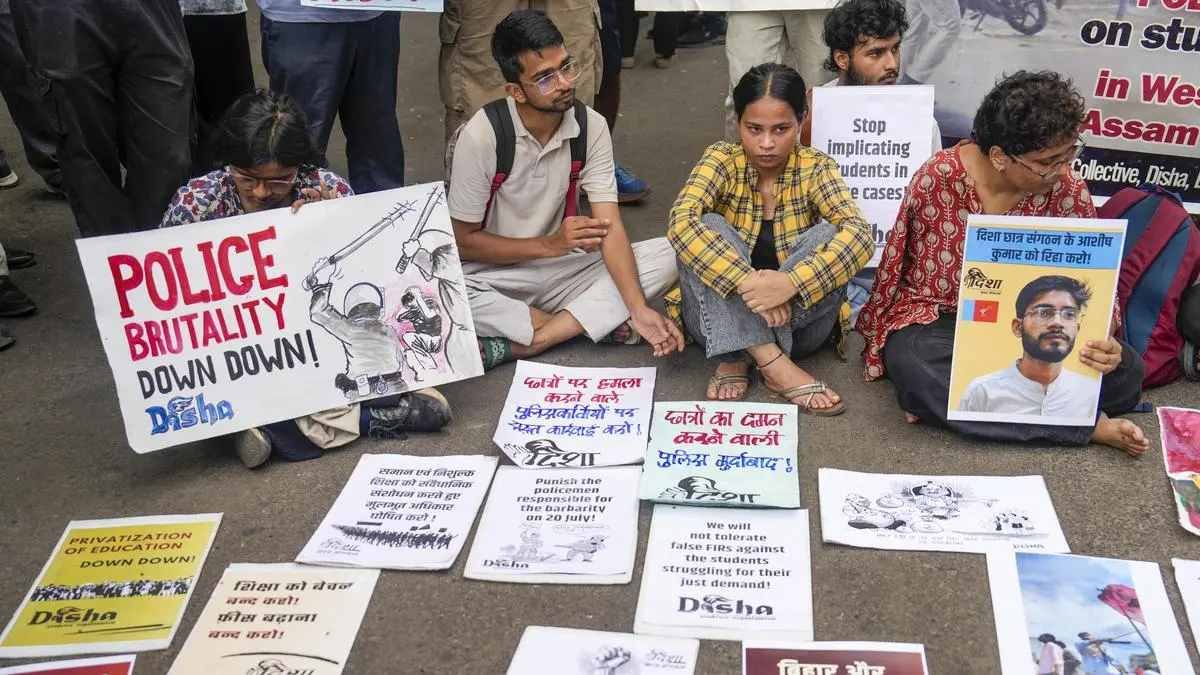
More than a week after the Cockroach Janta Party (CJP) called off its agitation against the NEET-UG paper leak, the promised amnesty for demonstrators remains highly contested. While some state governments have initiated the process of dropping charges, arrests, surveillance, and active FIRs persist across seven states, leading the CJP to allege a "breach of trust" following a recent Supreme Court order.
The legal situation remains fragmented. While states like Bihar and Assam have formally ordered the withdrawal of cases, others like Delhi and West Bengal continue to maintain active investigations or make fresh arrests. The Supreme Court's July 28 order, which allowed existing FIRs to proceed while freeing detained minors, has further complicated the path to amnesty for the protesters.
Delhi and Maharashtra Maintain Large Caseloads
In Delhi, the police have not quashed any of the 20 FIRs registered at the Parliament Street and Connaught Place police stations. These cases stem from the July 20 violence during the opening day of the Monsoon Session, when protesters marching from Jantar Mantar toward Parliament were stopped at barricades. The clashes left approximately 130 police personnel and 80 protesters injured. The FIRs invoke the Bharatiya Nyaya Sanhita, the Arms Act, and the Prevention of Damage to Public Property Act, with attempt-to-murder charges added for violence near Rail Bhawan. Delhi Police stated they are awaiting formal orders before withdrawing any cases.
Following the protests, Delhi Police initiated digital surveillance and issued takedown notices to social media accounts for allegedly abusive or illegal posts, including content targeting Prime Minister Narendra Modi. Content creators reported that Meta and X removed videos that had garnered millions of views. Furthermore, police sources revealed that facial recognition cameras at Jantar Mantar identified 2,873 individuals with prior criminal records, including cases of murder, robbery, rape, kidnapping, and narcotics. The CJP and Rajya Sabha MP Kapil Sibal have criticized this action as surveillance disguised as investigation.
In Maharashtra, Mumbai alone accounts for 20 FIRs with more than 1,000 people booked under various sections of the Bharatiya Nyaya Sanhita and the Maharashtra Police Act. Although Chief Minister Devendra Fadnavis directed the Home Department on July 28 to halt coercive measures and begin the withdrawal process, officials noted that the directive does not automatically terminate the FIRs, which still require closure reports or formal prosecution-stage withdrawals.
Active Arrests in West Bengal and Relief in Bihar and Assam
West Bengal remains the most active front of the crackdown. Following violence during a joint Left students and CJP rally at Dorina Crossing in Kolkata on July 24, police registered seven FIRs and identified 70 individuals. Despite a July 25 agreement to halt punitive actions, arrests continued under the newly enacted West Bengal Public Safety and Control of Anti-Social Activities Act, also known as the anti-goonda law. By July 27, 16 people had been arrested, including Wakar Azam and Javed Akhtar.
While police claim those arrested are outside elements rather than students, CJP spokesperson Ratna Singh disputed this, stating that 10 of the 11 initially arrested were Muslim, primarily from Kidderpore, Metiabruz, and Rajabazar. On July 28, the Chief Metropolitan Magistrate granted bail to the 16 accused, noting a lack of prima facie evidence of prior criminal records. Six other cases filed on complaints by journalists remain under investigation.
In contrast, Bihar and Assam have initiated formal withdrawals. Bihar police had detained 694 people during a July 25 bandh. While 339 minors were released, 355 others were booked. The CJP reported 86 specific arrests under attempt-to-murder charges in Siwan, Patna, and Chhapra, alongside 5,000 unnamed individuals. On July 27, the Bihar Home Department notified that all FIRs, complaints, and notices against those protesting before 6 p.m. on July 26 would be withdrawn. Assam similarly ordered the prompt withdrawal of its five registered cases, which had resulted in 13 arrests.
Developments in Kerala, Rajasthan, and Legal Next Steps
In Kerala, which is outside the central government's direct assurance, Leader of the Opposition Pinarayi Vijayan wrote to Chief Minister V.D. Satheesan, claiming that approximately 5,000 people have been booked across the state, mostly for bailable offenses like unlawful assembly. Satheesan has referred the matter to the Home Department for review. Meanwhile, in Rajasthan, the CJP claims it received a guarantee that no authorities would proceed against protesters, and no FIRs have been registered.
The Supreme Court's July 28 order, delivered by a bench led by Chief Justice of India Surya Kant, has drawn criticism from the CJP. While the court ordered the release of detained minors, it permitted investigations into existing FIRs to continue. CJP spokesperson Saurav Das expressed concern that the ruling contradicts the government's amnesty promises and could be used by central and state agencies to keep cases active against individual protesters.
In response, the CJP has launched "Saakshi," an online portal where demonstrators can upload photographic and video evidence of police actions. The group is also establishing a national legal aid network, supported by a Rs. 1 crore pledge from Kapil Sibal. The CJP continues to seek copies of the Delhi FIRs, which the Delhi Police Commissioner had previously agreed to provide on July 25.