Bonda Tribe's Enduring Ringa Weaving Tradition Preserved on National Handloom Day

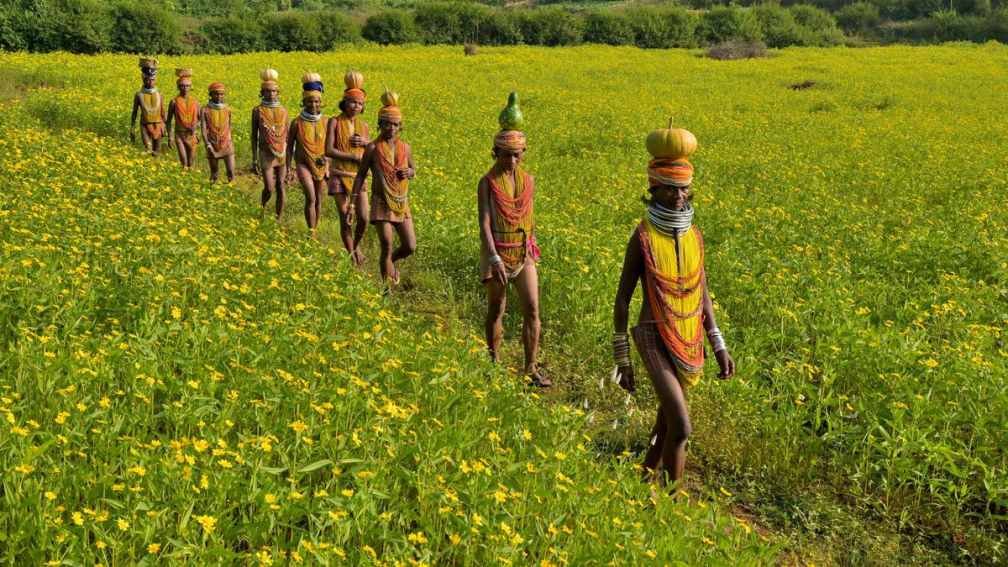
On National Handloom Day, the Bonda tribe's traditional handwoven Ringa weaving tradition continues to thrive in Odisha's Malkangiri district. The Ringa is a distinctive garment worn by Bonda women as a wraparound skirt, woven with striking horizontal stripes and bands of red, maroon, black, white, and blue.
The Bonda tribe, classified as one of India's Particularly Vulnerable Tribal Groups, has safeguarded its language, customs, and weaving tradition over generations. In this matriarchal society, women carry forward much of that cultural memory, preserving the art of weaving even as the modern world reaches their remote villages.
Unique Weaving Tradition
What makes the Bonda weaving tradition unique is that it has always been closely tied to the community's identity rather than to commerce, says Navaldeep Thareja, a textile engineer from Punjab. The Ringa was woven primarily for personal use, and it is one of the few textile traditions where a single garment has remained central to the community's identity for generations.
The fabric is tightly woven and is durable, making it suitable for everyday clothing. Within Bonda households, weaving has never existed as a specialised occupation. It fits into the rhythm of daily life alongside farming, gathering forest produce, and household responsibilities.
Preserving the Craft
Women of the Bonda tribe learn weaving by observing the women in their family. Mothers guide daughters, while grandmothers quietly correct mistakes until muscle memory takes over. The loom functions as much as a family archive as it does a tool for producing cloth.
A single Ringa generally takes two to three days to complete, depending on the yarn, the design, and the time available after daily chores. The pattern of weaving is gradually changing, with visitors, textile scholars, and collectors purchasing Ringas directly from artisans, providing a modest supplementary income.
Challenges Ahead
The future of the craft is not without uncertainty. Weaving alone does not provide a steady income, and many young people are choosing education and other jobs. Everyday clothing has also changed over time, so fewer young women are learning weaving regularly.
Ready-made garments have become commonplace, but the Ringa continues to occupy an important place within the community, especially during traditional festivals when families gather dressed in their customary attire.
Muduli welcomes the growing appreciation shown by visitors because every purchase carries encouragement beyond its monetary value. It makes them happy that people appreciate their weaving and traditions, and when someone values the Ringa, it encourages them to continue this craft and pass it on to the next generation.