Bihar BJP MLC Resigns to Clear Path for Minister Deepak Prakash After Supreme Court Scrutiny
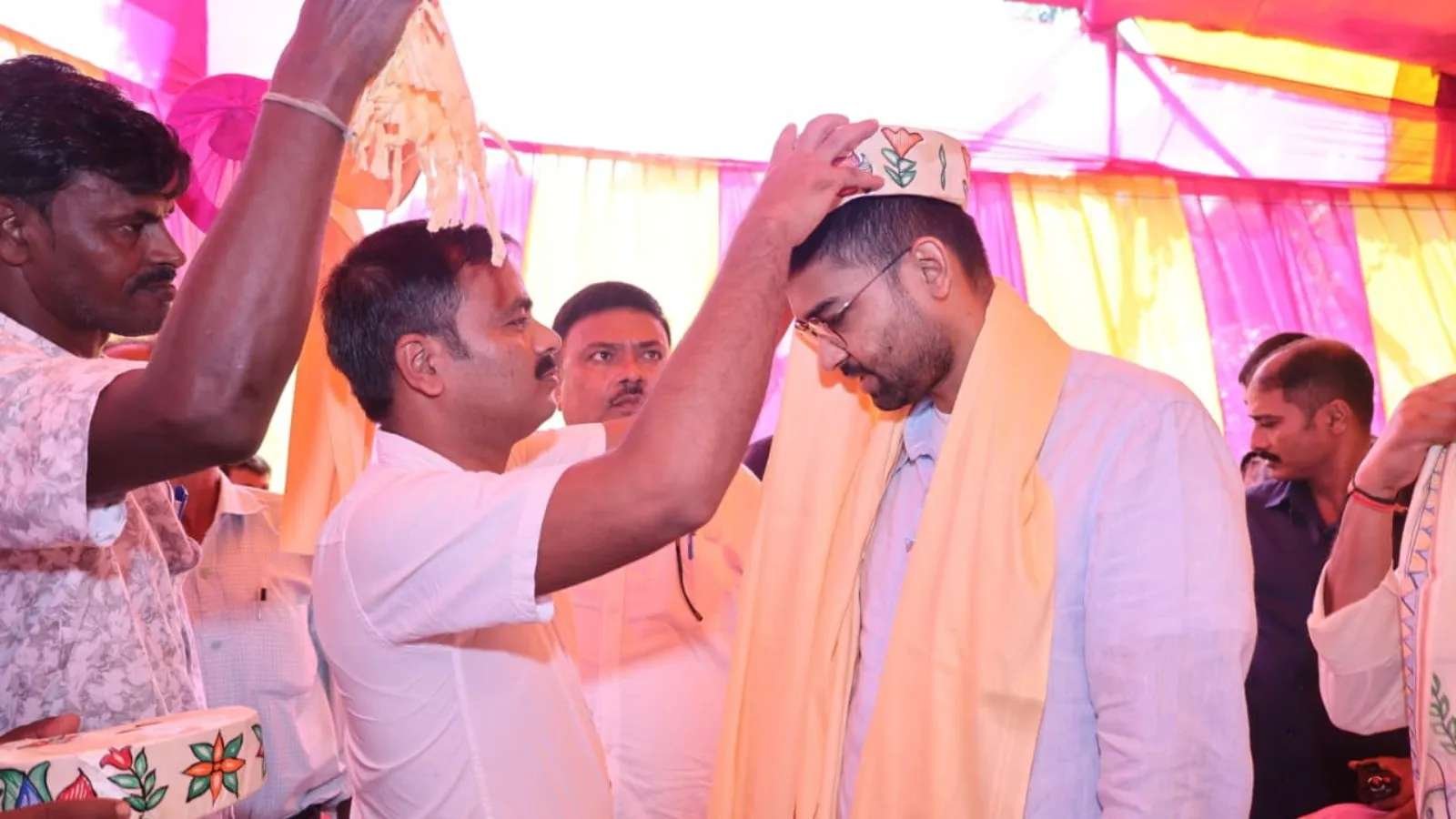
In a swift political development, Bharatiya Janata Party (BJP) Member of the Legislative Council (MLC) Devesh Kumar resigned from the Bihar Legislative Council on Friday. The move is aimed at facilitating the entry of Rashtriya Lok Morcha (RLM) leader and Bihar Panchayati Raj Minister Deepak Prakash into the Upper House of the state legislature.
Accompanied by Bihar BJP chief Sanjay Saraogi, Devesh Kumar submitted his resignation to Legislative Council Chairman Awadhesh Singh. The resignation comes amid intensifying legal scrutiny and political pressure regarding Prakash’s continuation as a minister in the Samrat Choudhary-led government without being elected to either House of the Bihar legislature.
Supreme Court Questions Ministerial Tenure
The BJP’s decision followed a day after the Supreme Court of India questioned the BJP-led National Democratic Alliance (NDA) government in Bihar over how Prakash has remained a minister despite not holding a seat in the legislature.
On Thursday, a three-judge Supreme Court Bench led by Chief Justice of India Surya Kant heard a petition challenging Prakash’s reappointment. The Bench asked the Bihar government’s counsel: “It is a pure legal issue. How are you retaining a minister beyond six months when he is not elected?” The apex court refused to grant further time to the state government to file its response and scheduled the next hearing for August 4.
Under Article 164(4) of the Constitution, an unelected individual can serve as a minister for a maximum of six months, during which they must secure election to either the Legislative Assembly or the Legislative Council to continue in office.
The Dispute Over Cumulative Tenure
Deepak Prakash, the 36-year-old son of RLM president Upendra Kushwaha, was initially inducted as the Panchayati Raj Minister by then Chief Minister Nitish Kumar on November 20, 2025. Following Nitish Kumar’s resignation, Samrat Choudhary assumed office as Chief Minister on April 15, 2026. Choudhary subsequently inducted Prakash back into the cabinet as the Panchayati Raj Minister on May 7, leaving a 22-day period during which Prakash did not hold office.
The legal challenge focuses on Prakash’s cumulative unelected tenure across these two separate cabinets within the same legislative term, which exceeds the six-month constitutional limit. He served for four months and 26 days during Nitish Kumar’s tenure, and has served for two months and 24 days under Samrat Choudhary.
The NDA government has argued that Prakash did not exceed the six-month limit in either individual stint. In June, Chief Minister Samrat Choudhary stated during a press conference, “He (Prakash) can remain a minister till five months and 29 days,” without addressing the cumulative duration of both terms.
Conversely, the petitioner before the Supreme Court argued that Article 164(4) offers only a one-time constitutional window. The petitioner contended that Prakash was required to secure an election between November 20, 2025, and May 20, and that his reappointment constitutes a circumvention of constitutional safeguards.
Judicial Precedents and Political Context
Legal experts have pointed to the 2001 Supreme Court ruling in S R Chaudhuri v. State of Punjab, where a three-judge Bench ruled that the six-month grace period is a "one-time privilege" for an individual during the term of a single Assembly. The court had noted that a change in Chief Minister during the same Assembly term does not reset this privilege for an individual, warning that allowing unelected ministers to resign and be reappointed would subvert parliamentary democracy.
To resolve the constitutional impasse, the BJP chose to have Devesh Kumar vacate his seat. Kumar was nominated to the Legislative Council under the Governor’s quota on March 17, 2021, by then Governor Fagu Chauhan, and his six-year term was scheduled to expire in March 2027.
This strategy mirrors a previous move by the NDA in 2021, when the Governor’s quota was utilized to secure Legislative Council seats for ministers Ashok Choudhary of the JD(U) and Janak Ram of the BJP.
The development carries significant political weight in Bihar. Prakash’s father, Upendra Kushwaha, is an influential NDA leader representing the OBC Kushwaha community, which constitutes a major voting bloc in the state. Prakash was previously left without a path to the legislature during the June 11 biennial Legislative Council elections, where the NDA did not nominate him despite his ministerial role. In those elections, all 10 candidates were elected unopposed, with the NDA winning nine seats and the opposition RJD taking one.