At the Still Point Performances in Kolkata Explore Belonging, Labour, and Resistance

The eighth edition of "At the Still Point" (ATSP), a community-funded dance platform, was held on July 31 and August 1 in Kolkata. Hosted at the Urban Theatre Project and the Goethe-Institut, Max Mueller Bhavan, this year's programme was themed "Be.long.ing." The event featured performances by the Gram Art Project from Madhya Pradesh and Manipuri contemporary dancer Surjit Nongmeikapam, exploring themes of soil, sovereignty, memory, violence, and displacement.
Community-Funded Art and the Theme of Belonging
ATSP was founded by Artsforward, the arts wing of curator and director Paramita Saha's practice. Operating as a community-financed formal arts platform, ATSP encourages audiences to become active stakeholders in supporting art. According to Saha, when commercial logic dictates artistic work, raising funds for difficult questions becomes challenging. The platform's crowd-funded model allows communities to decide which artistic conversations they wish to sustain.
This year's theme, "Be.long.ing," brought together two distinct works: "Cotton Stainers" by the women of the Gram Art Project collective, and "Fountain" by Surjit Nongmeikapam. Both performances used physical movement and sensory elements to address what it means to find or lose a sense of home.
Gram Art Project: Seed Sovereignty and Collective Testimony
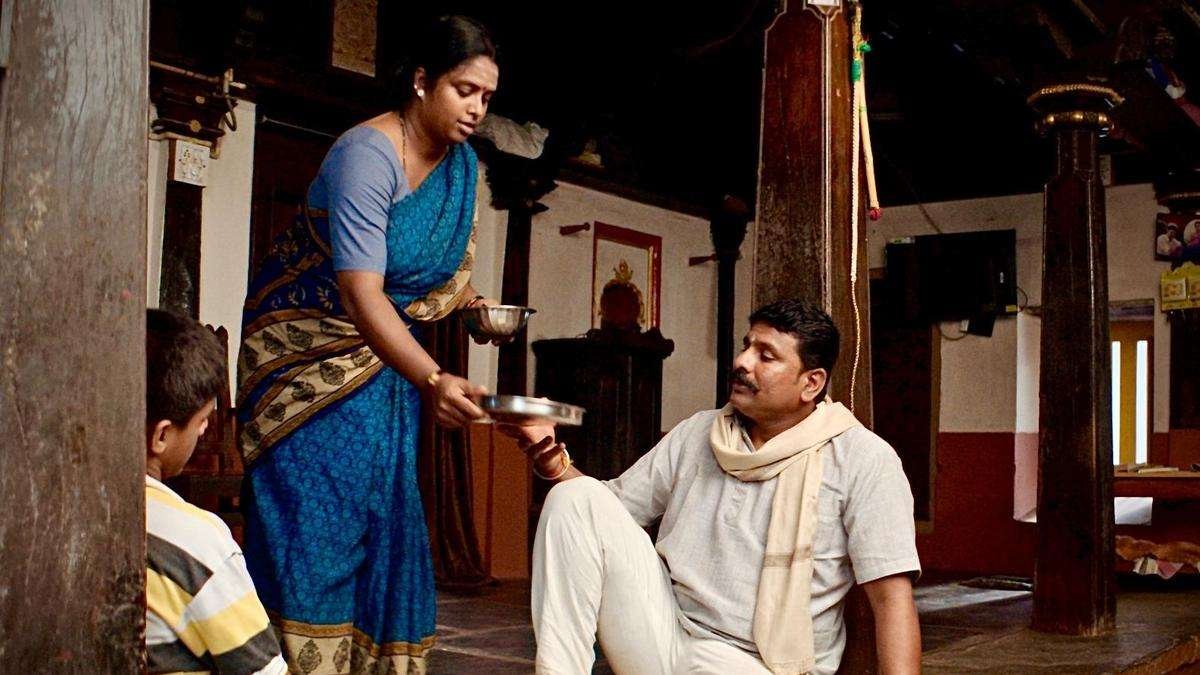
The Gram Art Project collective presented "Cotton Stainers" in two slots on July 31 at the Urban Theatre Project in South Kolkata’s Bhowanipore area. The performers are women from Paradsinga, a village in the Chhindwara district of Madhya Pradesh. In this rural region, migration, poverty, patriarchy, and tradition coexist with farming challenges and new aspirations.
Saha read a statement from the collective, noting that the women were sharing their hopes, dreams, memories, secrets, and the burdens of being rural women in an average Indian village. The collective's members are both farmers and artists, viewing the two practices as interchangeable.
Before the 60-minute performance began, audience members were given a sindoori seed (Bixa orellana) sourced from the jungle ecosystem of the performers. Attendees were asked to hold the seed, dip it in water, and spend time with it. Following this prelude, collective members Tanmay Joshi and Aditi Bhattad spoke about "koos ghas" (spear grass). They explained how its highly inflammable seeds can take root in barren land, survive fire, and move toward water when rain falls—a process described as becoming "jagruk" or conscious.
The performance itself did not rely on spoken dialogue, except for the mention of specific dates and household locations where acts of violence had occurred. In one notable moment, performer Shweta Bhattad held a gun while facing the event photographer, who raised his camera. The brief confrontation ended with the sounds of two shots from the camera and the gun.
Surjit Nongmeikapam: Levitation as Resistance
The second performance, "Fountain," was presented by contemporary dancer and performance artist Surjit Nongmeikapam from Imphal, Manipur. Nongmeikapam’s artistic practice, which he calls "Yangshak Movement — The Art of Practice," treats movement as ongoing research and a discipline to ask complex questions when words are insufficient.
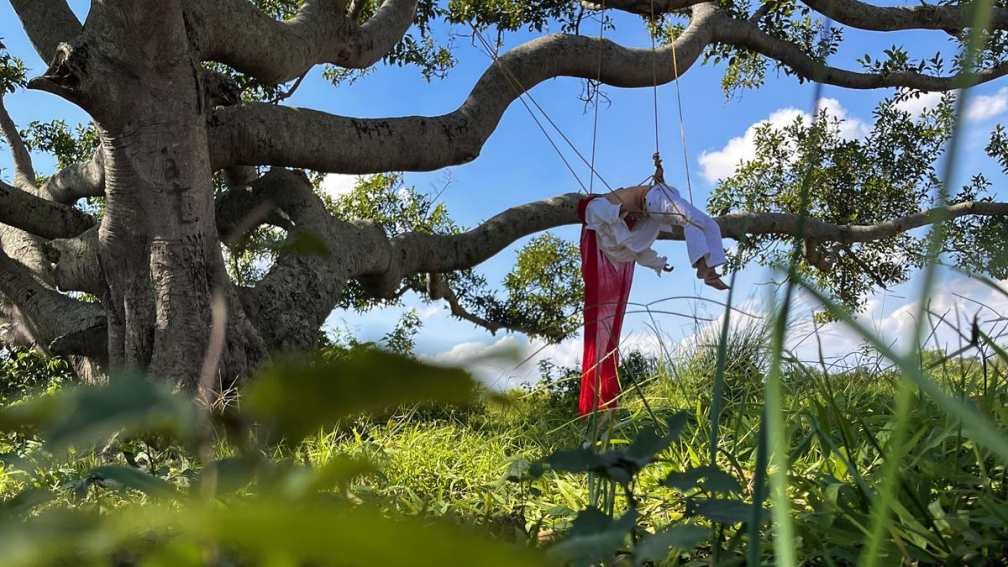
Performed at the Max Mueller Bhavan, "Fountain" featured Nongmeikapam suspending his body mid-air. This act of levitation served as a physical metaphor for the ongoing instability and displacement affecting Manipur, representing a people denied stable ground.
The performance integrated environmental sounds designed by Chaoba Thiyam and the NAF collective, text by Babina Chabungbam and Suresh Khurajam, and video footage from Nongmeikapam’s previous works. Through these elements, the performance turned the suspended body into a silent instrument of resistance.