Anti-Government Protests and Police Clashes Escalate in Tirana

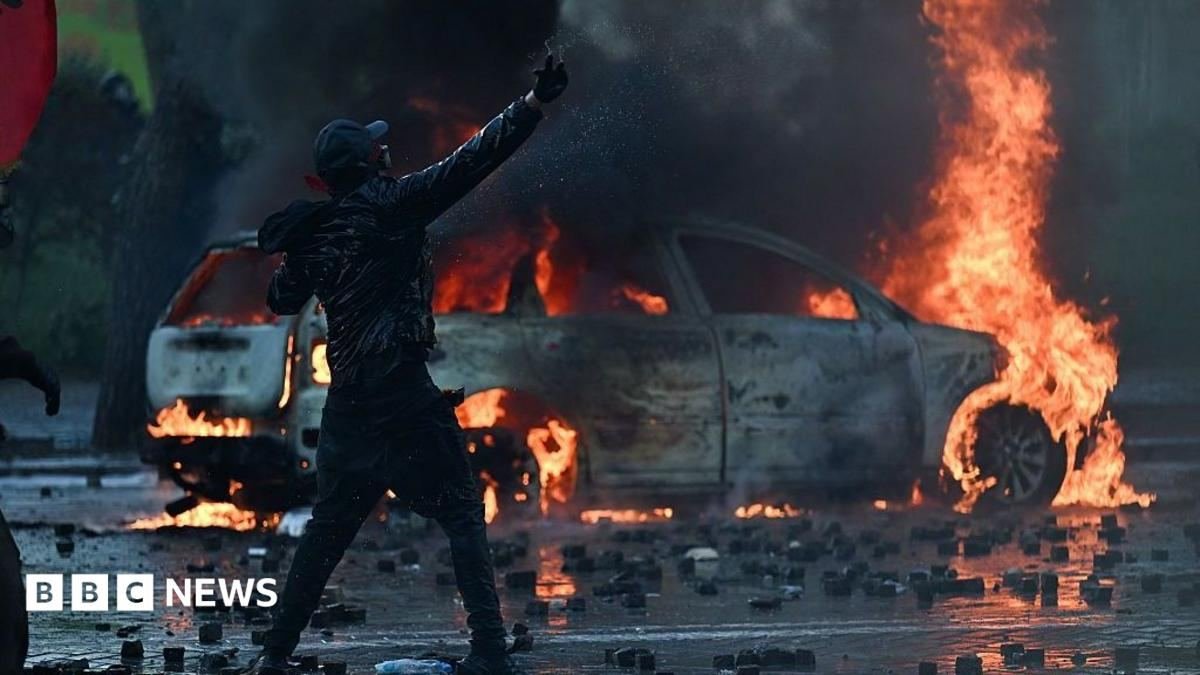
Demonstrators and riot police engaged in violent pitched battles in the centre of Tirana on Saturday, marking the fifth consecutive day of intense clashes in the Albanian capital. Masked protesters, including high school and university students, threw rocks and petrol bombs at police units stationed to defend the education ministry, which has emerged as a primary focus of the demonstrations.
Riot police responded to the attacks by deploying water cannon and volleys of tear gas to disperse the crowds. Reports also indicate that rubber bullets were used by law enforcement officers for the first time during the unrest. Many demonstrators wore gas masks or face masks, while volunteers distributed syringes of saline eyewash along the streets to assist those affected by tear gas. Explosions from petrol bombs were heard throughout the day.
Protest Focus Shifts to Prime Minister's Office
By Saturday afternoon, the site of the demonstration shifted toward the office of Prime Minister Edi Rama located on Tirana's main boulevard, where crowd sizes grew significantly larger than on preceding days. Riot police were targeted with cobble stones and fireworks, prompting continuous barrages of tear gas canisters that landed deep within the crowds and triggered moments of panic.
As smoke from a burning vehicle filled the air alongside sirens from ambulances and police vehicles, special forces arrived at dusk to reinforce riot police lines. Numerous injuries have been reported on both sides. Authorities have so far charged 80 individuals with public disorder, while hundreds of others have been arrested or placed under official investigation. The central area of Tirana remained strewn with broken glass and burnt debris.
The current wave of demonstrations began in early June as a peaceful movement before expanding into a broader political campaign demanding Prime Minister Rama's resignation over corruption allegations involving his administration. Student demonstrators confirmed they are boycotting university classes to participate in the actions. Seventeen-year-old university student Klea stated that students left school to fight for their rights, while also alleging that outside provocateurs were damaging stores and banks to discredit the protest movement.
Corruption Allegations and Political Pressure
Prime Minister Edi Rama, leader of the Socialist Party, has held power for 13 years. His governance and political standing are currently facing pressure from both street demonstrations and ongoing corruption investigations conducted by a special prosecution service established in 2019 under European Union and United States guidance.
Special prosecutors recently arrested secret service chief Vlora Hyseni, who is accused of helping Ergys Agasi evade justice. Agasi, a 39-year-old businessman, former government official, and personal friend of Rama, is currently under arrest. Speaking through his attorney, Agasi denied all corruption allegations, while Hyseni told prosecutors she had contacted Agasi to recruit him for intelligence services. Media reports in Albania have alleged Agasi served as an intermediary between the prime minister and organised crime groups. Prime Minister Rama acknowledged knowing Agasi but denied any knowledge of illegal acts.
Government Response and Political Outlook
In a statement posted on social media on Saturday morning, Prime Minister Rama defended his administration's record and attributed the protests to the opposition Democratic Party, led by Sali Berisha. Rama alleged that the demonstrations were driven by the agenda of un-named foreign actors seeking to disrupt Albania's progress toward EU membership, which his government aims to achieve by 2030.
Addressing the political impasse, News24 journalist and activist Osman Stafa called for the establishment of a neutral, caretaker government for one year to oversee new elections. Political analyst Lutfi Dervishi noted that by concentrating significant power in his own hands, Rama has become the primary figure held responsible by the public for political grievances. Currently, Rama's Socialist Party maintains a majority in the Albanian Parliament with 83 of the 140 seats, with the next parliamentary elections scheduled for 2029.