Anthropic CEO Dario Amodei Clarifies Stance on Open-Weight AI Models and Outlines National Security Concerns

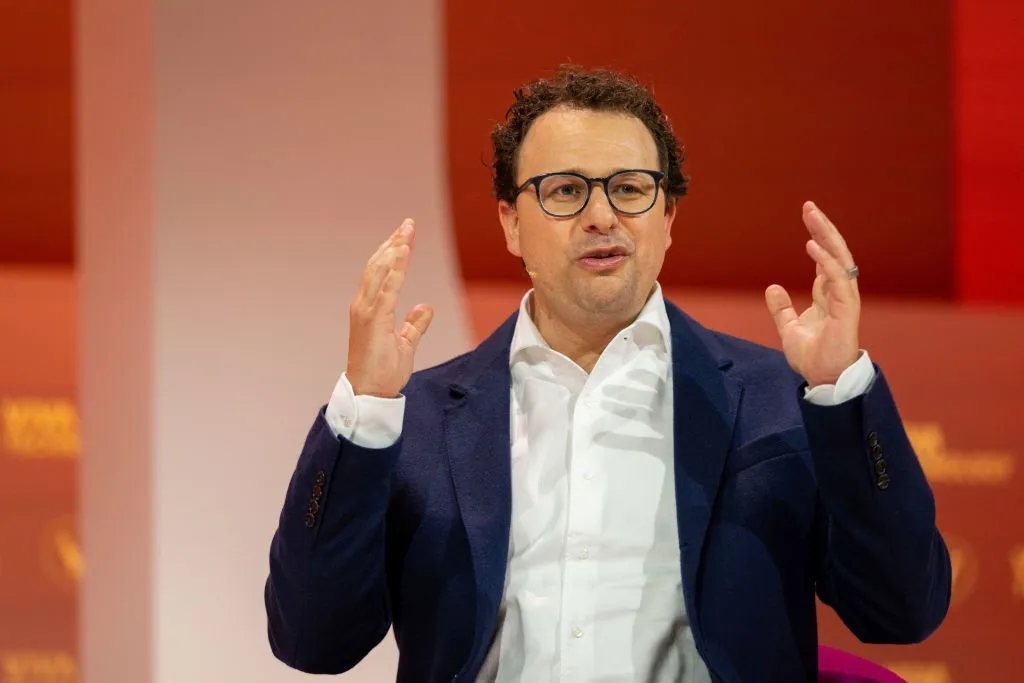
Anthropic founder and chief executive officer Dario Amodei has publicly addressed industry rumors suggesting that his company supports U.S. government efforts to ban open-weight artificial intelligence models. In a blog post published on Monday afternoon, Amodei clarified his position, stating explicitly that Anthropic does not advocate for such restrictions.
"Anyone who has read my past writing should know that I don’t regard such bans as a useful measure, but let me state it clearly so that there is no doubt: Anthropic has never advocated for a ban on open-weights models," Amodei wrote.
The Industry Debate on Open-Weight Restrictions
Amodei’s clarification follows a public pushback from other major technology leaders. On Friday, Nvidia founder and CEO Jensen Huang used his first post on the social media platform X to share an open letter. In the letter, Nvidia and a coalition of prominent AI companies—including Hugging Face, Meta, Microsoft, and Mistral—urged policymakers to refrain from imposing broad, "premature restrictions" on open-weight AI models.
While the open letter did not explicitly name China, the broader industry debate has increasingly focused on allegations that Chinese AI laboratories are advancing their capabilities by utilizing intellectual property from American firms. One highlighted method is "distillation," a process where an AI model is repeatedly bombarded with prompts to analyze and learn how it functions.
Amodei distinguished between general open-weight models and the specific geopolitical risks associated with foreign adversaries. "Open-weights models that don’t have dangerous capabilities are a public good: they don’t cost anything besides the compute needed to run them, and they provide value to businesses, developers, and researchers," he noted.
National Security and Authoritarian Threats
While Amodei stated he does not fear businesses utilizing open-weight models—even those originating from China—he reiterated his longstanding concerns regarding the misuse of highly advanced AI. His primary concern is that "authoritarian governments" could develop models superior to those in the United States, using them to establish "permanent military superiority" or to repress domestic populations. Amodei identified the Chinese Communist Party (CCP) as the "most capable" of these authoritarian governments.
Additionally, Amodei warned of the potential for AI to facilitate biological attacks, alongside traditional cybersecurity threats. He argued that open-weight models present a heightened risk in these sensitive areas because applying guardrails or monitoring their usage is exceptionally difficult. Citing a report from the UK AI Security Institute, Amodei pointed out that once open-weight models are publicly released, they cannot be withdrawn.
This perspective contrasts with arguments from open-source advocates, who maintain that public access to powerful open models allows independent developers and defenders to better protect themselves against threats.
Proposed Measures and Global Safety Testing
To counter the risks associated with China's AI development, Amodei outlined several recommended actions. These include restricting China's access to powerful semiconductor chips—a continuing pillar of U.S. policy—and implementing a formal crackdown on distillation. Currently, the U.S. has threatened to impose sanctions against China if it determines that intellectual property theft involving American AI models has occurred.
Amodei also expressed support for international efforts to establish a model safety testing organization. He noted that such an initiative, which has received support from the Trump administration in recent months, would require global participation to be effective.
"I think this idea is actually close to a consensus: I have been heartened both that the Trump administration has moved in this direction in recent months, and by recent industry proposals that would apply such testing to the most capable models regardless of their country of origin or whether they are open or closed (while exempting less capable models, such as those from startups and academia, entirely)," Amodei wrote.
He concluded that for any testing framework to succeed, the CCP would need to participate. Amodei suggested this cooperation might be achievable, noting that "limited cooperation around preventing AI biological weapons may be possible because it is in China’s interest too."